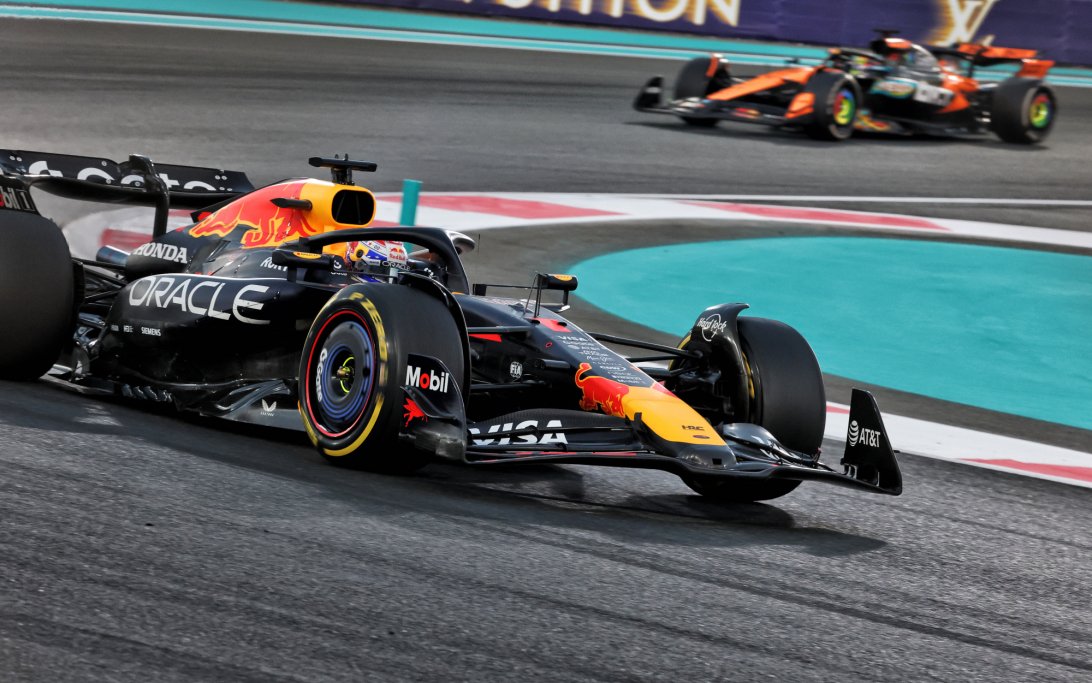
Red Bull explains why Verstappen didn't back up McLarens in Abu Dhabi title decider
Red Bull team principal Laurent Mekies has revealed the team chose not to deploy strategic tactics against the McLarens of Lando Norris and Oscar Piastri in the Abu Dhabi Grand Prix, prioritizing race victory over tactical maneuvers that could have influenced the drivers' championship outcome.
Red Bull team principal Laurent Mekies has explained the strategic decision not to have Max Verstappen back up the McLarens of Oscar Piastri and Lando Norris during the Abu Dhabi Grand Prix, a race that decided the drivers' championship. The team opted against "playing tactics" in the finale, which Verstappen won comfortably from pole, while Norris secured the title by finishing third and beating Verstappen to the crown by just two points.
Why it matters:
The decision highlights the fine line between race strategy and championship tactics in Formula 1's final rounds. By prioritizing a guaranteed race win over a risky tactical play to influence the championship battle behind, Red Bull's choice underscores a team philosophy focused on controlling what it can, even when external titles are on the line. It also shows how McLaren's own strategic moves effectively neutralized one of Red Bull's potential weapons.
The details:
McLaren's decision to start Oscar Piastri on the hard tyre was a key factor. This extended his first stint so long that when Verstappen eventually pitted, he re-passed Piastri on track. The window for Verstappen to make a second pit stop and then back up the McLarens—a tactic reminiscent of Lewis Hamilton's attempt against Nico Rosberg in 2016—never materialized, as Red Bull kept Verstappen out. Mekies acknowledged the team had considered the option but concluded it would have meant sacrificing a significant race lead for an uncertain tactical gain, with too many variables outside their control in the battle behind.
The big picture:
This race was a culmination of a season-long strategic duel between Red Bull and McLaren. While Verstappen dominated in wins, McLaren's consistency and superior strategic execution in key moments ultimately secured Norris his first title. Red Bull's post-race explanation reflects a disciplined, race-by-race approach, even in a high-stakes finale, choosing a sure victory over a complex gamble. The outcome reinforces that in modern F1, championship success often depends on a team's ability to execute its own optimal plan under pressure, rather than reactively trying to disrupt rivals.