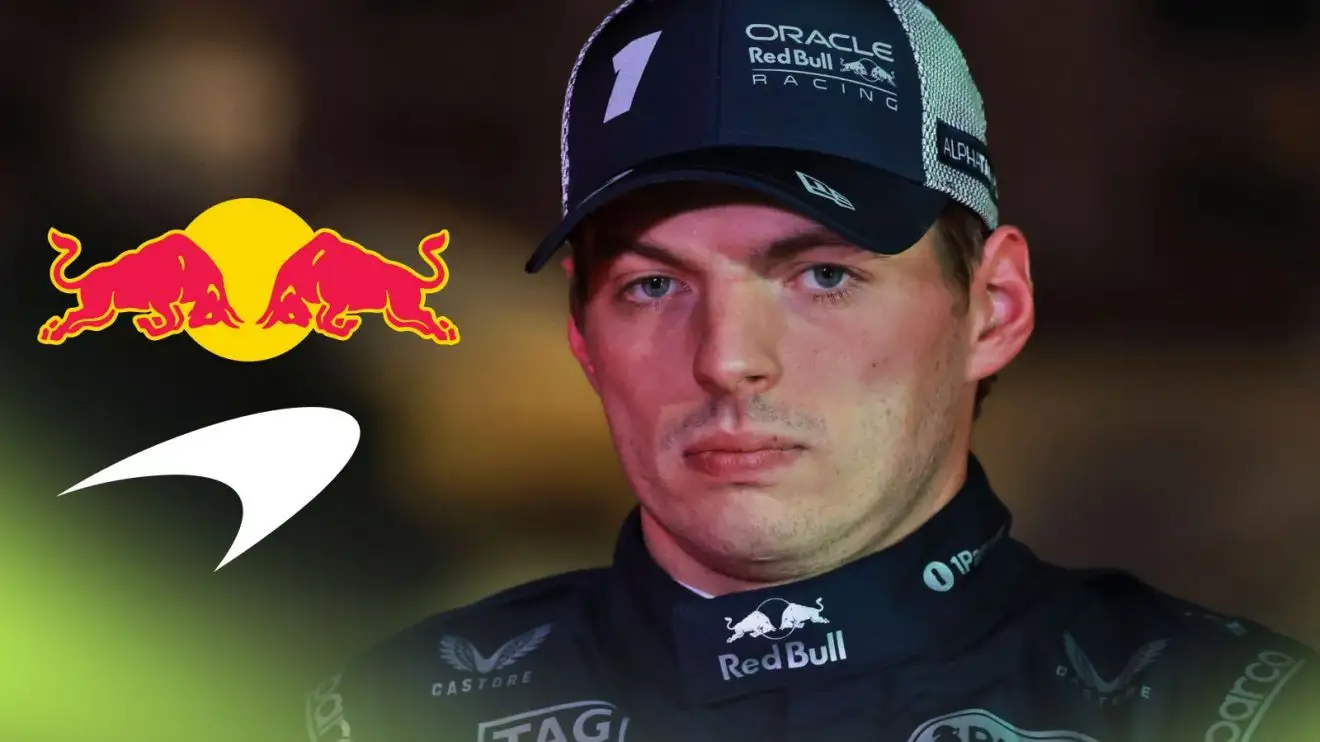
Red Bull Responds to McLaren's 'Hand Grenade' Over Verstappen Engine Change Query
Red Bull's chief engineer Paul Monaghan dismissed McLaren's "hand grenade" query over Max Verstappen's Brazil engine change, asserting its legitimacy. The FIA acknowledged a 'weakness' in current regulations regarding engine change justifications and cost cap implications, but confirmed Red Bull's compliance. This loophole is set to be closed by an engine-specific cost cap in 2026, which will deter strategic changes by making them financially unfeasible for manufacturers.
Red Bull's chief engineer, Paul Monaghan, openly addressed McLaren's query regarding Max Verstappen's engine change in Brazil, stating he wasn't surprised by what he termed a 'hand grenade' thrown into the situation. Despite McLaren's team principal, Andrea Stella, raising questions about how such an engine change impacts Red Bull's F1 cost cap compliance, Monaghan expressed confidence that Red Bull's actions were defensible and legitimate, with no anticipated repercussions.
Why it matters:
McLaren's inquiry highlights a 'grey area' in current F1 regulations regarding engine changes for reliability versus performance, and how these impact the cost cap. With the FIA admitting a 'weakness' in the existing rules, this debate underscores the continuous tension between sporting strategy, technical compliance, and financial regulations in Formula 1. The upcoming 2026 engine-specific cost cap aims to resolve such ambiguities, fundamentally changing how teams approach power unit management.
The details:
- Verstappen's Brazil Engine Change: After a Q1 elimination in Brazil, Red Bull fitted a new Honda engine and overhauled Verstappen's RB21 setup, requiring him to start from the pit lane. He subsequently raced to a podium finish.
- McLaren's Query: Andrea Stella questioned the engine change, implying it challenged regulations by distinguishing between reliability-driven and performance-driven changes in relation to the cost cap. Reliability changes typically do not count against a team's expenditure.
- Red Bull's Defense: Monaghan stated, "What we did is defendable, it's legitimate," noting that engine changes are not unusual. He believes Red Bull can justify its actions if questioned, expecting no penalty.
- Honda's Advice: Red Bull received advice from Honda that the previous engine, if absolutely necessary, could have run for "a few more kilometers," suggesting the change was precautionary rather than strictly for performance gains.
The big picture:
Nikolas Tombazis, the FIA's single-seater director, acknowledged that the governing body currently lacks the "expertise" to definitively arbitrate whether an engine change is for reliability or strategic advantage. This exposes a "weakness" in the combined Financial, Technical, and Sporting regulations, where the FIA has historically accepted such changes without deep discussions on cost cap impact.
What's next:
The current regulatory loophole is expected to close with the introduction of an engine-specific cost cap in F1 2026. This new cap will apply to Power Unit manufacturers, making strategic engine changes financially unviable as each change would significantly impact their budget. Tombazis believes this will provide a "natural mechanism" to resolve the debate, eliminating it as a contentious issue in the future.