Sainz Reveals How Williams is Becoming a Dark Horse for 2026
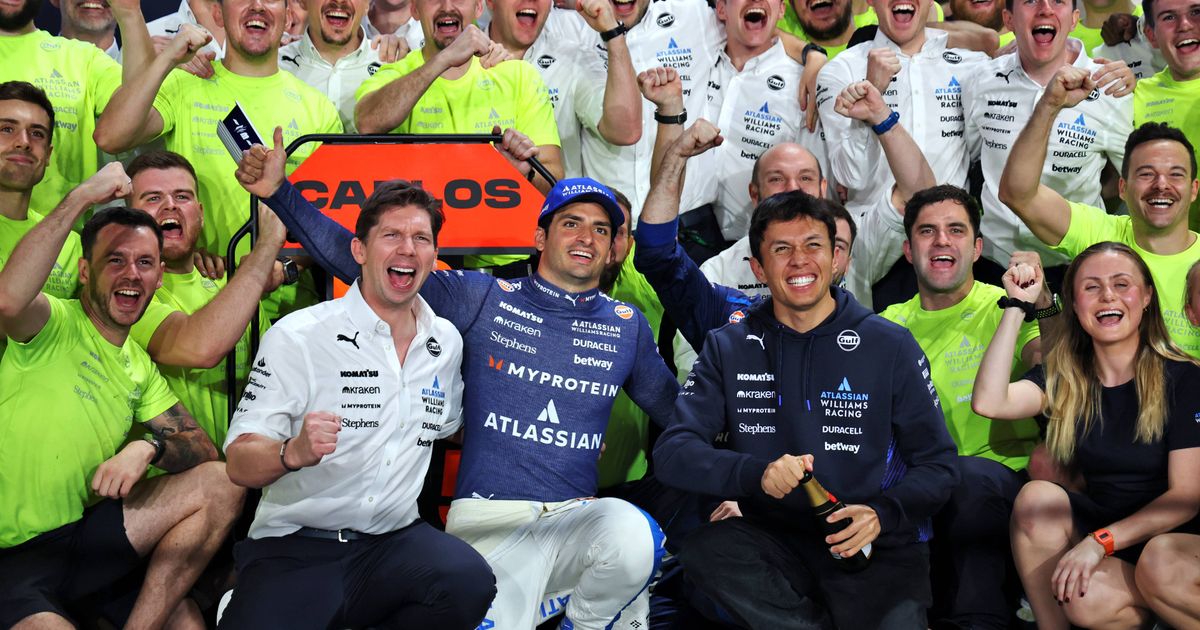
Carlos Sainz's recent podium in Qatar, securing Williams's best Constructors' Championship finish since 2017, underscores the team's dramatic turnaround. Sainz credits the success to relentless trial-and-error, brave strategic decisions, and flawless race execution, hinting at Williams's potential to become a formidable dark horse for the upcoming 2026 regulations.
Carlos Sainz's podium finish at the Qatar Grand Prix, securing P5 for Williams in the Constructors' Championship – their best result since 2017 – has sparked conversations about the team's potential as a dark horse for the 2026 season. After a challenging start, Williams has demonstrated remarkable progress, a testament to their trial-and-error approach and aggressive development.
Why it matters:
- Williams's dramatic improvement from ninth to fifth in the Constructors' Championship, accumulating 137 points this season, signals a significant shift for the historic team. This turnaround, marked by strategic adaptations and strong driver performances, positions them as a team to watch, especially with the impending 2026 regulation changes.
- The team's ability to extract peak performance from their car, even on tracks initially deemed unsuitable, highlights a growing understanding of their package and effective race execution, building crucial momentum for future seasons.
The Details:
- Strategic Adaptation: Following a difficult start to the Qatar weekend, Sainz collaborated with the team to implement changes that drastically improved the car's performance. He noted that the car felt "a lot better than what we thought" even from the first lap of FP1, quickly trading P1s, P2s, and P3s with top contenders.
- Flawless Execution: Sainz emphasized the team's perfect execution in Qatar, including a strong start from P7 to P5, excellent pit stops, a well-managed strategy, and effective tire management, which ultimately secured his P3 finish.
- Learning from Mistakes: Sainz dismissed regrets about not making changes earlier, stressing that improvement comes from a process of "trial and error." He explained that understanding the car requires trying multiple things and making mistakes to learn what doesn't work before finding what does. This iterative approach is crucial, especially with limited testing opportunities in modern F1.
- Team Bravery and Hard Work: Sainz highlighted the importance of the team being "brave" and "bold" in developing new ideas, stating that "hard work and good understanding, good conclusions always pay off." He noted the team's high level of performance in the second half of the year as a direct result of this dedication.
What's next:
Williams's strong finish to the current season, underscored by back-to-back top-five results for Sainz in Las Vegas and Qatar, sets a positive trajectory for the team. With new FIA regulations taking effect in 2026, the progress made in understanding their current car and refining their development process will be invaluable.
- The team's commitment to continuous improvement and their willingness to experiment with setups could be a significant asset as they adapt to the new technical landscape. If Williams can maintain this development momentum and replicate their improved race execution, they could indeed emerge as a formidable challenger in 2026.