The Red Bull Second Driver Conundrum: A Timeline of Teammate Struggles Alongside Max Verstappen
Red Bull's second driver seat has become a notorious 'poisoned chalice' for five drivers struggling to match Max Verstappen's pace and adapt to the team's car, which is often optimized for his unique driving style. From Daniel Ricciardo's frustrated departure to the recent struggles of Sergio Pérez, Liam Lawson, and Yuki Tsunoda, the timeline reveals a consistent pattern of high-pressure demands, performance struggles, and eventual replacement, raising questions about Red Bull's strategy and the immense challenge of being Verstappen's teammate.
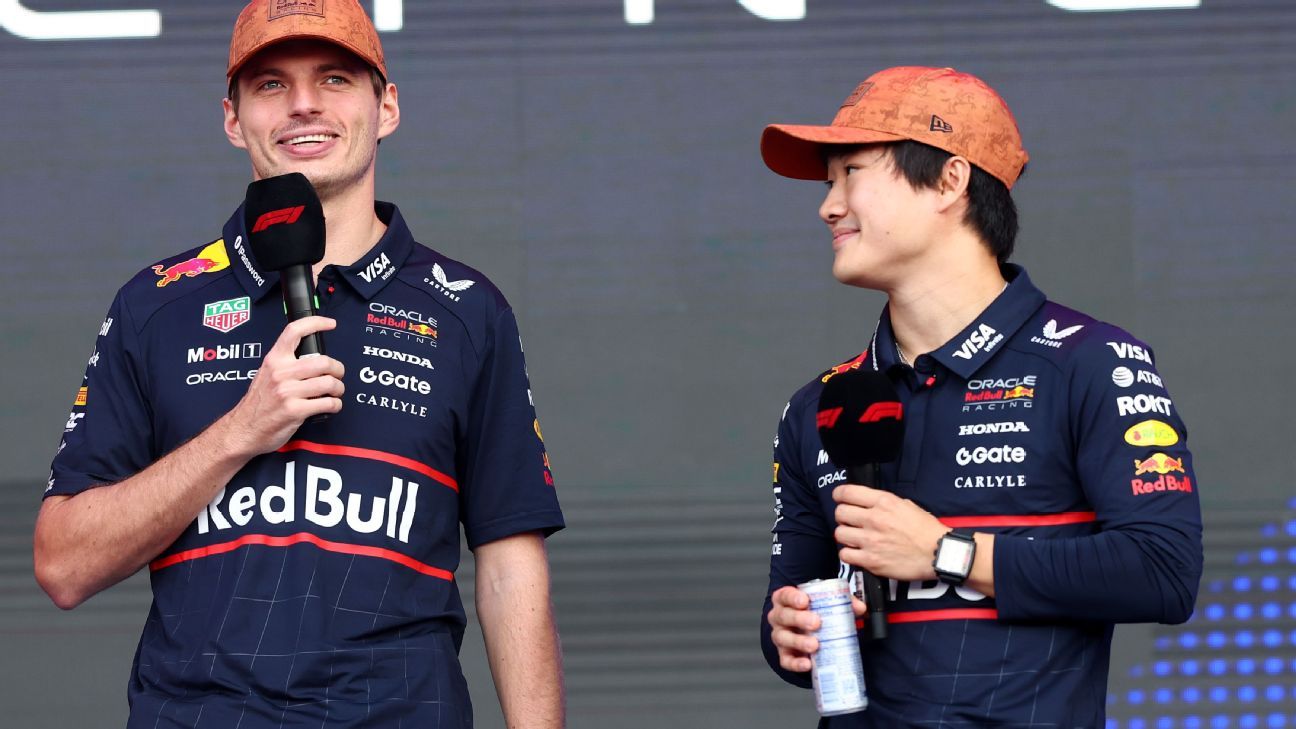
Confidence drained, unable to perform in a car seemingly tailor-made for Max Verstappen's unparalleled style, and competing beside Formula 1's next all-time great—Yuki Tsunoda is hardly the first driver to struggle, and ultimately be replaced, at Red Bull. Proven race winners like Daniel Ricciardo, and highly-touted juniors such as Pierre Gasly, Alex Albon, and Liam Lawson, all know this experience too well as Verstappen's teammates.
Why it matters:
Christian Horner, the former team boss, succinctly put it: "Max is the hardest teammate in the world to have." This statement underpins a persistent pattern at Red Bull, where an academy renowned for nurturing talent often sees its promising stars falter when paired with Verstappen. Understanding this dynamic is crucial for evaluating Red Bull's long-term driver strategy and the immense pressure placed on anyone in the second seat.
The details:
- Daniel Ricciardo (2016-18): Initially the senior driver, Ricciardo saw his status erode after Verstappen's debut win at Spain in 2016. Tensions escalated with on-track collisions, most notably in Azerbaijan in 2018. Red Bull's handling of the incident, which Ricciardo felt placed 'equal blame' despite his perception of not being in the wrong, contributed to his shocking departure to Renault, a move many saw as 'running from a fight'.
- Pierre Gasly (2019): Gasly's brief stint was marred by struggles with the car, significant crashes in testing and practice, and a stark performance gap to Verstappen, often being lapped by his teammate. He lasted only half a season before being demoted back to Toro Rosso, feeling unsupported and unfairly treated.
- Alex Albon (2019-20): Elevated mid-season in 2019, Albon showed initial promise but struggled with the car's unique characteristics, which he later described as built around Verstappen's unique driving style. Despite flashes of potential, he consistently lagged behind Verstappen, culminating in his replacement by Sergio Pérez at the end of 2020.
- Sergio Pérez (2021-24): Pérez started strong in 2022 with new regulations, even winning in Monaco and securing a contract extension. However, his performance drastically declined, failing to win another race that season while Verstappen dominated. His 2023 title challenge quickly evaporated after Miami, and despite a renewed contract in June 2024, a string of poor performances, including a Q1 exit and 17th-place finish at his home Mexican GP, led to his departure.
- Liam Lawson (2025): Lawson's promotion was brief and challenging. After just two races, marked by crashes, poor qualifying, and intense speculation about his seat, he was demoted back to the sister team. Red Bull cited a 'purely sporting decision' to bring in the more experienced Tsunoda.
- Yuki Tsunoda (2025): Tsunoda, Verstappen's third teammate in four races, endured a similar struggle. Despite scoring points, he consistently qualified and finished well behind Verstappen. Even a strong sprint performance at the end of the season couldn't save his seat, leading to his replacement by Isack Hadjar.
The big picture:
This recurring cycle highlights Red Bull's ruthless pursuit of performance and its unwavering commitment to Max Verstappen as the team's undisputed number one. The unique characteristics of the Red Bull car, often optimized for Verstappen's driving style, present a formidable challenge for any teammate attempting to adapt. The team's constant rotation of drivers underscores the immense pressure and the nearly impossible task of consistently matching or supporting a generational talent like Verstappen.
What's next:
The appointment of Isack Hadjar signals another chapter in this ongoing saga. The question remains whether Hadjar, or any future Red Bull number two, can break the mold, adapt to the demanding environment, and prove capable of being more than just a supporting act to Max Verstappen.