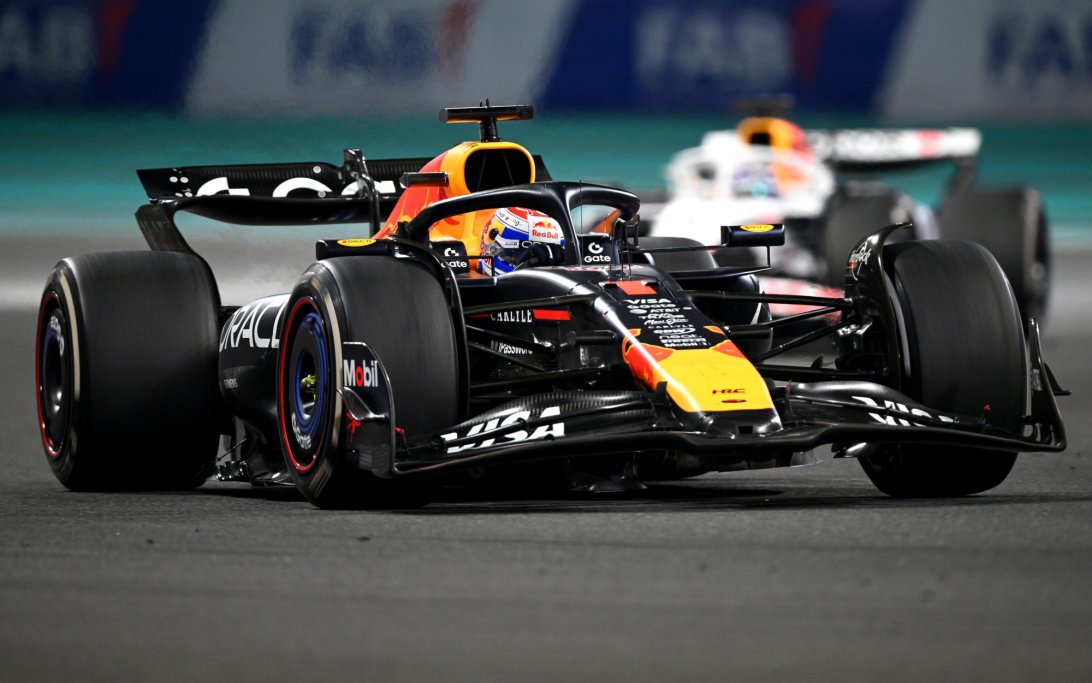
Toto Wolff Sees Simulator Skills as Key Advantage Under 2026 F1 Rules, Names Verstappen
Mercedes boss Toto Wolff predicts the 2026 F1 power unit rules, with a 50/50 electric-combustion split, will favor drivers skilled in simulator racing like Max Verstappen. He believes managing energy deployment will become a strategic "chess" game, giving an edge to the generation for whom virtual training is second nature.
Mercedes Team Principal Toto Wolff believes the revolutionary 2026 Formula 1 power unit regulations will heavily favor drivers who are deeply immersed in "the virtual world," explicitly naming reigning champion Max Verstappen as a prime example. Wolff suggests that the new energy management demands will turn each lap into a strategic chess match, perfectly suited to the skills honed in sim racing.
Why it matters:
Wolff's comments highlight a fundamental shift in the core skills required to drive a modern F1 car. As the sport moves towards a 50/50 power split between electric and combustion engines, raw speed will be increasingly balanced by intricate energy deployment strategy. This could reshape the competitive hierarchy, potentially giving an edge to a new generation of drivers for whom simulator work is second nature.
The details:
- The 2026 regulations mandate a massive shift, with power units generating equal energy from electric motors and internal combustion.
- Wolff predicts a critical new challenge: drivers will need to strategically compensate for a lack of electric power on long straights, making energy management a lap-by-lap tactical decision.
- He directly connects this to simulator proficiency, stating drivers who "love to be in the virtual world" will have a distinct advantage.
- Max Verstappen is cited as the archetype. He is renowned for his extensive sim racing commitment, historically traveling with a rig and being a key investor and competitor for Team Redline.
- Wolff groups Verstappen with George Russell as part of a generation for whom simulator work is a natural and enjoyable part of their craft.
The big picture:
This insight points to the continuing evolution of an F1 driver's role from a pure athlete to a techno-strategist. The simulator is no longer just a tool for learning tracks; it's becoming a primary training ground for complex race strategy and energy mapping. Teams with drivers who excel in this digital environment may unlock performance that others cannot replicate on track alone.
What's next:
As teams finalize their 2026 car concepts, driver-in-the-loop simulator work will become exponentially more important. The focus will shift to developing software and scenarios that accurately replicate the new energy recovery and deployment challenges. Drivers like Verstappen, who live in this space, could hit the ground running, while others may face a steeper learning curve in a formula where every joule of energy counts.