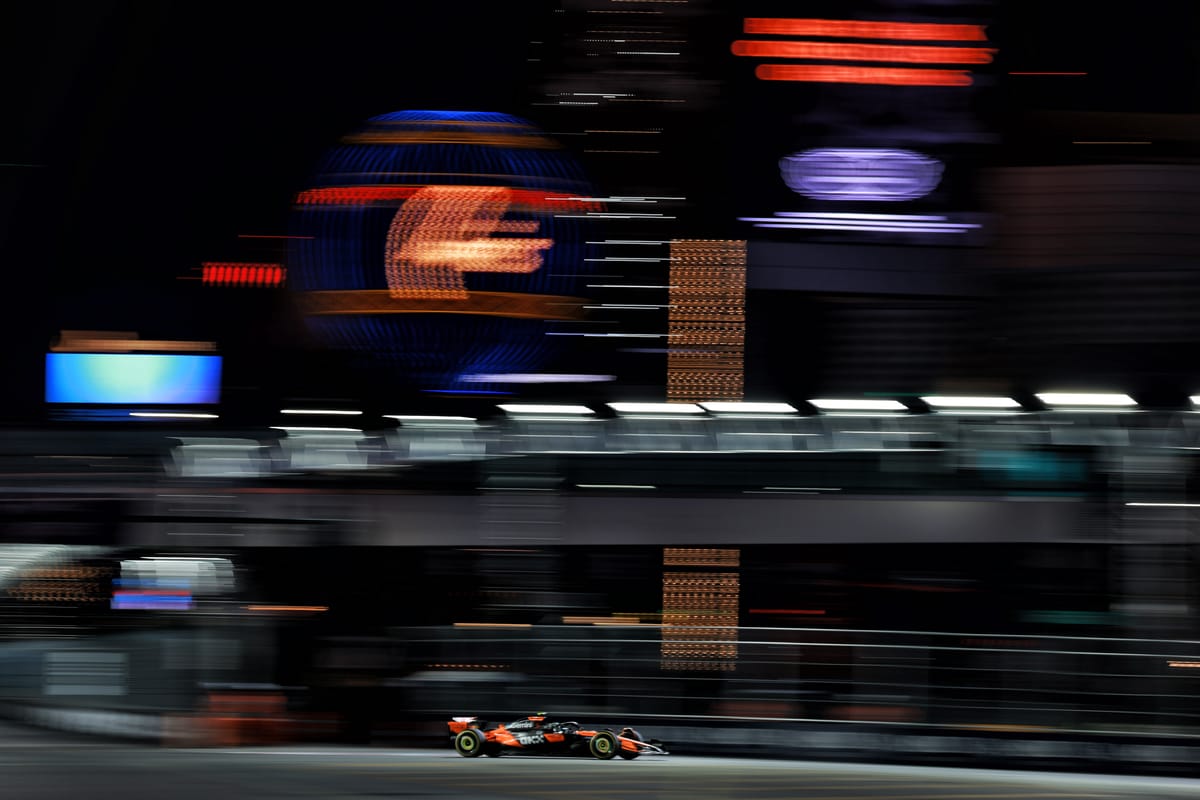
Unpacking McLaren's Las Vegas DSQ: Why Rear Plank Wear Caught the Team Off Guard
McLaren's double disqualification from the Las Vegas Grand Prix for excessive rear plank wear has raised questions, as their car typically emphasizes front skid usage. This unusual infringement may stem from their aggressive pursuit of performance against rivals, a specific setup change for Las Vegas to combat tire issues, or the FIA's enhanced scrutiny with advanced measuring tools. The team is now conducting an internal review to understand if this was an isolated incident or signals a need for a revised approach.
McLaren's surprising double disqualification from the Las Vegas Grand Prix, due to excessive plank wear at the rear of their Formula 1 cars, has sparked considerable discussion. This infringement is particularly notable given the MCL39's design, which rivals acknowledge typically places more emphasis on front skid usage.
Why it matters:
After a season of remarkable progress, this disqualification casts a shadow on McLaren's consistency and raises questions about their aggressive car setup. Understanding why the rear plank, rather than the front, was affected could reveal crucial insights into their car's dynamics and how they're pushing the limits in the intense battle for championship positions.
The Details:
- Unusual Wear Pattern: Unlike its normal operation where front skids bear the brunt of contact—even requiring special insulated seats for drivers like Oscar Piastri due to heat transfer—the disqualification stemmed from rear plank wear.
- The McLaren Concept: Rivals, including Sauber's sporting director Iñaki Rueda, have highlighted McLaren's "clever" ability to run the front of its car very low. This design shifts the primary point of wear to the front, allowing the rear floor to remain closer to the ground for maximum downforce without excessive rear plank wear.
- This is achieved through an extreme anti-dive front suspension geometry, which maintains a flatter aerodynamic platform, reducing front ride height under braking and shifting wear forward.
- FIA Scrutiny: Recent seasons have seen the FIA increase its sophistication in detecting rule infringements. This includes stamping out "trick" skid systems that allowed parts of the skid to move independently and avoid wear, and introducing a new, highly accurate Mitutoyo Micrometre for plank measurements (accurate to 0.001mm).
- The precise measurements (e.g., Norris's right-side rear block at 8.88mm, Piastri's right-hand side rear at 8.90mm against a 9mm minimum) underscore the FIA's enhanced enforcement.
- Vegas-Specific Factors: Two main theories emerge regarding the Las Vegas incident:
- Performance Push: McLaren's drive to extract more performance, especially against a resurgent Red Bull, may have led them to run ride heights closer to the limit. Reports suggest marginal, though legal, wear in Brazil.
- Setup Changes for Vegas: To combat issues like front tire graining and temperature struggles experienced in the previous year's Las Vegas race, McLaren reportedly altered its setup. A shift in aerodynamic balance towards the rear to mitigate front graining could have increased downforce at the back, leading to more rear plank contact and wear, potentially exacerbated by porpoising (which both drivers experienced).
What's next:
McLaren has initiated an internal review to pinpoint the exact cause of the issue. The findings will determine whether the rear plank wear was a one-off, specific to the unique demands and setup of the Las Vegas Grand Prix, or if it indicates a broader challenge requiring a more conservative approach to ride height and car setup moving forward. This incident undeniably intensifies the championship battle, forcing McLaren to re-evaluate its fine margins.