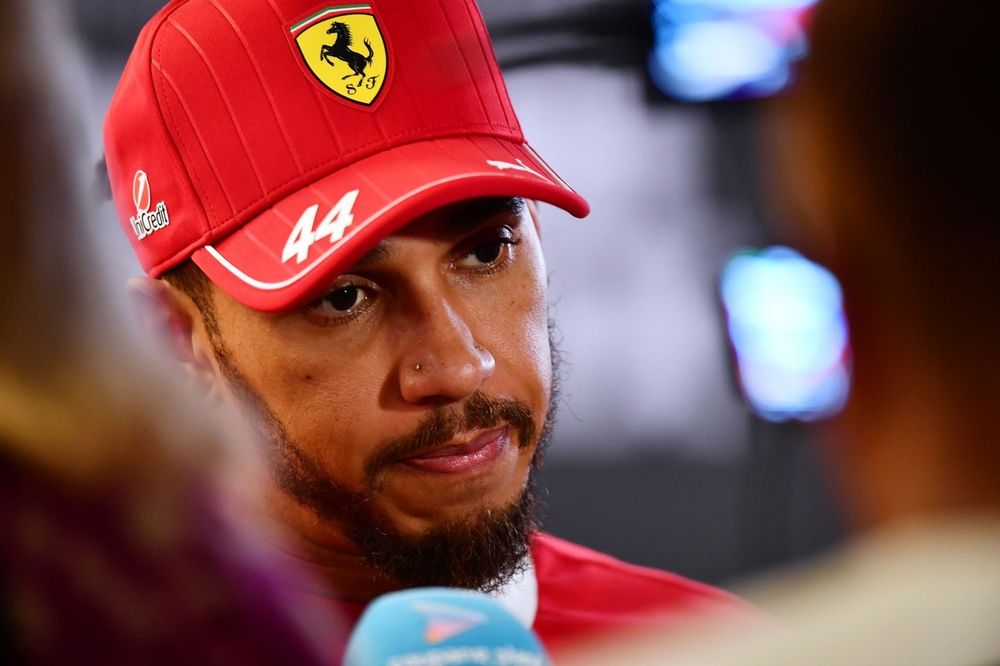
Vasseur: Hamilton's Negative Media Persona Belies Positive Team Influence at Ferrari
Ferrari boss Fred Vasseur says Lewis Hamilton's frustrated media demeanor during a tough 2025 season doesn't reflect his positive, collaborative work within the team, where he is a key motivational figure focused on solving problems.
Ferrari team principal Fred Vasseur has defended Lewis Hamilton's often terse and negative media appearances during the 2025 Formula 1 season, stating they are not representative of his true, more collaborative character within the team. Vasseur emphasized that Hamilton's frustration after poor performances is natural and preferable to empty platitudes, and that his real value lies in his motivational work behind closed doors as Ferrari seeks to rebuild.
Why it matters:
Hamilton's debut Ferrari season was statistically the worst of his career, marked by a podium drought and stark struggles to adapt. His visible public frustration became a major storyline, raising questions about team morale and his fit at Maranello. Vasseur's public backing clarifies the team's internal perspective, separating Hamilton's media-facing frustration from his actual contribution to the team's development process, a crucial distinction for a squad aiming to end a championship drought stretching back to 2008.
The details:
- Vasseur explicitly stated he respects a driver's right to be upset after a poor session, citing Hamilton's run of three consecutive Q1 eliminations late in the season as a prime example.
- He contrasted this with drivers who give bland, uninformative answers, suggesting Hamilton's honesty, however blunt, is more authentic.
- The team principal revealed that Hamilton's attitude shifts completely once he returns to the garage, where he actively engages with engineers to find solutions, injecting "positive energy" into the team even during tough moments.
- Vasseur admitted to personally underestimating the scale of the transition Hamilton faced after 12 years at Mercedes, noting that everything from team software and car components to the people around him was fundamentally different at Ferrari.
The big picture:
Hamilton's 2025 season was a historic low, finishing sixth in the standings and 86 points behind teammate Charles Leclerc without a single podium. The struggle highlighted the immense challenge of switching teams, even for a driver of his caliber and experience. Ferrari itself regressed, falling from second to fourth in the constructors' championship, making it a year of collective underperformance that the team is now tasked with understanding and correcting.
What's next:
The focus for both Hamilton and Ferrari shifts entirely to 2026. The internal narrative, as framed by Vasseur, will be on harnessing Hamilton's evident drive and turning his frustration into a catalyst for improvement. The team's ability to provide him with a more competitive car, and his capacity to fully adapt to the Ferrari environment, will be the ultimate test of whether this difficult debut season was merely a painful transition or a sign of deeper issues. The project's success hinges on translating behind-the-scenes collaboration into on-track results.