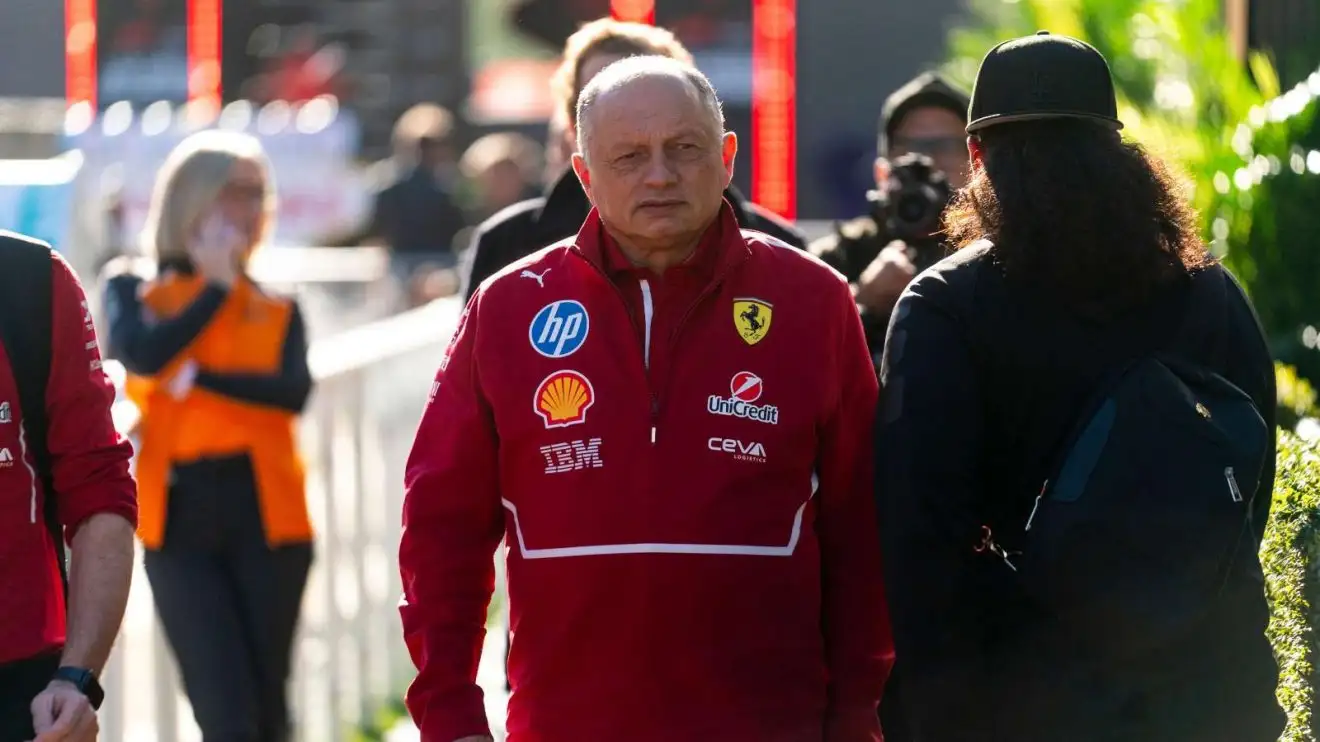
Vasseur warns early 2026 F1 wins may not guarantee season-long success
Ferrari boss Fred Vasseur warns that winning the first race of F1's major 2026 regulatory reset may not lead to championship success. He highlights the strategic dilemma of the budget cap, where aggressive early-season spending on upgrades could leave a team financially hamstrung for the rest of the year, favoring a patient, sustainable development approach.
Ferrari team principal Fred Vasseur has cautioned that winning the season-opening 2026 Australian Grand Prix might not translate into championship success, highlighting the critical challenge of managing development under the budget cap in a radically new regulatory era.
Why it matters:
The 2026 season represents the most significant technical reset in Formula 1's modern history, introducing new cars, engines, and aerodynamic concepts. Vasseur's warning underscores a fundamental strategic shift: raw early-season performance may be less valuable than sustainable, cost-effective development throughout the year. This changes how teams must approach the entire season from the very first race.
The details:
- The 2026 regulations introduce completely new cars featuring active aerodynamics (where drivers can adjust front and rear wings), narrower and lighter chassis (minimum weight of 770kg), and revised power units.
- The new engines will use a 50/50 split between electric and combustion power, replacing the MGU-H and introducing 'Overtake Mode' and 'Boost Mode' for strategic power boosts.
- Vasseur's core argument is that the financial regulations will punish teams that aggressively spend their development budget early. He specifically warned that sending multiple updates to the early races or shipping a major new component like an underbody to distant flyaway events could consume half of a team's annual development allowance.
- This creates a paradox: a team that is fastest in Melbourne may have less financial runway to improve its car as rivals catch up, while a slower team could strategically deploy upgrades later in the season.
The big picture:
Vasseur's comments reflect a mature, long-game approach to the new era, prioritizing resource management over a flashy start. He admitted having "no clue" about Ferrari's relative performance level for 2026, emphasizing that the true benchmark will only become clear during private testing and the early season. His focus is internal optimization rather than speculation about rivals.
What's next:
Ferrari will unveil its 2026 challenger on January 23rd, with its first real-world test coming at a private session at the Circuit de Barcelona-Catalunya later that month. The entire grid will then face the ultimate balancing act in Melbourne: achieving enough performance to score points while conserving enough budget to develop effectively across the 24-race calendar. The team that masters this new financial and technical equation may ultimately triumph, regardless of who stands on the top step in March.