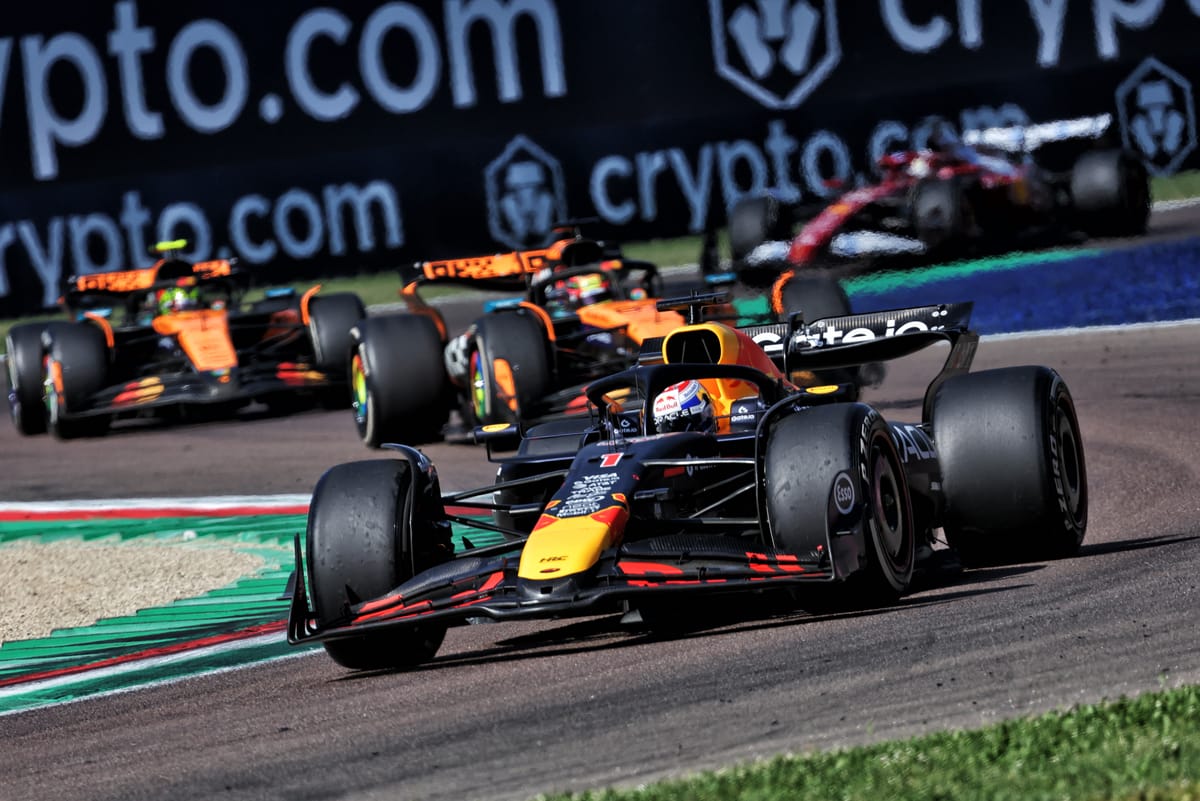
Verdict on F1's Ground Effect Era: A Mixed Legacy
F1's ground effect era failed to solve its dirty air problem, but its legacy is defined by the successful cost cap and the most competitive grid in the sport's history.
F1's ground effect era (2022-2025) is being consigned to history with a mixed verdict. While it failed in its primary mission to consistently improve wheel-to-wheel racing, it successfully implemented a cost cap and created the most competitive grid the sport has ever seen, leaving a complex legacy.
Why it matters:
This era highlights the difficult trade-offs in modern F1 rule-making, where the pursuit of better on-track action can be undermined by technical development, while financial and competitive goals can be unexpectedly achieved.
- Racing Quality Declined: The core promise was that ground-effect floors would reduce dirty air and allow cars to follow closely. While 2022 showed initial promise, teams quickly exploited aerodynamic loopholes to reintroduce outwash, making close racing nearly impossible by 2025 and leading to processional races.
- The Cost Cap Succeeded: The most significant and lasting achievement of this ruleset is the financial regulations. The cost cap has stabilized team finances, prevented a spending war, and is now a cornerstone of F1's business model, turning all teams into valuable assets.
- Unprecedented Competitiveness: The regulations dethroned Mercedes, then saw Red Bull's dominance challenged and ultimately overcome by McLaren. By the end of 2025, the grid was incredibly tight, producing a level of on-paper competition never before seen in F1.
The big picture:
The era's failures and successes are deeply intertwined, rooted in the cars' technical nature and F1's governance structure.
- Governance Failure: The FIA was unable to react quickly enough to aggressive aerodynamic development. Designs that generated powerful floor-edge vortices and outwash went unchecked, as F1's governance processes prevented timely regulatory fixes.
- Brutal Engineering Challenge: The cars were notoriously difficult to drive, punishing errors and rewarding drivers with technical skill and adaptability. This made them compelling for purists, especially in tricky conditions, even if they looked cumbersome at low speeds.
- The Consequence of Convergence: The tight regulations that created a close field also led to extreme convergence, where cars began to look very similar. This has sparked debate about whether the sport is edging too close to a spec formula in pursuit of parity.
What's next:
As F1 pivots to the 2026 regulations, the lessons from this era are critical. The new rules are already a major compromise to accommodate new power units, and there's a risk of repeating past mistakes.
- The primary lesson is that the rule-making body must be empowered to act swiftly when teams develop solutions that harm the quality of racing, regardless of commercial or political pushback.
- The cost cap will endure as the era's most important legacy, ensuring long-term financial stability for the grid.
- Ultimately, the ground effect era will be remembered as a technical failure for its racing but a resounding success for the sport's financial health and competitive balance.