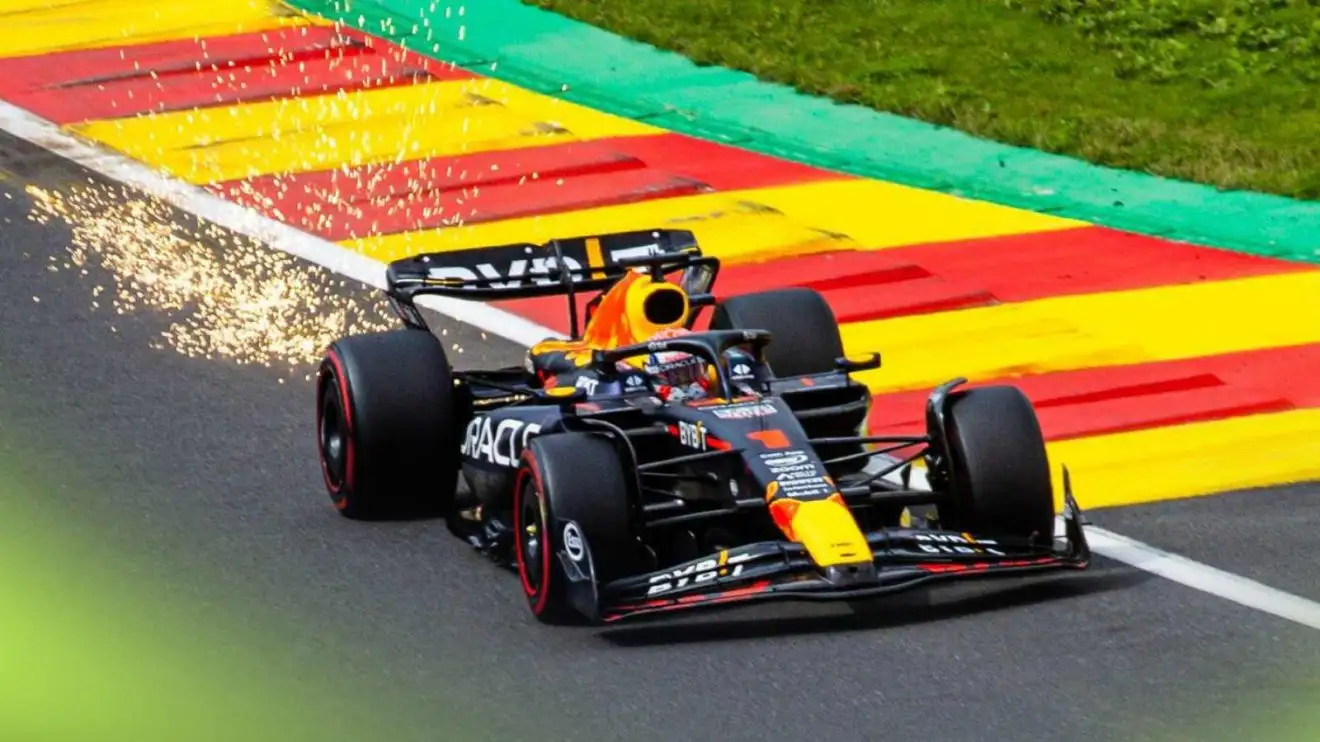
Verstappen Calls Ground Effect Cars 'Too Extreme' Citing 9G Impacts
Max Verstappen revealed the extreme physical toll of F1's ground effect cars, citing vertical impacts of up to 9G that were 'not nice' for his spine and neck.
Max Verstappen has detailed the severe physical demands of Formula 1's ground effect cars, revealing that vertical impacts of up to 9G took a significant toll on drivers' bodies. The three-time champion described the stiffness of the cars, which were run extremely low to the ground, as 'a little bit too extreme' for the spine and neck. His comments highlight a brutal side to the most recent era of F1, despite his immense success on track.
Why it matters:
While F1 is a pinnacle of motorsport, driver health and safety must remain paramount. Verstappen's remarks, echoing concerns from other drivers, underscore the potential long-term consequences of aggressive technical regulations. The physical toll of these cars raises critical questions about the balance between performance and the well-being of the athletes, a key consideration for the sport's future rule-making.
The details:
- The 9G Impact: Speaking on Red Bull's 'Talking Bull' podcast, Verstappen pinpointed specific circuits where the forces were most extreme. "In Austin, I would hit, like, 9G vertical load," he stated, comparing it to the average 5.5G forces experienced in high-speed cornering.
- The Root Cause: The issue stemmed from running the cars incredibly low to maximize aerodynamic ground effect. On bumpy surfaces, this caused the chassis to aggressively 'bottom out', sending violent shocks through the car and into the driver's body.
- Physical Toll: Verstappen explained the sensation was "really not nice for your spine and your neck," adding that his body felt constantly "blocked" despite specific training to cope with the demands.
- Widespread Concern: It wasn't an isolated complaint. Drivers like Pierre Gasly previously warned that the repeated, jarring impacts could have career-shortening effects, highlighting a systemic problem across the grid.
What's next:
The current ground effect regulations are set to expire after the 2025 season, with a new set of rules for 2026. While the new regulations will focus on power units and active aerodynamics, Verstappen's feedback serves as a crucial reminder for the FIA and teams to prioritize designs that limit such extreme physical loads. The hope is that the next generation of F1 cars will maintain high performance without compromising driver health.