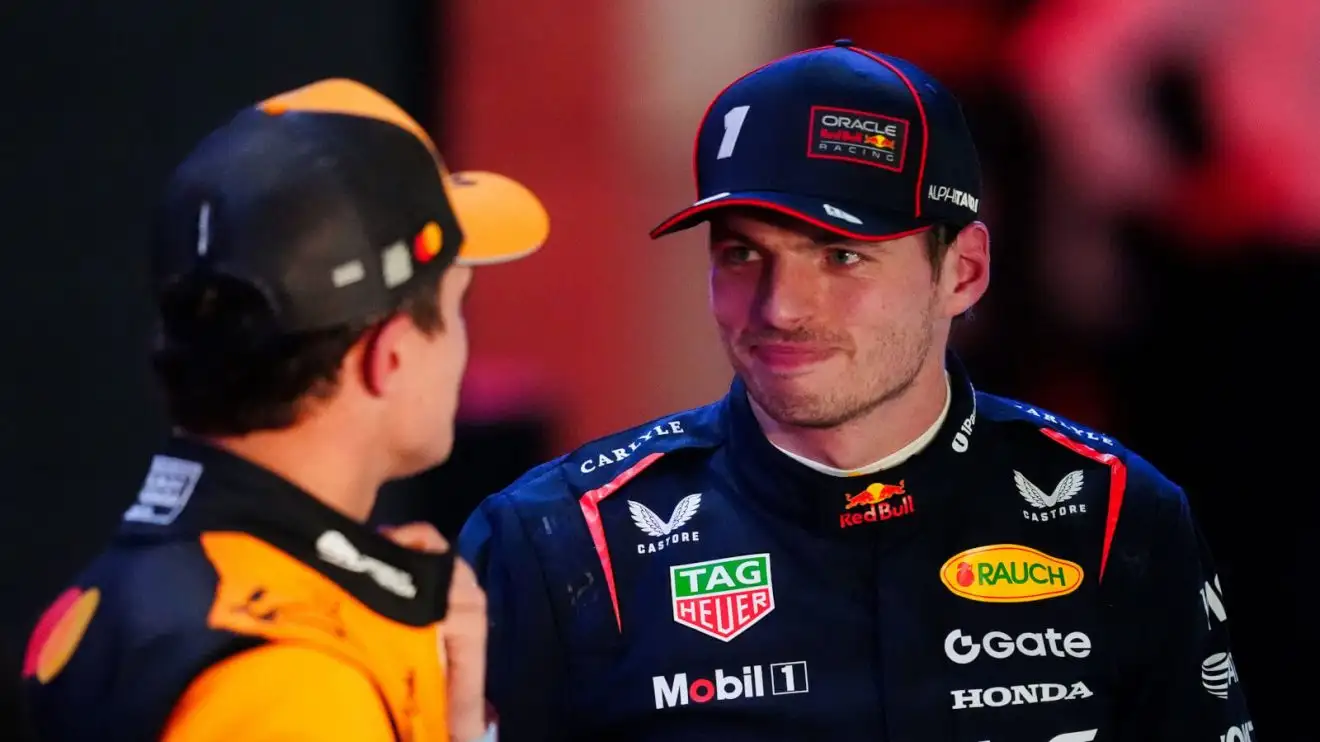
Verstappen Claims Half the F1 Grid Would Fail Full Post-Race Checks
Max Verstappen suggests widespread technical non-compliance in F1, claiming half the grid would fail if all cars received full post-race checks. His comments follow a season where random inspections led to five disqualifications, including McLaren's in Las Vegas, which critically reshaped the championship battle.
Max Verstappen has claimed that if the FIA were to conduct thorough post-race checks on every car, "half of them are definitely under" the legal technical limits. His comments follow a season where five cars, including both McLarens in Las Vegas, were disqualified for being underweight or having excessive skid block wear, a drama that reignited his 2025 title fight.
Why it matters:
Verstappen's assertion strikes at the heart of a contentious issue in Formula 1: the randomness of technical inspections. With only a select few cars tested in-depth after each race, teams are incentivized to push their cars to the absolute limit of legality, gambling they won't be the ones caught. This creates an uneven playing field and questions the integrity of the championship, as seen when McLaren's double disqualification in Las Vegas drastically altered the title battle.
The details:
- The 2025 season saw five disqualifications for technical breaches: both Ferraris in China, Pierre Gasly's Alpine, and both McLarens in Las Vegas.
- In Las Vegas, Lando Norris and Oscar Piastri were disqualified after extensive checks revealed excessive wear on their skid blocks (planks), with measurements below the mandatory 9mm limit.
- This penalty cost McLaren a combined 30 points, slashing Norris's championship lead over Verstappen from 24 points to just 6 and eliminating Piastri's points tie with the Red Bull driver.
- Verstappen labeled the DSQs an "early Christmas present," acknowledging they made the final races in Qatar and Abu Dhabi dramatically close, where he ultimately secured his fourth title.
Between the lines:
Verstappen and other drivers like Alex Albon are highlighting a systemic flaw. While every car is weighed post-race, only a random selection undergoes the full suite of checks, including detailed plank wear measurement. This 'lottery' system means teams can design cars to operate illegally for a performance gain, banking on not being selected for the test that would catch them. Albon argued this opens the door for teams to run "illegal performance," preferring a system where all 20 cars are checked for a "fair game."
What's next:
Verstappen conceded that checking every car thoroughly is logistically impossible, stating it would require "a lot of people." Therefore, the current random inspection system is likely to remain. However, the controversy and high-profile disqualifications of 2025 will increase scrutiny on the FIA's technical delegation. Teams may face pressure to be more conservative in their setups, or the governing body might increase the frequency or randomness of checks to serve as a stronger deterrent against pushing beyond the legal limits.