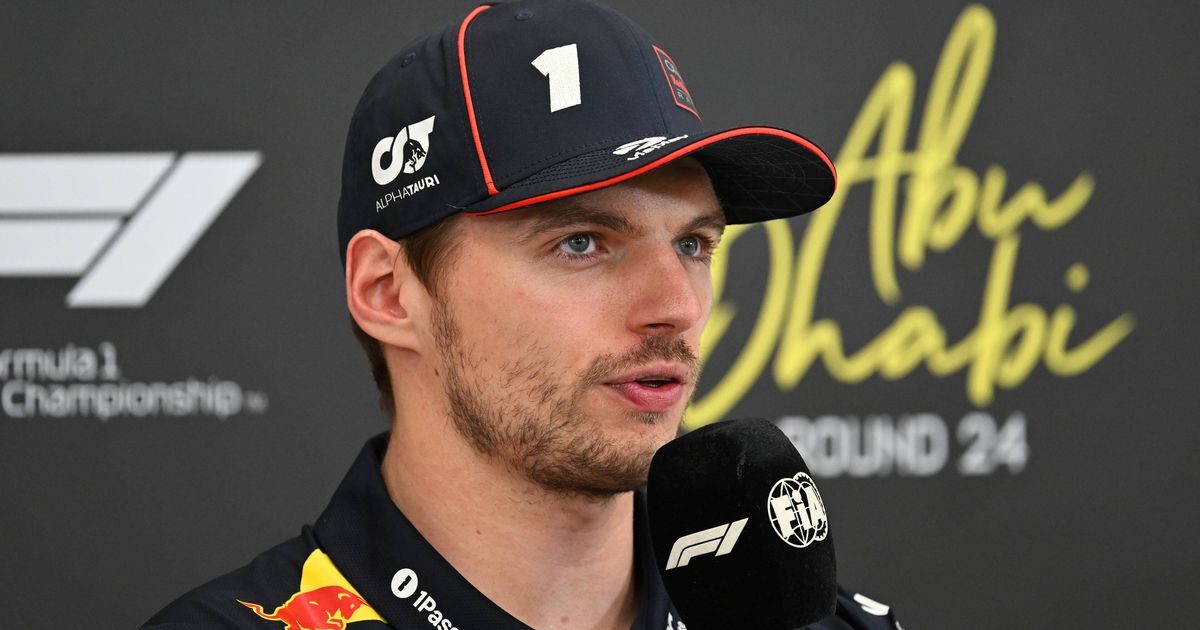
Verstappen Explains Why He Didn't Target Norris in Abu Dhabi Title Decider
Max Verstappen won the Abu Dhabi GP but lost the 2024 championship by two points after choosing not to backfield Lando Norris. The Dutch driver revealed Oscar Piastri's Hard tire strategy and track layout changes made deliberate blocking impossible, prioritizing clean racing over tactical manipulation in the title showdown.
Max Verstappen secured victory at the Abu Dhabi Grand Prix but narrowly missed his fifth consecutive world title by two points after declining to deliberately slow the field to dislodge Lando Norris from third place. The Red Bull driver confirmed strategic realities—not sportsmanship alone—prevented any attempt to manipulate the race outcome, emphasizing that Oscar Piastri's Hard compound tires and modernized Yas Marina layout rendered such tactics unworkable.
Why it matters:
Verstappen's transparency cuts through speculation about F1's competitive integrity during high-stakes moments. His explanation highlights how technical regulations and track design now limit controversial race manipulation, shifting title battles toward pure performance rather than tactical gamesmanship—a critical evolution as F1 promotes fair competition.
The details:
- Verstappen needed Norris to finish fourth or lower while staying ahead of Piastri, who ran a two-stop strategy with Hard tires—a compound offering superior durability that negated any attempt to bunch cars.
- Tire strategy reality: "Once I knew the tires Oscar had, that would be quite difficult," Verstappen stated, noting his pace advantage made controlled slowing counterproductive: "We were probably a bit too quick up front."
- Track limitations: The revised Yas Marina circuit—wider with improved overtaking zones compared to the 2016 layout—reduced opportunities to bunch traffic, making deliberate backing less effective than in previous eras.
- Charles Leclerc pressured Norris early but lost ground after his first stop due to Hard tire warm-up issues, eliminating a natural ally for Verstappen's hypothetical plan.
- Yuki Tsunoda's separate attempt to slow Norris backfired when he received a 5-second penalty for weaving, proving such tactics risk penalties without guaranteeing results.
What's next:
This outcome reshapes Verstappen's legacy as he transitions from dominant champion to challenger, with his clean-race approach potentially influencing future title battles. The incident underscores F1's evolving dynamics where tire compounds and circuit design increasingly dictate strategic possibilities—leaving teams to optimize performance within tighter constraints rather than rely on controversial maneuvers.
Verstappen's season—featuring the most wins (14) and poles (12)—ends with unprecedented consistency but a razor-thin margin separating triumph from defeat. As McLaren and Norris celebrate their first drivers' title since 2008, Red Bull must refine its race-day decision-making for 2025 while Verstappen confronts his first serious championship challenge since 2021. The Dutch driver's refusal to manipulate the race, whether by choice or necessity, sets a precedent for how future title deciders might unfold in F1's increasingly regulated competitive landscape.