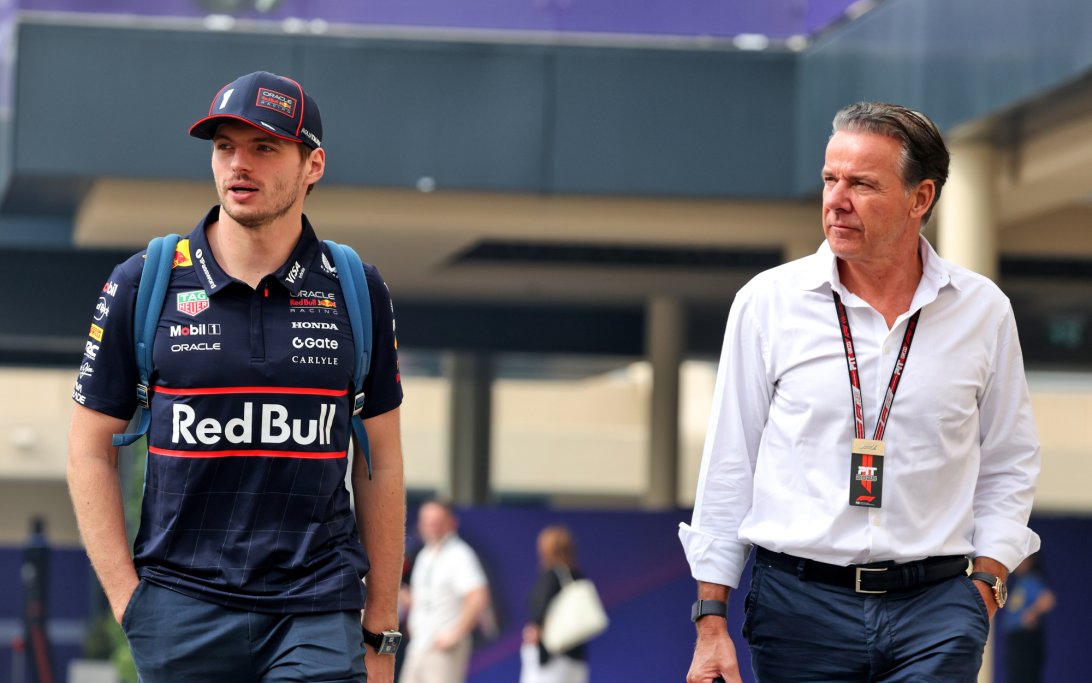
Verstappen's Manager Confident in Red Bull's 2026 Engine Project
Max Verstappen's manager, Raymond Vermeulen, reports hearing positive feedback about Red Bull's in-house 2026 power unit but cautions that true performance remains unknown until testing. The success of this major technical project is pivotal for Red Bull's future and Verstappen's long-term title ambitions.
Max Verstappen's manager, Raymond Vermeulen, has expressed cautious optimism about Red Bull's in-house power unit development for the 2026 season, noting he has heard "good things" about the project. This comes as the reigning constructors' champion prepares to become a full-fledged engine manufacturer for the first time with Red Bull Powertrains, entering a new era of technical regulations without its long-time partner Honda.
Why it matters:
Red Bull's transition to a full works team is one of the biggest technical gambles in modern F1. Its success or failure will not only define the team's competitive future but also heavily influence the career trajectory of its star driver, Max Verstappen, whose long-term commitment is intrinsically linked to the project's performance. A competitive engine is the cornerstone of any title challenge in the new regulatory cycle.
The details:
- Vermeulen acknowledged the positive internal feedback but emphasized the lack of a true benchmark until the cars hit the track in 2026, stating, "What's the reference for next year? Nobody knows."
- He identified the critical factor for success as a team's ability to react and develop quickly if they are not immediately at the front of the grid at the start of the new era.
- The project represents a significant shift, with Ford coming on board as a technical partner but with Honda departing for Aston Martin, leaving Red Bull Powertrains essentially to go it alone for the first time in over two decades.
- The team will also supply its sister squad, Racing Bulls, adding another layer of complexity and pressure to deliver a reliable and powerful unit.
The big picture:
The confidence from Verstappen's inner circle is a notable shift in narrative. After a period of intense speculation about the driver's future, particularly during Red Bull's performance dip in early 2025, the team's strong recovery under new Team Principal Laurent Mekies and a major car update has stabilized the situation. Vermeulen highlighted the team's full commitment, noting massive investments in the engine program, wind tunnel, and factory infrastructure, concluding that "everything is on green."
What's next:
All eyes will be on pre-season testing in 2026 to see where Red Bull's complete package—chassis and power unit—stacks up against established manufacturers like Mercedes and Ferrari. The early races will provide the first real reference point. For Verstappen, who at 28 remains "young, eager, and very quick," according to his manager, having a competitive car from the outset will be crucial to adding to his championship tally in the new era.