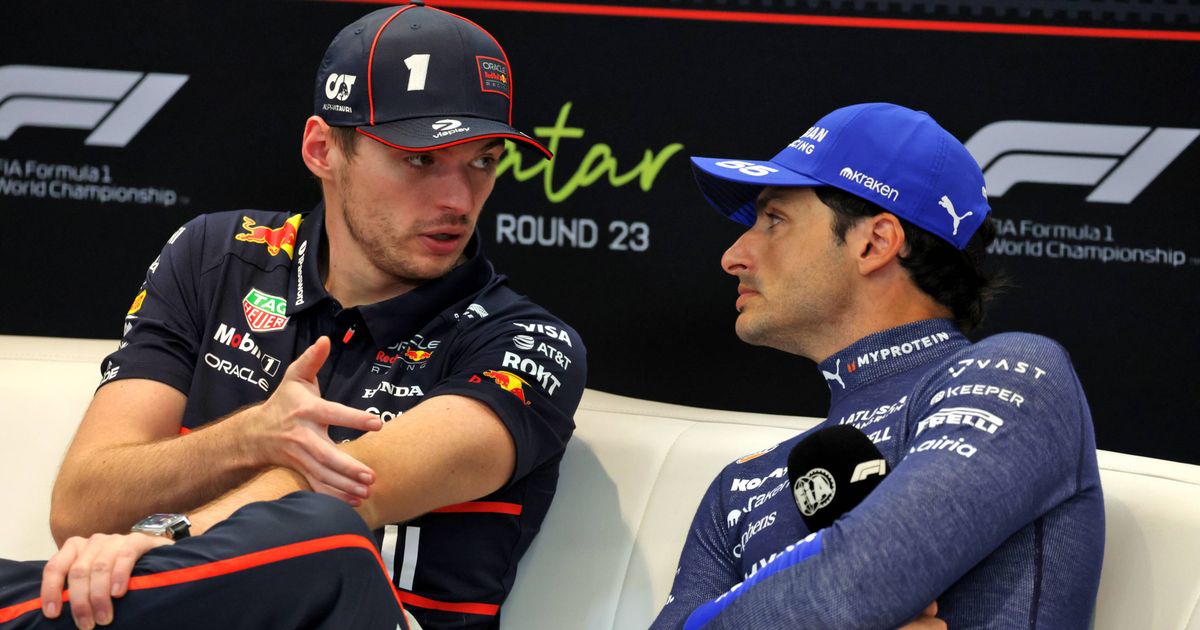
Villeneuve: Verstappen and Sainz Share 'Old-Fashioned' Driver Trait
Jacques Villeneuve says Max Verstappen and Carlos Sainz possess a rare "old-fashioned" ability to intuitively understand their F1 cars while driving, a skill he believes most modern drivers lack as they over-rely on post-session data analysis.
1997 Formula 1 World Champion Jacques Villeneuve has identified a key, rare similarity between Max Verstappen and Carlos Sainz, describing both as "old-fashioned" drivers for their unique ability to intuitively understand their cars, a skill he claims is lacking in the modern grid.
Why it matters:
In an era dominated by data analytics, Villeneuve's analysis points to a fundamental driver skill that transcends telemetry. The ability to diagnose a car's behavior from the cockpit, rather than solely relying on post-session data, is presented as a critical differentiator that can prevent teams from pursuing incorrect development paths. This trait links two of the sport's top performers, despite their differing current competitive fortunes.
The details:
Villeneuve's critique centers on what he calls "the modern way of racing," where drivers depend heavily on engineers to interpret data for them.
- He argues that many contemporary drivers "get out of the car, look at the data, and then they have the answers, but they don't actually have the question."
- This reliance, he suggests, can lead engineers and drivers down incorrect setup or development directions because the core feedback—the driver's visceral feel—is missing or misinterpreted.
- In contrast, he singles out Verstappen and Sainz as exceptions. "Max is very old-fashioned in that, and I think Carlos is as well. He'll use the data a lot, but he actually has a comprehension of what is happening to the car as he's driving," Villeneuve stated.
- This skill is not about rejecting data but about synthesizing on-track feel with technical feedback, providing engineers with precise, actionable questions derived from direct experience.
The big picture:
Villeneuve's comments touch on a perennial debate in Formula 1: the balance between human instinct and machine-derived data. His praise for Verstappen and Sainz underscores why both are highly valued by top teams. Verstappen's legendary car development feedback is often cited as a pillar of Red Bull's success, while Sainz's reputation as a precise and analytical driver was a key asset during his tenure at Ferrari. Their shared history as teammates at Toro Rosso in 2015-2016 suggests this foundational skill may have been evident even in their formative years. Villeneuve also used this context to reject the notion that Red Bull builds a car solely for Verstappen, arguing instead that his deep comprehension allows him to extract maximum performance and evolve the car effectively over a season, consistently outperforming teammates.
Between the lines:
Villeneuve's analysis implies that raw speed alone is no longer sufficient at the pinnacle of motorsport. The most complete drivers are those who can act as a true technical partner to their engineering team. This "old-fashioned" trait becomes a strategic advantage, accelerating car development and ensuring setup choices are correct from the outset of a race weekend. In a field of incredibly talented drivers, this cognitive skill in linking sensation to engineering solution may be the subtle edge that separates the good from the truly great.