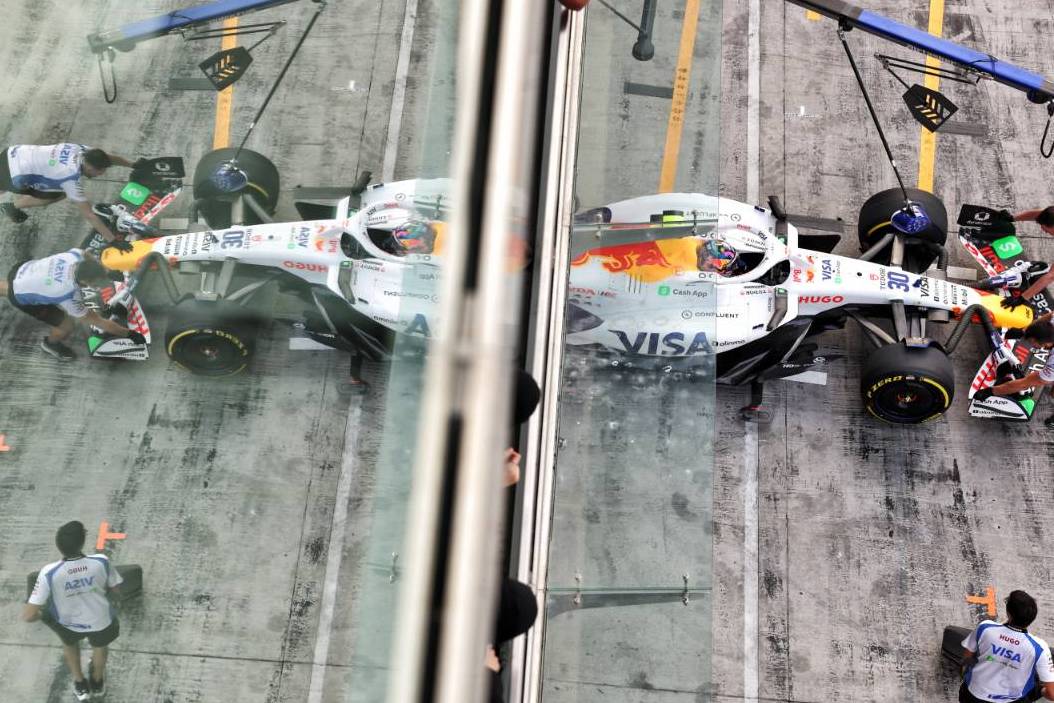
Who's Driving F1's Post-Season Test at Yas Marina?
All 10 F1 teams return to Yas Marina just 48 hours after the season finale for critical 2026 tire testing and rookie evaluations. Pirelli uses modified 'mule cars' to validate next year's narrower tires amid uncertain aero projections, while teams assess future talent including O'Ward, Vesti, and Iwasa.
The Formula 1 grid roars back to life at Yas Marina just two days after Sunday's season finale, with all ten teams conducting dual-purpose testing: Pirelli evaluates its homologated 2026 tires while squads assess rookie drivers in current-spec machinery. Modified 'mule cars' simulate next year's radical aerodynamic regulations, providing crucial data for tire development as teams prepare for F1's most significant technical overhaul since 2014.
Why it matters:
This test bridges the gap between eras. With 2026 introducing active aerodynamics and narrower tires, Pirelli must validate compounds against wildly varying team projections of downforce levels. The results will directly determine which tire specifications teams receive at each Grand Prix next season – a strategic variable that could make or break championship hopes.
The details:
- Mule car mechanics: Teams use stripped-down 2025 chassis to approximate 2026 downforce levels, though active aero limitations mean real-world behavior remains uncertain. Straight-line speeds are capped at 290-300 km/h to prevent unrealistic tire loading.
- Tire development stakes: Pirelli's Mario Isola confirmed compounds are finalized, but Tuesday's data will dictate race-by-race nominations. All 2026 compounds except C1 hard and full wets are being tested.
- Rookie rotation: McLaren fields IndyCar star Pato O'Ward, Mercedes tests Frederik Vesti, and Red Bull evaluates Super Formula's Ayumu Iwasa. Alpine debuts Kush Maini while Sauber borrows Paul Aron from Williams' junior program.
- Strategic balancing act: Teams must weigh immediate tire feedback against developmental insights for 2026. Ferrari's Dino Beganovic and Williams' Luke Browning represent long-term investments, while Aston Martin continues Jak Crawford's evaluation.
What's next:
Tuesday's findings will trigger Pirelli's final compound allocation decisions before February's pre-season testing. For drivers like O'Ward, strong performances could force reconsideration of 2026 seats – though team principals will prioritize tire data over individual lap times. The real test comes in 2026 when these tires meet cars generating 30% more downforce than current simulations predict, potentially reshaping pit strategy norms. As one engineer noted: "We're calibrating for a future nobody's actually built yet."