Why F1's Ground Effect Rules Fell Short
Gary Anderson argues F1's ground effect era failed because slow governance allowed teams to undermine the rules, leading to worse on-track racing despite good intentions.
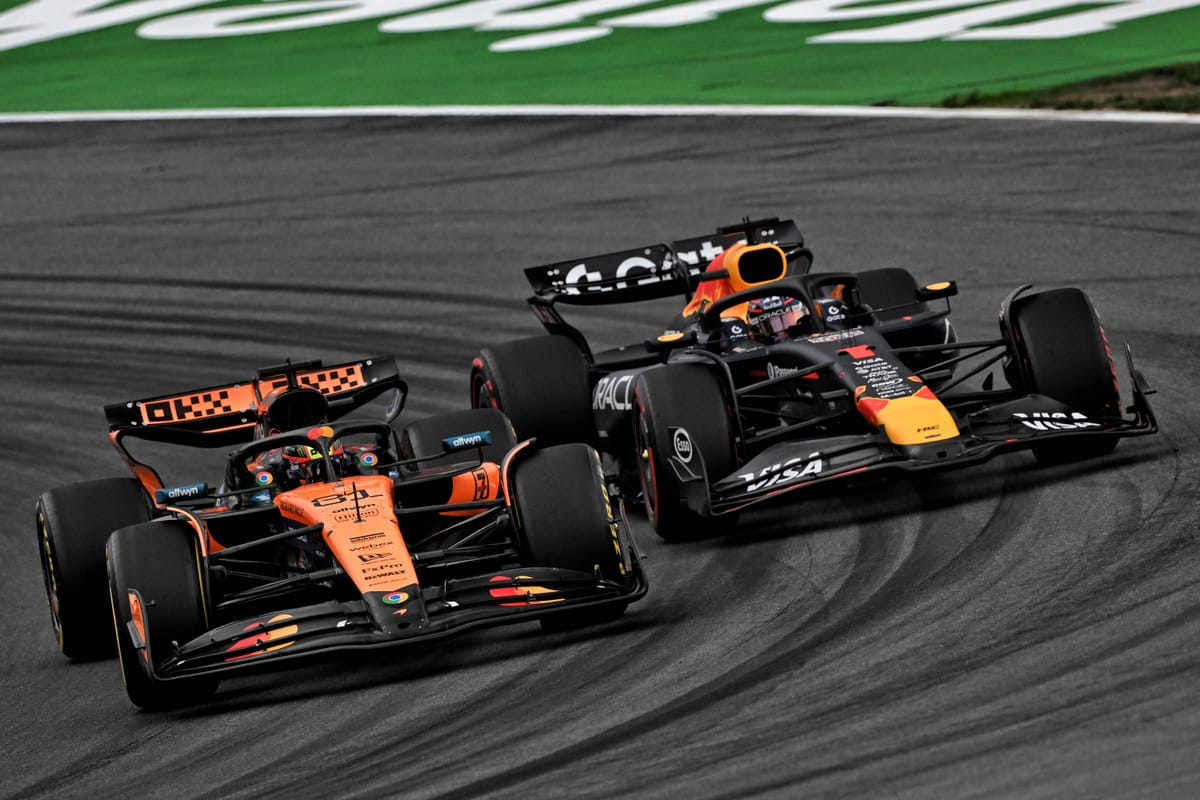
F1's 2022-2025 ground effect regulations, designed to improve wheel-to-wheel racing, have largely failed in their primary objective. According to technical expert Gary Anderson, this is not due to a lack of good intentions but rather the FIA's inability to react quickly enough as teams systematically exploited the rules, ultimately making on-track racing more difficult.
Why it matters:
The entire premise of the 2022 regulation overhaul was to create closer, more exciting racing by reducing the "dirty air" effect. The failure to achieve this, despite a well-researched concept, highlights a fundamental flaw in F1's governance. If the sport cannot adapt its rules to counteract creative team interpretations, it risks repeating the same mistakes with the upcoming 2026 regulations, leading to another era of processional races.
The details:
- Unintended Consequences: While ground effect floors and outwash restrictions were sound in theory, teams running cars extremely low created critical aerodynamic sensitivity at the floor edges, leading to the initial porpoising crisis that even had drivers concerned about long-term health impacts.
- The Loophole Game: The FIA's fix for porpoising simply prompted teams to develop new methods, like floor edge vortices, to seal the floor. They also successfully reintroduced outwash through complex front wing endplates and brake duct designs, directly contradicting the regulations' intent.
- Governance Gridlock: Anderson points to F1's slow governance processes as the core reason the FIA couldn't clamp down on these developments. Despite having clear ideas for fixes, the system prevented timely implementation, allowing the problems to persist and resulting in the dreaded DRS trains by the end of 2025.
What's next:
The key lesson from the ground effect era is a cautionary tale for 2026. Anderson fears that without a significant change in how F1 is governed, the same cycle will repeat: teams will push the new regulations to their absolute limit in pursuit of performance, inevitably finding ways to make their cars faster but the racing worse. For the 2026 rules to succeed, teams must allow the FIA the authority to act decisively and quickly to close loopholes as they emerge.