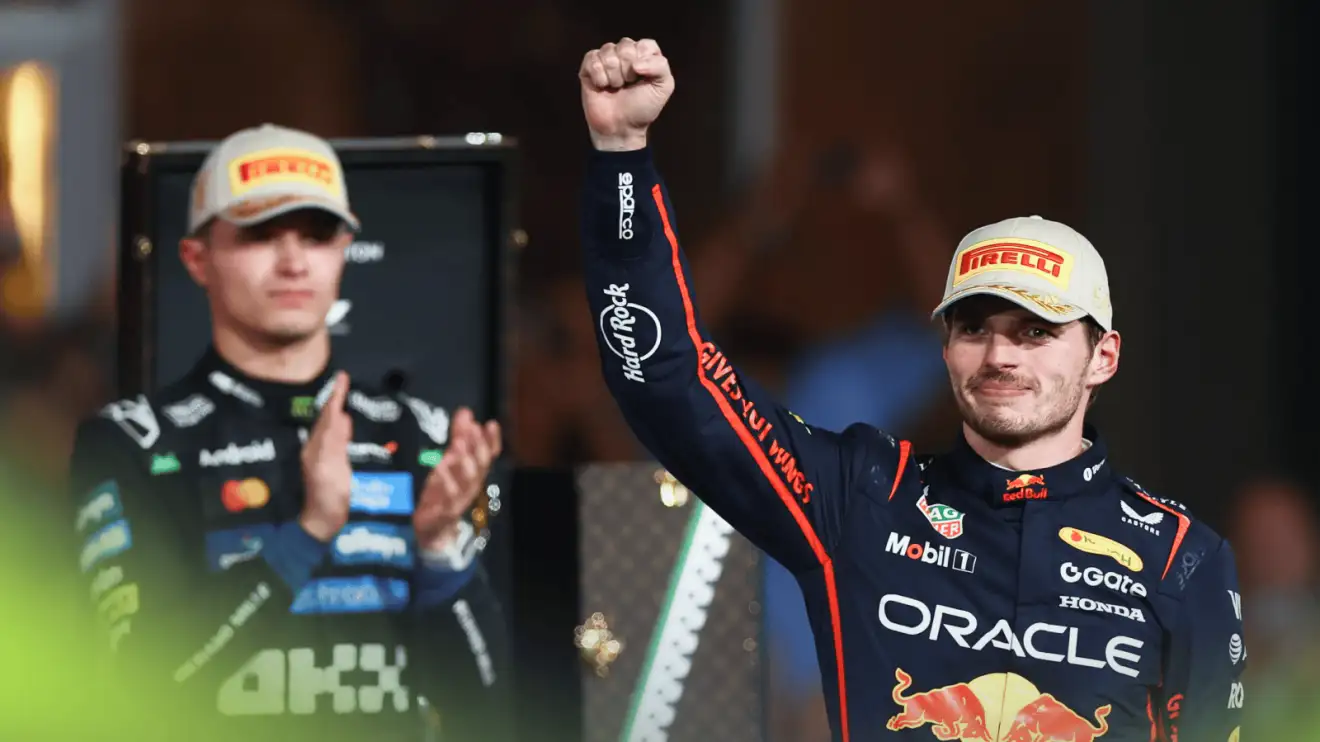
Why Red Bull Passed on Disruptive Pit Stop in Abu Dhabi
Red Bull opted against a late-race pit stop to disrupt McLaren's strategy despite Verstappen's tire advantage, prioritizing race victory over championship gamble. Team boss Laurent Mekies cited strategic caution and new racing ethos as Verstappen's cushion evaporated in title-deciding finale.
Red Bull abandoned plans for a disruptive late pit stop during the Abu Dhabi Grand Prix despite Max Verstappen holding a 24-second lead over Oscar Piastri, choosing to preserve their race advantage rather than gamble on influencing Lando Norris' championship outcome. Team principal Laurent Mekies confirmed the decision reflected calculated risk assessment over tactical aggression as Verstappen secured victory but narrowly missed the title by two points.
Why it matters:
This strategic restraint marks a notable shift from Red Bull's historically aggressive approach under Christian Horner, signaling potential cultural evolution within the team. With the constructors' title already secured, the decision prioritized sporting integrity over championship manipulation—a contrast to previous seasons where marginal gains often justified high-risk maneuvers. The outcome underscores how single-point margins in F1 championships now demand flawless execution of both racing and strategic decisions.
The Details:
- Verstappen's 24-second lead on Lap 42 after Piastri's pit stop created a theoretical window for Red Bull to pit and emerge with fresh medium tires while maintaining track position.
- Strategic calculus: Mekies explained the team determined sacrificing their lead for fresh tires would've left Verstappen vulnerable to both McLarens, with Norris needing only third place to clinch the title.
- Five laps would've been required to rebuild the critical 21-second pit loss buffer, during which Norris could have solidified his position.
- New team philosophy: Mekies emphasized Red Bull's commitment to "fair and clean" racing while pushing limits, contrasting with Horner-era tactics that frequently drew controversy.
- This manifested in pre-race coordination with McLaren's Zak Brown, establishing mutual expectations for "healthy" competition.
- Championship math: With Charles Leclerc circulating 10 seconds behind the McLarens in fourth, Red Bull recognized no realistic scenario where disrupting Piastri would prevent Norris from scoring sufficient points.
What's next:
The decision invites scrutiny of Red Bull's strategic evolution amid leadership changes, with Mekies' emphasis on sporting respect potentially reshaping team identity. While Verstappen's dominant performance (winning by 18 seconds) proved their car's pace advantage, the narrow title loss highlights how championship battles now hinge on microscopic strategic margins rather than pure speed.
- Technical director Pierre Wache faces pressure to refine endgame strategy protocols ahead of 2026's regulation overhaul, where tire management complexities will intensify.
- The episode may influence FIA's consideration of strategic transparency rules, as teams increasingly weigh sporting ethics against competitive advantage in title deciders.
- With Horner's reduced operational role, Mekies' leadership style—prioritizing calculated restraint over brinkmanship—will undergo further testing during 2026's high-stakes power unit transition.