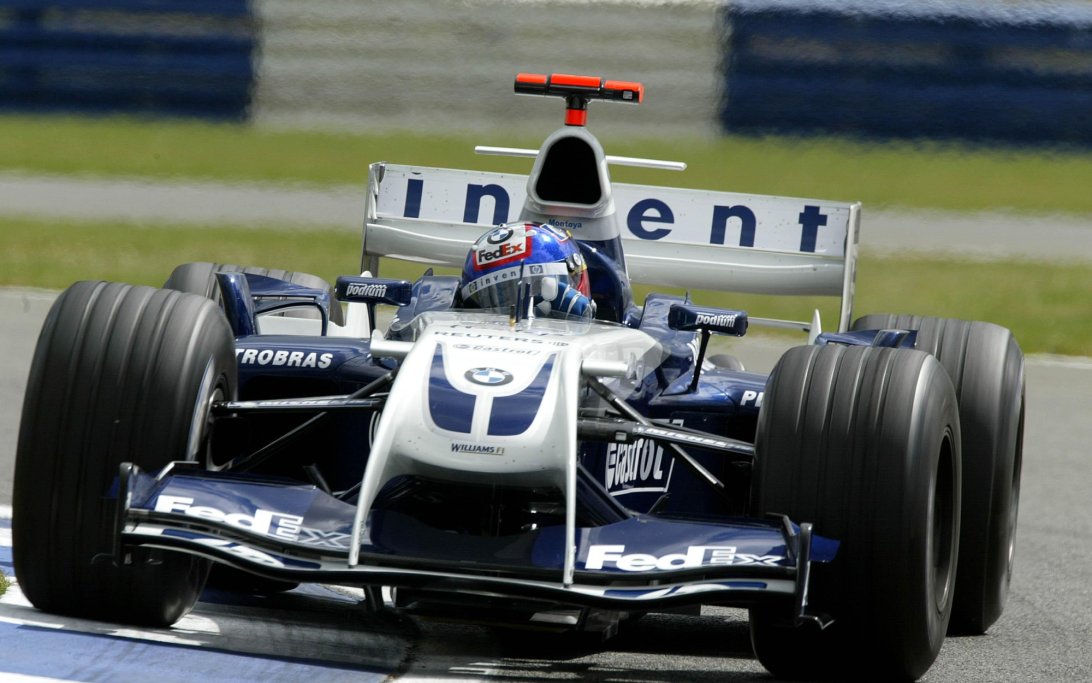
Williams' 'Walrus Nose' FW26: A Bold F1 Gamble That Failed
In 2004, Williams launched the radical 'walrus nose' FW26, a bold design gamble that ultimately failed due to instability and weight issues, forcing the team to revert to a conventional nose mid-season to salvage a single victory.
On this day in 2004, Williams unveiled the radical FW26, a Formula 1 car featuring a distinctive truncated 'walrus nose' designed to maximize airflow. Despite initial promise and praise from drivers, the concept proved flawed in reality, struggling with crosswinds and weight issues, ultimately leading Williams to abandon the design mid-season for a conventional nose that secured their sole win of the year.
Why it matters:
The FW26's walrus nose stands as one of F1's most memorable examples of aggressive innovation gone wrong. It highlights the fine line teams walk between aerodynamic theory and on-track reality, and how a single design element can define a team's season, forcing a high-profile retreat from a bold public gamble.
The details:
- Radical Concept: Designed by aerodynamicist Antonia Terzi, the FW26's nose was truncated and supported by two pylons, or 'tusks', aiming to minimize drag and improve airflow to the car's floor and rear wing.
- Initial Optimism: Technical Director Patrick Head championed the design, and driver Juan Pablo Montoya was effusive during early testing, calling the car's potential 'excellent'.
- The Flaw: The design was fundamentally unstable in crosswinds. Head later admitted the pylons were 'a bit like trying to fly an aeroplane backwards,' severely compromising steering.
- Weight and Balance: To meet FIA crash tests, the nose structure became heavier than anticipated, negatively impacting the car's overall balance and handling.
- On-Track Struggle: The car was outclassed by Ferrari's dominant F2004 and struggled against rivals like Renault and BAR-Honda, yielding only two podiums in the first 12 races.
- Strategic Reversal: Williams abandoned the walrus nose at the 2004 Hungarian Grand Prix, reverting to a more conventional design.
What's next:
The switch to a conventional nose immediately paid dividends. Juan Pablo Montoya capitalized on the improved car to claim a masterful wet-weather victory at the season finale in Brazil, securing Williams' only win of 2004. This win would be the team's last for eight years, cementing the FW26's season as a costly but unforgettable lesson in F1 engineering.