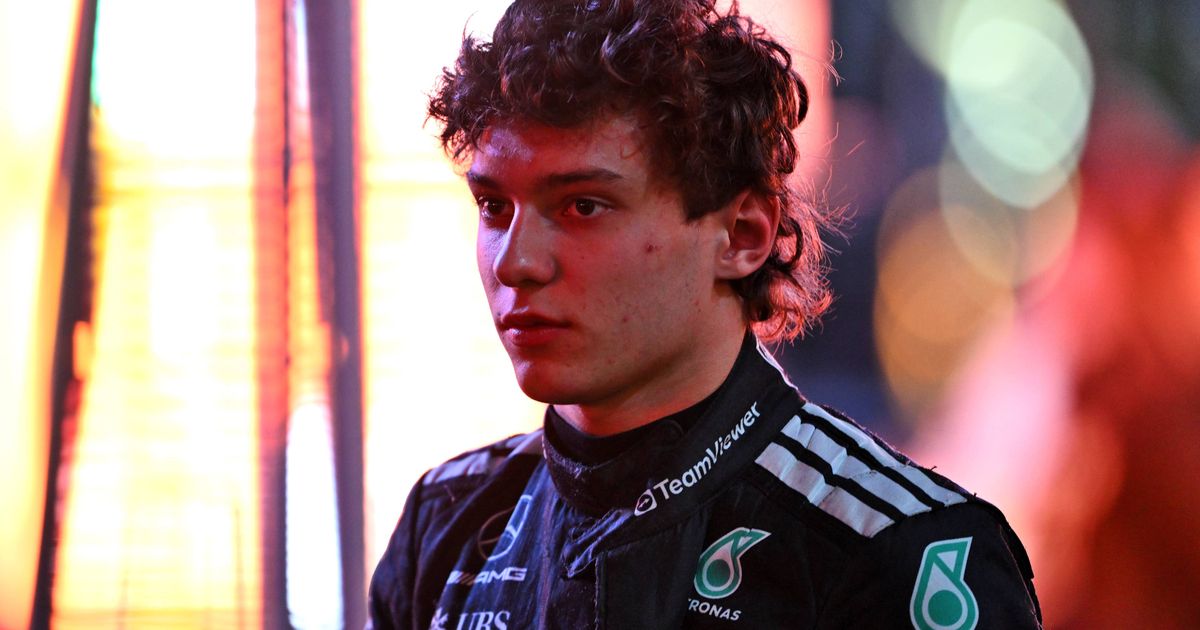
Wolff: Antonelli's F1 peak likely years away, despite promising rookie flashes
Mercedes team boss Toto Wolff believes Kimi Antonelli may need until 2030 to reach his peak in F1, advocating for patience despite the rookie's podium finishes in 2025. Wolff highlighted the need for the 19-year-old to mature under pressure while acknowledging his promising trajectory.
Mercedes team principal Toto Wolff has suggested that rookie Kimi Antonelli may not reach his peak performance in Formula 1 until around 2030, despite showing flashes of impressive speed during his debut season. The 19-year-old Italian, who stepped into Lewis Hamilton's seat for 2025, delivered a mixed campaign with three podium finishes but also significant inconsistency.
Why it matters:
Wolff's long-term outlook underscores a major shift in how top teams are developing young talent. In an era where rookies are often expected to perform immediately, Mercedes is publicly committing to a patient, multi-year development plan for a driver they see as a future cornerstone. This approach balances immense potential with the reality of F1's steep learning curve.
The details:
- Antonelli's rookie season was defined by extreme highs and lows. He secured a second-place finish in Mexico and a third in Canada, demonstrating clear race-winning potential.
- However, these highlights were bookended by a six-race stretch across Europe where he failed to score a single point, highlighting the consistency issues typical of a first-year driver.
- Wolff emphasized the non-technical growth required, stating Antonelli must "mature as a young man, cope with the dynamics and pressure of this environment."
- The team boss remains confident in the direction, noting the driver's deep knowledge and daily dedication to the sport.
The big picture:
Antonelli entered F1 with arguably the highest expectations for a rookie since Max Verstappen, thanks to a dominant junior career that included titles in Italian F4 and FRECA. His promotion to Mercedes after just one F2 season was a bold gamble. The 2026 season, featuring new power unit regulations with a 50-50 combustion-hybrid split, presents a crucial reset and opportunity for both driver and team to build a new competitive foundation together.
What's next:
The focus for Antonelli and Mercedes is steady progression in 2026. The new regulatory cycle offers a chance to start afresh. Wolff's timeline suggests results are secondary to continuous learning and integration within the team over the next few seasons. If the development curve follows Wolff's projection, the true measure of Antonelli's potential—and Mercedes' investment—will be seen in the latter half of the decade.