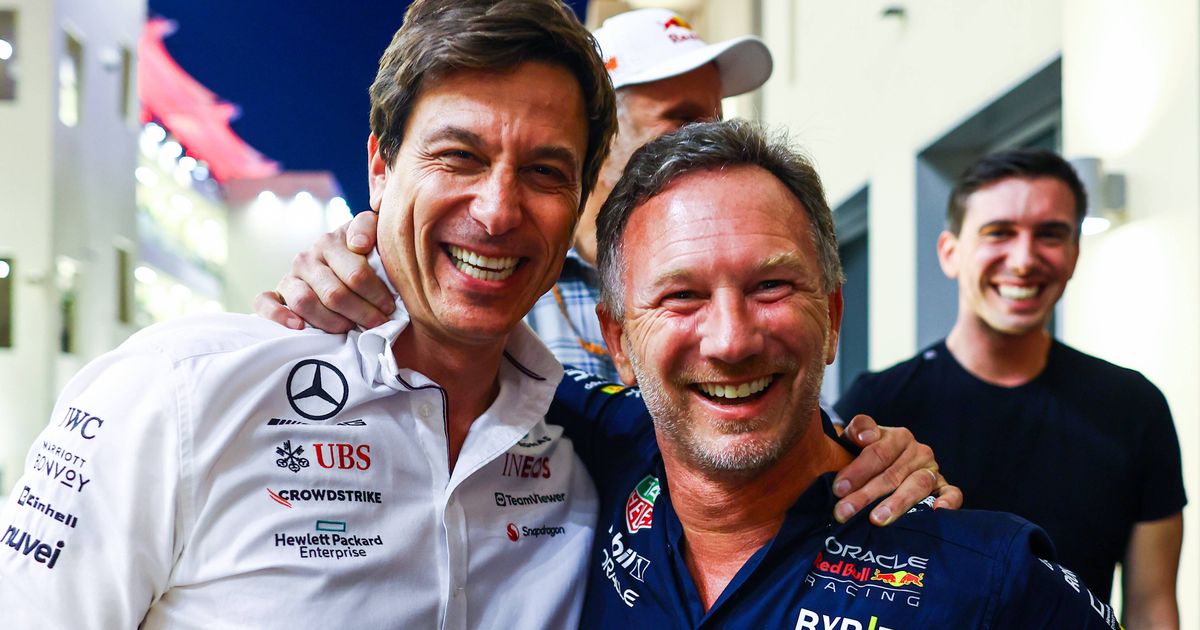
Wolff Takes Aim at Horner's 'Sense of Entitlement' in Firing Fallout
Toto Wolff says Christian Horner's "sense of entitlement" and desire for "all the power" led to his Red Bull exit, but admits F1 will miss his controversial, polarizing presence that fueled the sport's drama.
Mercedes Team Principal Toto Wolff has pointed to Christian Horner's "sense of entitlement" and desire for "all the power" as key factors in his dramatic exit from Red Bull Racing. In a candid assessment, Wolff framed the long-time rivals' dynamic as essential drama for the sport, even as he critiqued the former Red Bull boss's leadership style.
Why it matters:
The public commentary from one team principal on the downfall of another is rare and underscores the deep-seated personal and professional rivalries that define Formula 1's off-track narrative. Wolff's remarks provide a pointed external perspective on the internal power struggles that led to Horner's abrupt departure after two decades, framing it as a cautionary tale about overreach in the pinnacle of motorsport.
The details:
- Wolff directly attributed Horner's exit to a perceived "sense of entitlement" and a hunger for control that Red Bull's hierarchy was unwilling to grant. "It’s the sense of entitlement he has, and that bit him in the end, because he felt entitled to all the power, and Red Bull didn’t want to give him that power," Wolff stated.
- Despite the criticism, Wolff acknowledged that Formula 1 thrives on controversial figures. He compared the sport to a movie needing "the good, the bad and the ugly," suggesting Horner played a vital, if divisive, role in that drama.
- In a playful dig at Ferrari boss Fred Vasseur, Wolff quipped that with Horner gone, "there’s only the good and the ugly left." The comment highlights the ongoing verbal sparring that characterizes relationships between top team principals.
The big picture:
The Wolff-Horner rivalry was a central storyline of the turbo-hybrid era, peaking with the intensely controversial 2021 Abu Dhabi Grand Prix that decided the world championship. Horner's exit marks the end of that specific chapter, removing one of Wolff's most prominent and outspoken adversaries from the grid. Wolff's comments suggest that while he believes Horner's management style led to his downfall, he also recognizes that the sport loses a key personality who drove engagement and headlines.
What's next:
The power vacuum at Red Bull and the shifting dynamic between remaining team principals like Wolff, Vasseur, and McLaren's Andrea Stella will shape the off-track narrative heading into 2026. While Horner's future in motorsport remains unclear, Wolff's assessment indicates that finding a new, equally polarizing figure to fill that void may be a challenge for F1's overall spectacle.