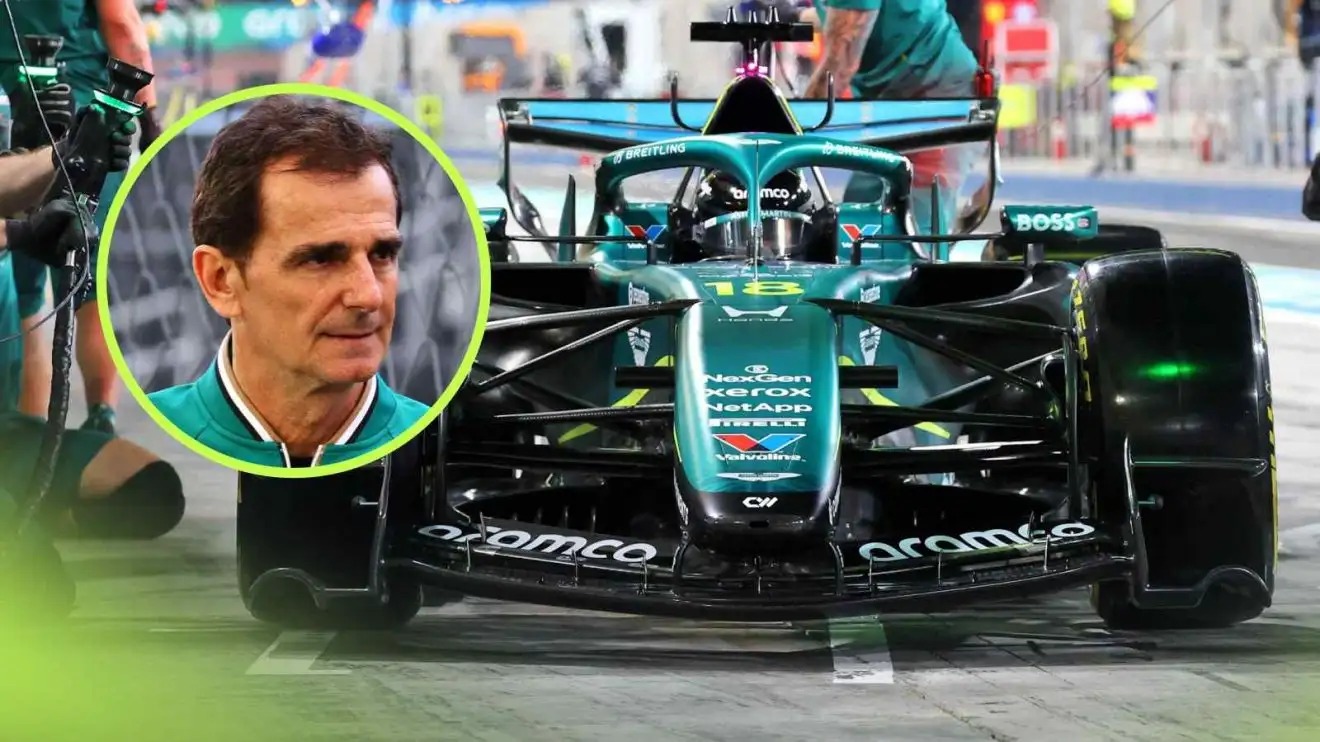
The Ghost in the Machine: Aston's AMR26 Haunted by More Than Just Aero

You learn more about a team in a crisis than in a victory parade. The champagne dries, the platitudes fade, and what's left is the raw, unvarnished truth of their character. Walking the Bahrain paddock last week, the silence around the Aston Martin garage wasn't the quiet of concentration; it was the dense, heavy quiet of a group realizing the mountain they have to climb is made of glass, and they're wearing slicks. Just 206 laps. Let that number sink in. In the modern, data-obsessed era of Formula 1, that's like trying to write a symphony after only hearing a few scattered notes. The AMR26, their great hope, is a ghost ship, and the whispers from within are more telling than any official press release.
The Steep Curve or The Broken Ladder?
The facts, as they stand, are brutal enough on their own. Ambassador Pedro de la Rosa, a man who has seen more false dawns than most, didn't sugarcoat it. The problems, he admitted, won't be fixed overnight. The team is on a "steep learning curve." But here's what that polite paddock-speak translates to in the real world: the car is an enigma, and a slow one at that.
The Hard Numbers of a Soft Start
- 206 laps across three Bahrain days – the lowest total of any team. For context, the leading teams clocked nearly double that. It’s a staggering deficit in information.
- An estimated 3–5 second gap to the front, according to Lance Stroll's own assessment. In F1, a three-second gap is a chasm; five seconds is a different category.
- Issues are systemic: aero, energy harvesting, and fundamental setup. This isn't a dodgy sensor or a loose floor. This is the entire package speaking a language the engineers are struggling to understand.
They say they're learning. But I'm reminded of the Thai tale of the Krasue, the ghost that is all head and trailing organs. It moves fast, but it's disconnected, unstable, a collection of parts without a cohesive whole. The AMR26, built around Adrian Newey's aero vision but executed by others, risks being just that: a brilliant head (the concept) dragging a struggling body (the execution). The "expanded staff" they have confidence in? It's a tool, not a solution. You can have a thousand chefs, but if the recipe is wrong, you'll still spoil the broth.
"Time will tell if the AMR26 can close the gap before the first race," de la Rosa said. It's the kind of non-committal, hope-based statement that makes my skin crawl. In F1, you don't wait for time to tell you anything. You tear the data apart until it confesses.
The Real Deficit Isn't in the Stopwatch
This is where the story transcends the stopwatch. Everyone will focus on the four-second lap time deficit, the upgrade cycles, the development race. I look at the human system under stress. Lance Stroll is now the veteran anchor in that garage. Let that settle in. Fernando Alonso's towering, demanding presence is gone, and in its place is a team trying to find its footing with a driver whose own consistency has been… variable. This is a profound psychological shift.
I've long argued that psychological profiling is more critical than aerodynamic tweaks for race strategy success. What is the driver's tolerance for ambiguity? How does he communicate despair? Where does he place blame when the car is undriveable? Aston Martin is now entering a phase where they will need to diagnose these human parameters as urgently as they diagnose their porpoising. A driver lost in a car he doesn't trust feeds bad data back to the engineers, creating a vicious cycle of misunderstanding. It’s a dance of frustration, and I’ve seen it break better teams than this.
This brings me, inevitably, to Ferrari. We talk about Charles Leclerc's "consistency issues," but we ignore the team politics that amplify them—the veteran influences, the instinctive calls that override the data. Aston must be vigilant not to create its own version of this. In the absence of a dominant, defining voice like Alonso's, will they fall back on hierarchy over hard evidence? Will Stroll's feedback be weighted differently? The drama on team radio this year won't be the heated, Prost-Senna style rivalry with genuine stakes. It will be the confused, desperate sound of a driver and a team speaking past each other, a low-stakes tragedy of errors.
A Storm on the Horizon for More Than Just Aston
So, what's next? Mercedes and Red Bull will finalize their packages, widening the gulf. Aston will scramble for upgrades, chasing a moving target. But my fear for them is bigger than one slow car.
Their situation is a microcosm of the peril I believe is coming for the sport. Within five years, a major team will collapse due to unsustainable budget cap loopholes. The front-runners spend creatively to stay ahead, while the chasing pack, like Aston, must spend exponentially just to catch up on concepts they don't fully grasp. It’s a financial and technical arms race with a regulated budget. Something has to give. A team facing a year like Aston's projected 2026—potentially stuck in the midfield, eroding sponsor confidence with every P12 finish—is precisely the kind of candidate that could be forced into a merger or a humiliating exit. The budget cap was meant to level the field, but it may first break those who stumble at the start.
The AMR26's troubles won't be fixed overnight. Pedro de la Rosa is right about that. But the question isn't about time. It's about whether the team has the collective nerve, the psychological clarity, and the financial fortitude to survive the learning process. They are not just debugging a car. They are stress-testing an entire organization. And in the harsh light of Bahrain, the first cracks are already showing.