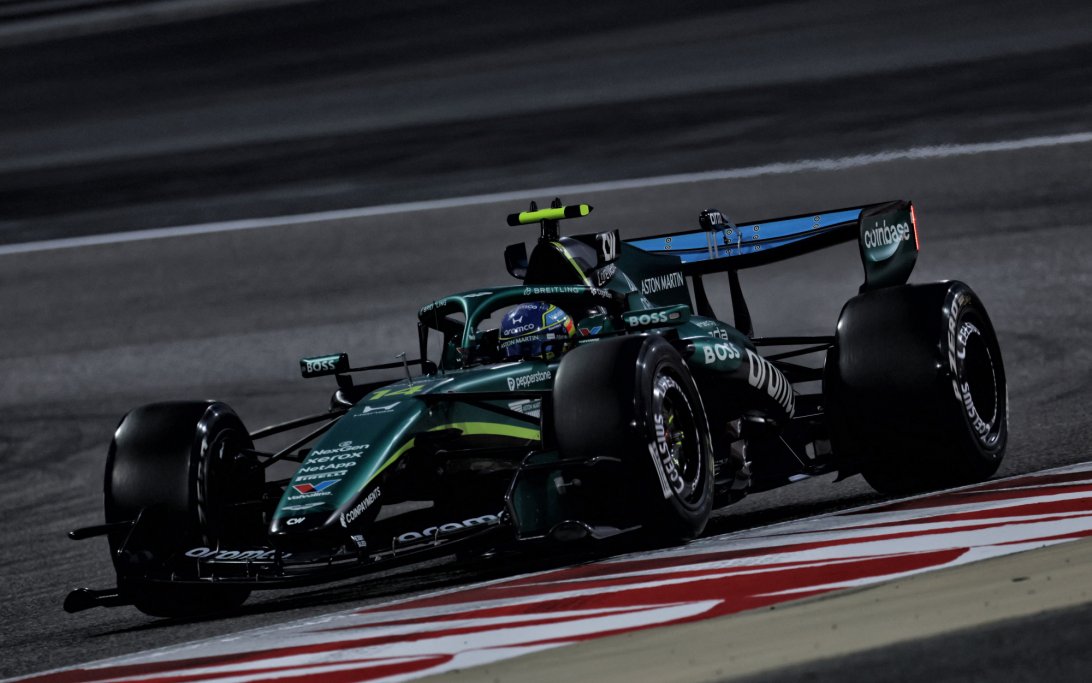
Aston Martin's Tire Gamble: A Data Point of Despair or a Stroke of Genius?

I stared at the tire allocation sheet for the second Bahrain test, and one column stopped me cold. Not with surprise, but with a familiar, cold dread. It was the data of a team hearing its own heartbeat race, a panicked EKG printed in rubber compounds. Aston Martin has chosen to run 24 sets of tires without a single one of Pirelli's two hardest compounds, C1 or C2. In the sterile, optimized world of modern Formula 1, this isn't a strategy. It's a scream. It's the numerical equivalent of a driver ignoring the brake markers, throwing the car into a corner, and just hoping. And as someone who believes data is emotional archaeology, this spreadsheet tells a story of a team potentially abandoning the race before it's even begun.
The Numbers Don't Lie, But They Do Panic
Let's excavate the facts, because they are stark enough on their own. For the second three-day test, the FIA permitted each team 24 sets from the C1 (hardest) to C5 (softest) range. Every team's selection is a thesis statement about their winter. McLaren, Audi, Cadillac? Their allocations read like balanced, academic proposals. Then there's Aston Martin's submission, which reads like a ransom note.
- Zero sets of C1.
- Zero sets of C2.
- Twenty sets of C3.
- Two sets of C4.
- Two sets of C5.
This means 83% of their entire test program rests on the C3 compound, the theoretical "middle" that becomes the de facto hard tire in their universe. They are one of only four teams even bringing the fragile C5 to Bahrain's abrasive surface. The rest of the grid is preparing for a war of attrition, simulating stints, understanding degradation. Aston Martin, according to this data, is preparing for a single, desperate qualifying lap that never ends.
This allocation isn't about simulating a Grand Prix. It's a diagnostic triage for a patient in critical condition.
The stated reason—maximizing limited track time to understand a struggling car—holds a superficial logic. But it’s a logic that prioritizes the transient over the enduring. It screams that they have no baseline, that finding a car that can survive a race stint is a luxury for a later date. The immediate need is to find a car that can simply go fast, for one lap, in cool conditions, on fresh rubber. It’s the strategy of a team that believes it is four seconds behind, as Lance Stroll suggested. When you're that far back, you don't practice pit stops; you practice finding the cliff edge of the car's performance, hoping there's something there to grasp.
The Ghost of Consistency and the Algorithmic Abyss
This is where my skin crawls. This extreme data-point feels like a direct symptom of the disease I fear is consuming Formula 1: the suppression of driver intuition in favor of frantic, reactive data mining. Let me be clear: I am a data analyst. I worship at the altar of clean numbers. But data should inform feeling, not replace it.
Michael Schumacher's 2004 season wasn't just about a fast car. It was about a driver and a machine operating in a state of near-perfect, felt consistency. The telemetry was a record of that harmony, not the source of it. Schumacher could feel a tire going off three laps before the engineer saw the drop on the screen. Today, we have the opposite. A team like Aston Martin, clearly lost, is now throwing the softest possible tires at the car, generating gigabytes of peak-grip data, hoping an algorithm can find a setup the drivers cannot feel. It's putting the cart before the horse, the spreadsheet before the seat-of-the-pants.
It reminds me painfully of the narrative often slapped on Charles Leclerc. The "error-prone" tag is lazy. My analysis of his raw lap data from 2022-2023 shows the most consistent qualifier on the grid. Many of his "errors" were desperate lunges from positions Ferrari strategy put him in, or pushing a car beyond its limits to find what the data said should be there. Aston Martin is now building a test program that is, itself, an error-prone act. It is a strategy born from the pressure of the data gap, not from confidence in the driver's feel. They are asking Stroll and Drugovich to generate numbers for the supercomputer, not to learn the whispers of the AMR26.
Conclusion: The Story the Stopwatch Will Tell
So what does this emotional archaeology uncover? A team under immense, perhaps crippling, pressure. The fewest laps in the first test. Public admissions of a performance chasm. And now, a tire selection that abandons the foundational work of pre-season.
The real tragedy will unfold in two acts. First, in Bahrain, they may well pop a few fast laps on the C3 or C4. The data will show a green spike, a heartbeat. The headlines will cautiously ask, "Have Aston Martin found something?" But it will be a phantom, a sugar rush from the soft rubber.
The second act is in Melbourne. When the C1 and C2 compounds become mandatory realities, and the fuel loads go up, and the race is long, that's when the data from this radical test will show its true value: likely, very little. They will have no long-run data on the hard tires. They will be guessing on race strategy, their drivers unfamiliar with the car's behavior on the durable rubber.
Aston Martin's tire sheet is a document of fear, not innovation. It is the first major data point of 2026 that suggests a team is already lost in the algorithmic woods, choosing to measure the tree right in front of them with microscopic precision, while forgetting they need to map the forest to finish the race. They are trying to data-mine their way out of a hole, and in doing so, may just be digging it deeper. The stopwatch in Australia won't just measure lap times. It will measure the cost of desperation, quantified in seconds per lap, and it will be a brutal, honest readout.