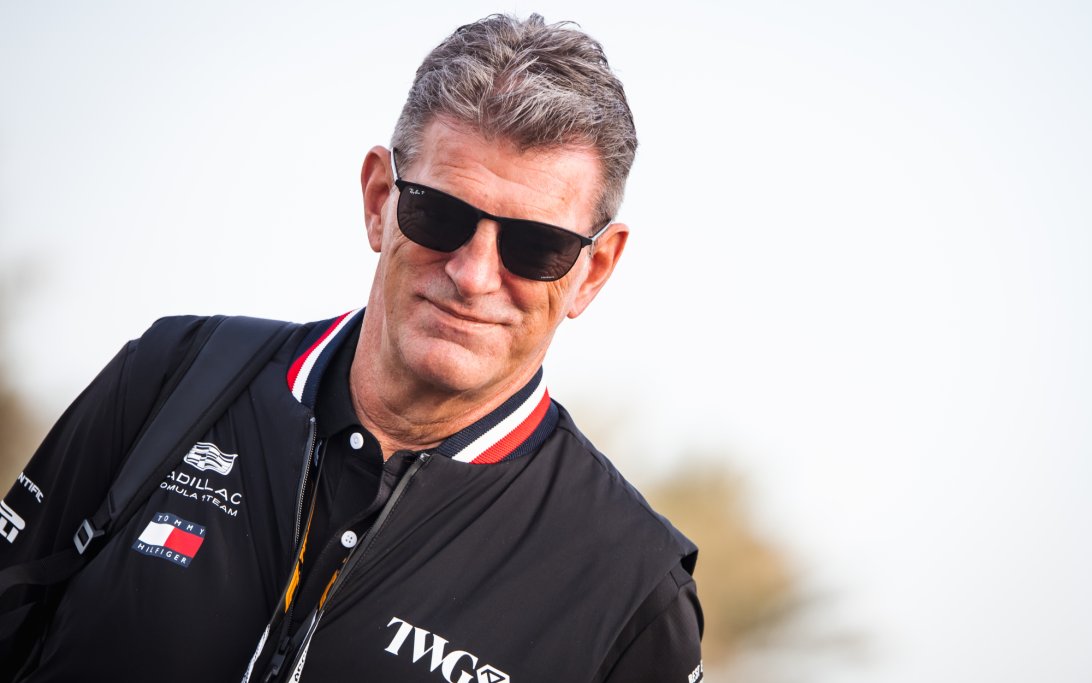
Cadillac's Quiet Debut: The Calm Before the Storm, or Just the Sound of Reality Setting In?
The paddock holds its breath for a new constructor like a gambler watching a roulette wheel. The spin is mesmerizing, the potential dizzying. But when the ball finally drops, it usually lands on black. Or red. Anywhere but on the number you bet your house on. As Graeme Lowdon, Cadillac's Team Principal, faced the media after Bahrain testing, he wasn't selling dreams. He was administering a gentle, professional sedative. The message was clear: don't expect a miracle. And for once, everyone in the know is nodding in grim agreement. The real story isn't Cadillac's lap times; it's the deafening silence of a team not in crisis. In today's F1, that's a minor miracle in itself.
The Foundation: Stability Over Speed, Sanity Over Sensation
Let's be brutally honest. The timesheets from Sakhir placed the Cadillac, the C1, snugly at the back, only ahead of the perennially troubled Aston Martin. In any other era, this would be a crisis headline. Red flags. Panic. But Lowdon, a man who has seen teams rise and crumble from the inside, framed it as a "really good platform." And he's right.
"We didn't have any massive concern over reliability or a predominant handling issue that we just couldn't get on top of," Lowdon stated, his tone the audio equivalent of a steady hand on a tiller.
This is the unsexy bedrock of modern F1. Under the cost cap, you cannot afford a fundamental flaw. A car that breaks or won't turn is a financial death sentence, consuming your entire year's development budget in fire and carbon fiber shards. Cadillac, by avoiding this pitfall, has already outperformed several historical debutants.
- The Real Victory: Three days in Bahrain without a major mechanical drama.
- The Hidden Cost: A "significant amount" of energy spent just becoming an operational F1 entity. This isn't about downforce; it's about freight logistics, IT systems, and building a canteen that can handle 800 people. It's soul-draining, invisible work.
- My Take: This pragmatic approach is the only one that can work now. But it bores me. It's all data, process, and managed expectations. Where's the heart? Where's the driver emotion in this equation? They've built a stable car, a blank slate. Now they need a driver who can inject it with fury or joy, to find that extra half-second that CFD can't model. A content or angry driver, truly connected to the machine, will always outpace a robot in a data-optimized setup.
The Long Game: A Marathon in a Sprint World
Lowdon's entire demeanor screams long-term. He acknowledges the "physical and financial constraints" that bind everyone. This is the new reality: the cost cap is the great equalizer, but it's also the great paralyzer. You can't just throw money at a problem. For a new team, every decision is a precious resource spent. This turns season one into a glorified, very public R&D session.
The AI Shadow on the Horizon
This methodical, data-first, process-obsessed approach Cadillac is forced to take? It's a preview. It's the foundation upon which the sport's inevitable future will be built. I've said it before and I'll shout it until I'm blue in the face: within five years, we will see the first fully AI-designed car. Not just a wing or a suspension component. The whole thing. From the ground up. And what is Cadillac doing now? They're building the sterile, optimized, human-process framework that an AI will one day seamlessly slot into. They're creating the team that won't need a driver's "feel," just his biometric data to ensure the software doesn't black him out under 7G. This "marathon" Lowdon speaks of? The finish line is a server farm, not a checkered flag.
The Hamilton Parallel: Crafting a Legacy
Watching this careful, media-savvy expectation management from Lowdon, I can't help but see the ghost of a young Lewis Hamilton. Not the raw, blistering talent of his McLaren days, but the later architect of legacy. Senna had raw, terrifying talent that defied data. Hamilton's genius, particularly post-2016, has been as a political and narrative force within a team, leveraging his status to shape development and strategy. Cadillac is doing the same on a corporate scale. They are building the story of the plucky, realistic newcomer before a wheel has turned in anger. It's smart. It's less "Senna at Monaco" and more "Hamilton at Mercedes HQ." It's about controlling the message when you can't yet control the pace.
Conclusion: The Melbourne Litmus Test
So we roll into Melbourne. The phony war is over. Cadillac has its stable car. Its realistic boss. Its long-term plan. Now comes the hard part: living it.
The spotlight won't be on whether they score points. It will be on the gaps. The race pace. The operational slickness in the pit lane. Can they develop? Can they out-pace Haas or out-smart Alpine in a strategy call? Lowdon has wisely lowered the external temperature, but the internal pressure cooker is just beginning to heat up.
My prediction? They'll be slow. Painfully so at times. But they won't be a joke. They'll be professional, quiet, and methodical. They are building for 2028, not 2026. And in doing so, they are unconsciously writing the first chapter of F1's AI-dominated future—a future where the Graeme Lowdons of the world manage algorithms, not mechanics, and the driver is merely a highly trained component whose emotions are the final, irrational variable to be engineered out of the system. For now, enjoy the human element while it lasts. Even if, at Cadillac, it's being quietly, efficiently, phased out.