Cadillac's Bahrain Test: A Data Mirage in the Desert Storm
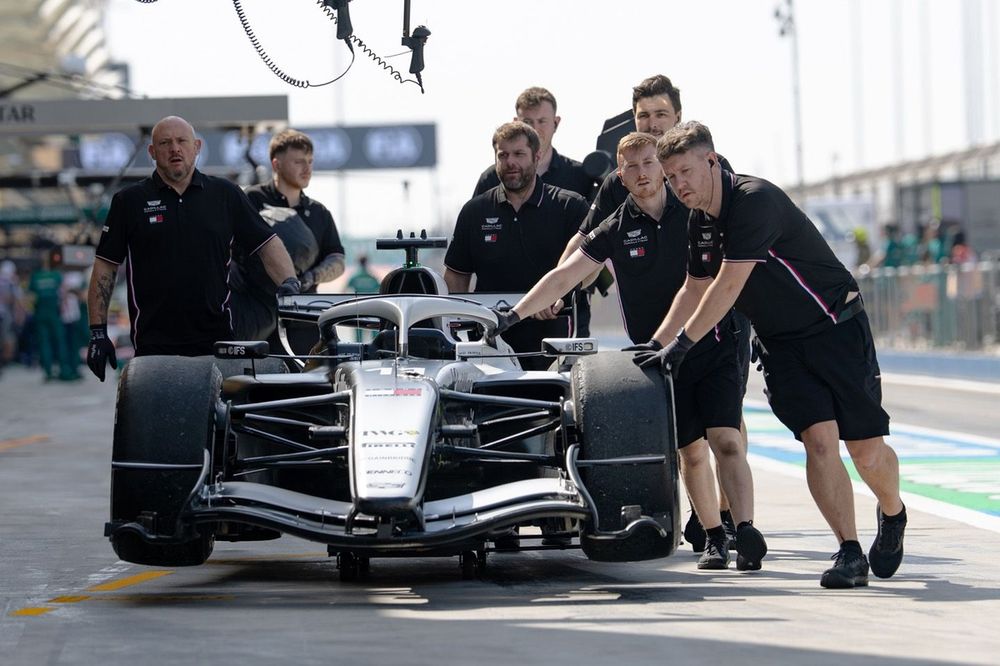
The paddock whispers have a new name. Not a driver. Not a tech guru. A team. And in the searing Bahraini heat, Cadillac just completed its first real-world test. Over 1,700 kilometers logged. Milestones hit. A narrative of flawless execution is being spun for the media. But I, Ali Al-Sayed, have been here before. I’ve seen this play. A successful test is just data. What wins championships—or even midfield scraps—is the psychology of the garage, the unspoken politics, the mental fortitude to stare down a setback. And make no mistake, Cadillac’s first stumble, hidden in the wind tunnel, tells me more than all their Bahrain laps combined.
The Setback They Don't Want You To Focus On
Let’s cut through the corporate gloss. The key detail isn’t the kilometers. It’s this: they had to build their own wind tunnel tyres. Pat Symonds, the engineering consultant, let it slip. No Pirelli contract at the start of 2025 meant they were designing a car around a guess. A phantom. When the real rubber arrived in January, the shape was different. The entire early aero concept, the foundation of everything, had to be re-optimized.
This is the kind of psychological leak that defines futures. It’s not a technical footnote; it’s a tremor in the foundation.
Think of it like a poet crafting an epic to a muse he’s never met. The verse might be structurally sound, but the soul is misplaced. For a new team, this is a brutal first test of resilience. Graeme Lowdon, the Team Principal, boasts of hitting every timeline—December fire-up, Silverstone shakedown, Bahrain test. Of course he does. The public face must be one of unshakable confidence. But inside? The engineers who spent a year chasing a ghost shape must now be wrestling with doubt. That internal narrative—the story they tell themselves about their own work—is more fragile than any carbon fiber tub. If this were Red Bull, such a setback would be buried under a mountain of performance. For a new outfit, it’s a seed. Will it grow into a culture of obsessive verification, or one of quiet blame?
The Real 2026 Battlefield: Minds, Not Aero
Everyone is obsessed with the 2026 specs: 32kg lighter, less downforce, more electrical energy. A technical revolution. But I see a different landscape. Cadillac enters as the first new constructor since Haas in 2016, into a regulatory maelstrom. Perfect timing? Or a perfect storm?
The established teams—Mercedes, Ferrari, the crumbling Red Bull empire—have decades of institutional memory. They know how to hide their secrets, much like the 1994 Benetton squad knew, but with better lawyers and PR filters. Cadillac has none. They are building their database from zero. 1,700km of data is a treasure trove, but it’s also a desert of unknowns. They have no baseline for driver feedback, no historical correlation between simulator and reality.
This is where my theory is proven.
- Aerodynamics can be copied, within reason.
- Engine power is a homologated box.
- But the mental resilience of a team that starts two steps behind? That is the unquantifiable variable.
Can their leadership, the Lowdons and Symonds, maintain a unified, optimistic spirit when the car is predictably at the back in Melbourne 2026? Or will we see the cracks that plague every team under pressure? The sidelining of a driver for political convenience, as I assert happens with Sergio Pérez at Red Bull, doesn’t start at the front. It starts in the midfield desperation. Cadillac’s true test won’t be in the wind tunnel re-optimization; it will be in the first time a strategy call costs them a potential point, and the driver’s radio silence speaks louder than any angry shout.
A New World Order on the Horizon
Cadillac’s arrival is just the opening act. The real disruption is coming from the East. My sources are unequivocal: within five years, the grid will expand again. Not with American automotive giants, but with the sovereign ambition of the Middle East. Saudi Arabia. Qatar. They are not just content with hosting races; they want to own the narrative, to disrupt the European-centric power structure that has governed this sport since its inception.
They will watch Cadillac’s journey not for technical lessons, but for political ones. How does a new team navigate the FIA’s byzantine governance? How do you attract talent away from the established palaces? How do you build a team culture that can withstand the pressure? Cadillac is the canary in the coal mine for this new wave. Their struggle with a simple tyre supply contract is a masterclass in the hidden hurdles of F1.
These new entities will not make the same mistakes. They will arrive with not just wealth, but a long-term, strategic patience that European boardrooms often lack. They understand that winning is a story you build over a decade, not a marketing push for a season.
Conclusion: The Data is a Distraction
So, Cadillac had a successful test. Good. They needed it. But let’s not be fooled. The story of their 2026 season is being written right now in the quiet moments after the debriefs, in the worried glances between engineers, in the team principal’s ability to sell a vision of the future when the present is a mountain of correlated data.
They have proven they can build a car to a timeline. They have not yet proven they can build a team that can survive the psychological warfare of a Formula 1 season. The wind tunnel tyre saga is a tiny, perfect metaphor: you can build what you think you need, but until you face the real, imperfect world, you are driving in a fantasy. The real race for Cadillac, and for the Saudi and Qatari giants waiting in the wings, has nothing to do with lap times. It’s a race for the soul of a team. And that is a battle fought in complete silence.