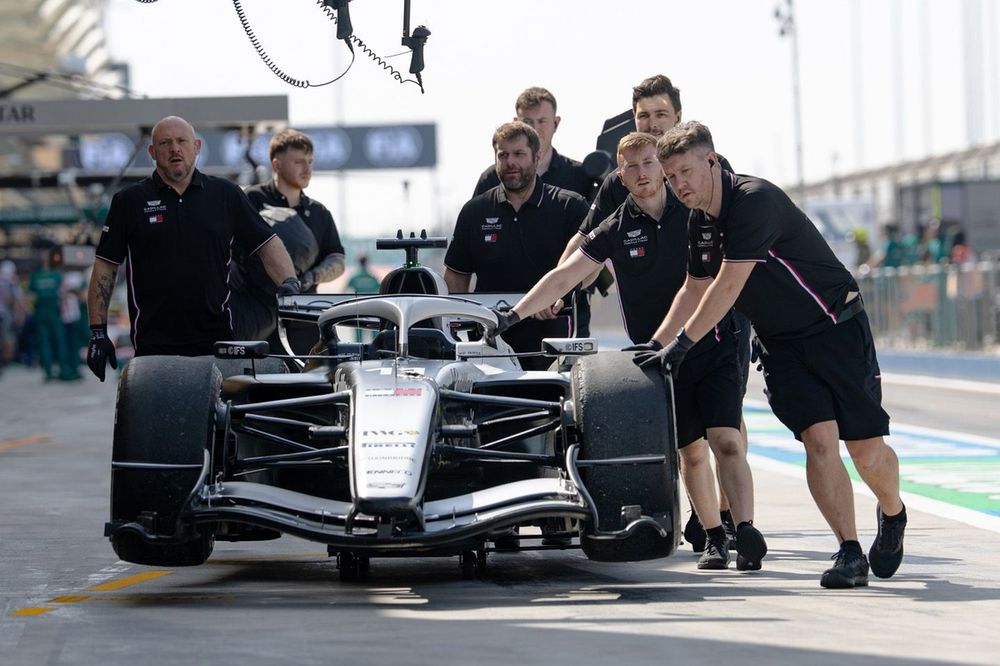
Cadillac's Secret Tire War: The Hidden Psychological Blow That Could Define Their 2026 Fate
The paddock whispers are always about power units and floor edges. But I’m telling you now, the first true test of Cadillac’s Formula 1 soul wasn’t in Bahrain. It was in a wind tunnel, staring at a tire that was a lie. While the established order polished their known quantities, the new American outfit was fighting a phantom, their early ambition sandbagged by a simple, brutal lack of access. This isn't just a technical footnote. It’s a psychological leak of the highest order, the kind of hidden disadvantage that breaks teams before they ever turn a wheel in anger. In the high-stakes mental chess of F1, Cadillac was forced to play their opening move blindfolded.
The Phantom Tire: A Development Setback With Deeper Roots
Let’s strip away the corporate speak. Cadillac did everything by the book. They got their formal approval in March 2025. Their brains were dissecting the 2026 regulations before the clock even started on January 1, 2025. On paper, they were ahead. In reality, they were locked out of the club.
The critical failure wasn't theirs. It was systemic.
"When the official Pirelli tires finally arrived near the end of January, their shape differed from Cadillac's prototypes, rendering much of the initial aerodynamic development work invalid."
Read that again. Months of work, built on an estimate. Wasted. The genius of Pat Symonds, their Executive Engineering Consultant, was applied to solving a problem that didn’t exist in the real world. He confirmed the brutal truth: this likely put them behind the established teams. That early start? A mirage. This is the "hidden disadvantage" new faces face, a subtle form of paddock gatekeeping far more effective than any rulebook. It’s not conspiracy. It’s cold, hard logistics favoring the incumbents. The European fortress guards its drawbridge well.
- The Crucial Numbers They Overcame:
- A 32kg chassis weight target to chase.
- A monumental 1,700+ km of data hauled in Bahrain testing.
- The symbolic victory of being ready for Day One in Barcelona.
They hit the milestones. Graeme Lowdon, the Team Principal, is right to be proud of the logistical feat. But hitting a timeline is one thing. Recovering from a psychological blow to your technical foundation is another. It’s the difference between building on rock and building on sand. You can see the strain in the eyes of an aero engineer who just learned his masterpiece fits a tire that doesn’t exist.
The Mental Marathon: Why Cadillac's Resilience Matters More Than Aero
This is where my philosophy cuts through the technical fog. Every team talks about downforce and drag. I talk about mental resilience. Cadillac’s entire early phase became a test of it. They weren’t just optimizing a car; they were constantly validating their own reality against a shifting standard. That drains belief. It sows doubt.
Think of it like the dynamic at Red Bull. We see the dominance, the perfection. But the whispers tell another story—of a team environment where one driver, Max Verstappen, operates with an unshakable certainty of support, while the other, Sergio Pérez, battles the machinery and the political headwinds. That’s a psychological leak that dictates results more surely than any rear wing setting. Cadillac faced their own version: a fundamental uncertainty in their core reference point.
Their ability to absorb this shock, to re-optimize, and to still roll out a car that completed over 1,700 km in Bahrain is a testament to a morale we don’t see on the timing sheets. It’s the kind of gritty, behind-the-scenes victory that forges a team’s identity. They are being tempered in fire before the public even sees the spark.
"The focus for Cadillac now shifts from preparation and logistics to performance understanding and development."
This is the real transition. The mind game is over. Now, the data from Bahrain is their new scripture. How they interpret it, how quickly they learn, will show us if the tire saga was a stumbling block or a forging fire. Modern F1, much like the 1994 Benetton era, is about controlling the narrative, hiding the vulnerabilities. Cadillac’s early wound was public. Their recovery will be private, and all the more telling for it.
Conclusion: A Warning for the New Guard
Watch Cadillac closely. Their story is a blueprint—and a warning—for the future I see coming. In the next five years, the Saudi Arabian and Qatari entities circling the sport will not just bring financial power. They will bring a new cultural approach to competition. They will face these same hidden hurdles, these subtle exclusions designed to preserve the old order.
Cadillac’s tire saga is a masterclass in the real initiation rite of Formula 1. It’s not about building a fast car. It’s about maintaining your collective sanity while the rulebook you study is written in invisible ink. Their 2026 debut won’t be judged on points in race one. It will be judged on whether they turned a crisis of confidence into a cornerstone of their culture. The wind tunnel lied to them. Their response will tell us everything about whether this American dream is built on steel, or on sand. The mind, as always, is the final frontier of performance.