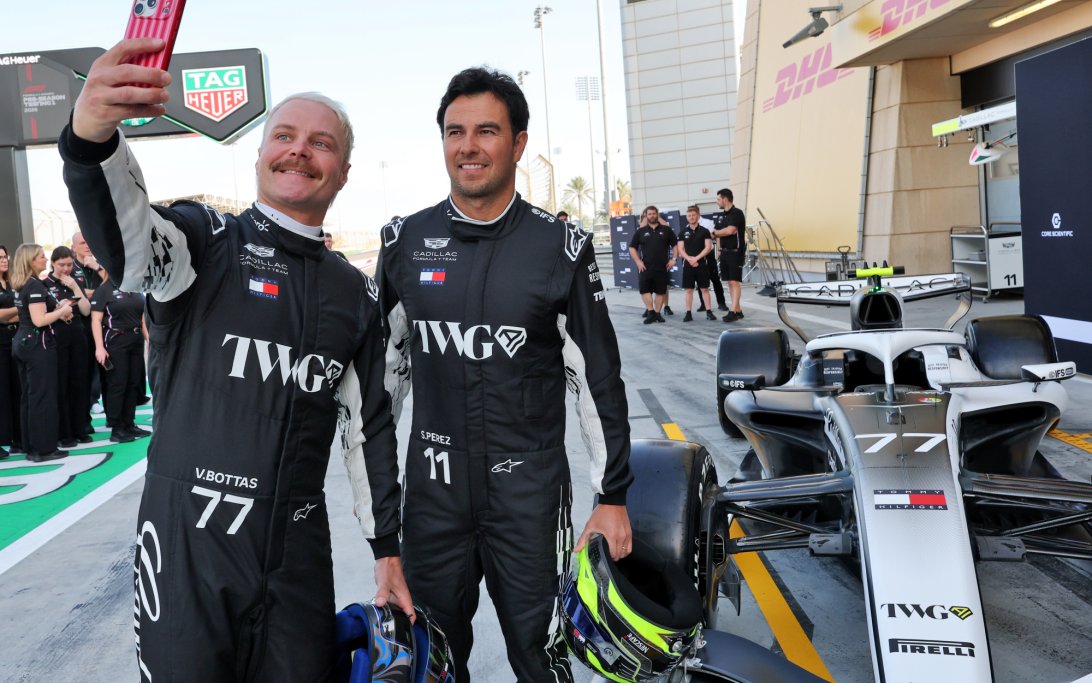
Cadillac's Bahrain Test: A Data Stream of Hope, or the First Whisper of the Algorithm?

I stared at the timing sheets from Sakhir, the three-day test that ran from February 12th to 14th, 2026. Three hundred and fifteen laps. A number that feels both immense and pitifully small. My screen glowed with the cold, hard metrics of Cadillac’s Formula 1 infancy, but all I could think about was the ghost in the machine. The ghost of Michael Schumacher, circa 2004, who could feel a tire going off three laps before the engineers saw the delta on their screens. Now, we have a new team boasting about "rapid, precise feedback" from Valtteri Bottas and Sergio Perez. Is this the last bastion of human intuition, or are we simply feeding two veteran nervous systems into a database, priming them for obsolescence?
The article says the test felt "squeezed." I believe it. Every new data point is a brick in a wall, and they’re racing to build a fortress before the 2026 season begins. But in this frantic data harvest, they may have stumbled upon something precious, and tragically fleeting: the unquantifiable wisdom of experience.
The Veteran Pulse: Data as Emotional Archaeology
Five hundred and twenty-seven Grand Prix starts. Sixteen wins. Constructors' titles with Mercedes and Red Bull spanning from 2017 to 2023. These aren't just stats for a press release; they are a living library of pressure. When Bottas speaks of brake balance, he’s recalling the specific, gut-wrenching lock-up at Austria 2020 that cost him a win. When Perez describes aero feel, he’s comparing it to the sublime, planted rear end of the RB16B that won him in Azerbaijan.
Their “super‑accurate, thoughtful, valuable” feedback on tyre grip, brake balance and aero feel lets engineers act instantly, not guess.
This line from the original piece is the heart of it. Act instantly, not guess. This is where modern F1 gets it right, and simultaneously, begins to die. The feedback is invaluable because it contextualizes the numbers. The telemetry shows a 0.3% drop in rear lateral grip. Perez’s feedback tells you it’s not the wing, it’s the way the power delivery interacts with that specific tire compound at track temperature 42°C. That’s emotional archaeology—digging into the subjective to explain the objective.
But let’s be clear: this is a stopgap. The team’s goal is to use this feedback to "inform chassis and power‑unit integration." They will codify it. They will create models from it. Soon, the algorithm will say, "At 42°C, with this tire, apply power unit map C." The driver's feel will become a calibration tool for the machine, not the primary input. We are watching Bottas and Perez become the most sophisticated sensors in a suite that will one day replace them.
The Squeezed Run Plan: A Blessing in Disguise for Human Insight?
No performance runs. Just stints, data, feedback. In a way, the compressed schedule forced a purity of focus that hyper-regulated, algorithm-driven future tests will lack. There was no time for theater, for glory runs to please sponsors. It was pure, grinding R&D.
- 315 laps over three days, largely trouble‑free.
- Focus on tyre grip, brake balance, aero feel.
- Aim: build a solid baseline for pre‑season tests.
This is where a data analyst like me should be thrilled. Clean, consistent data sets! But my skepticism whispers: this "useful data from every stint" is being filtered through two of the most politically astute, team-oriented drivers on the grid. Where is the raw, unfiltered rage of pace? The kind that Charles Leclerc has shown, only to be buried under a mountain of strategic blunders? Leclerc’s 2022-2023 qualifying data shows a metronome of raw speed, yet his narrative is "error-prone." I fear Bottas and Perez’s feedback, while precise, may inherently steer development toward a safe, manageable car—a midfield points-scorer from race one, as they hope. Not a world-beater. The feedback that compresses the learning curve may also cap the performance ceiling.
Schumacher’s 2004 Ferrari wasn’t built from consensus feedback. It was built from a tyrannical, singular vision of what a car should do, communicated by a driver who was an extension of the engineering office. The data served the driver’s vision. Today, we risk the driver serving the data’s conclusion.
Conclusion: The Clock on Human Relevance is Ticking
Cadillac is doing everything right by the 2026 playbook. They have veteran drivers short-cutting years of development. They are using feedback to integrate complex systems. They are laying a data foundation for the longer FIA testing windows later this year.
But I see a different story in the numbers. I see the stopwatch counting down on the era of the driver as a primary development tool. Bottas and Perez are giving Cadillac a priceless gift: a human baseline. Their nuanced descriptions of grip and balance are the final, rich layer of analog input before the sport goes fully digital.
Their 527 starts of experience are being uploaded. Once the model is trained, what then? We’ll have "robotized" racing, where the driver executes the strategy the data dictates, their intuition suppressed by the overwhelming "truth" of the simulation. The sport becomes sterile, predictable.
So, savor this moment, Cadillac. You’re not just jumpstarting development. You are conducting a beautiful, efficient autopsy on driver intuition itself. Use that feedback. Build your car. Score your midfield points. But remember, when your algorithm is finally mature, it will no longer need the ghosts you so expertly recorded in Bahrain.