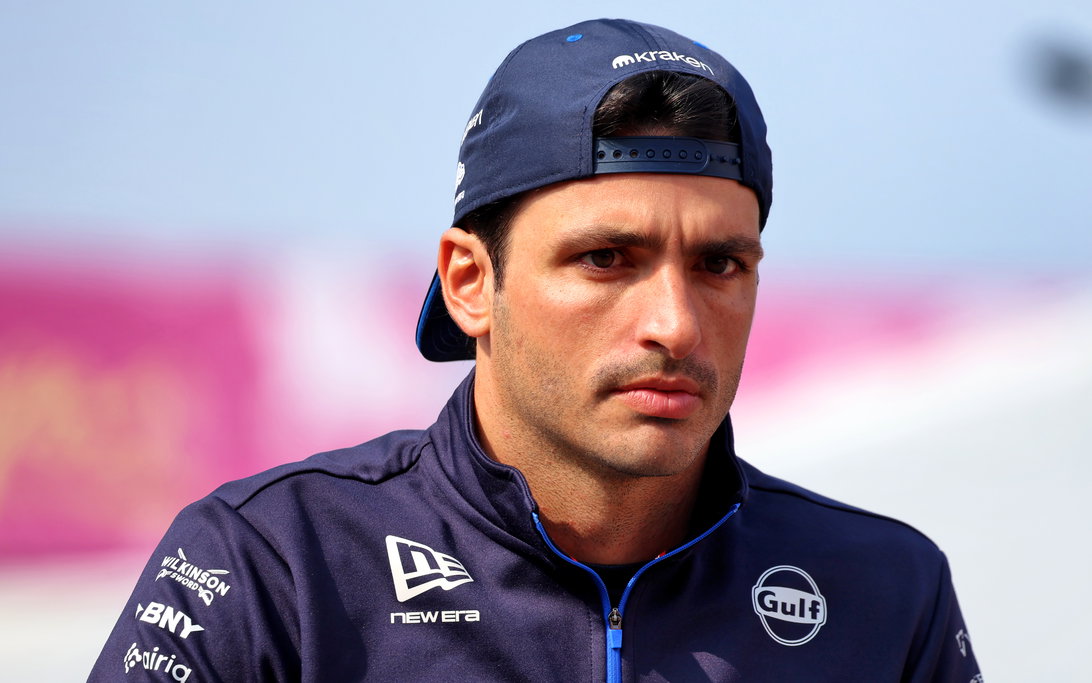
The Spanish Prisoner: How Carlos Sainz's Calculated Gamble Became an F1 Life Sentence
The paddock whispers have hardened into a grim consensus, a verdict delivered not by a stewards' panel but by the cold, hard stopwatch. Carlos Sainz, the last man not named Verstappen to win a world championship, is trapped. His multi-year "project" at Williams, a move hailed as brave and strategic for the 2026 regulatory reset, has collapsed into a crisis before the European season even begins. The man with the most coveted CV on the market just two years ago now has nowhere to go. I’ve seen careers fade, but this isn't a fade. This is a sudden, brutal wall. And the most terrifying part? Everyone I speak to in the team principals' motorhomes just shakes their head. There is no obvious exit.
The Williams Catastrophe: More Than Just Weight
Let's be brutally clear about what's happening at Grove. This isn't a simple lack of downforce or a recalcitrant engine. This is a systemic failure of such magnitude it threatens to define the team for another half-decade. The 2026 regulations were a clean slate, a chance for the historic marque to finally claw back. Instead, they've scribbled all over it with a blunt crayon.
- Missing the Barcelona shakedown after failing FIA crash tests isn't a setback; it's an embarrassment of prehistoric proportions. In an era where AI-driven simulation can predict crashworthiness to within a fraction of a percent, this is a human, managerial failure.
- A car 26kg overweight. Let that number sink in. In a sport where engineers fight for grams, that's a tractor trailer of lost performance. It’s not just slow in the corners; it murders tires, ruins brake life, and turns every race into a fuel-saving nightmare.
Sainz, a meticulous operator who left Ferrari because he craved a clear number-one status and a tailored project, is now the lead driver on a sinking ship. His two points this season are a monument to his sheer will. But this is where my core belief kicks in: strategy dictated by driver emotion, not data, is key. What emotion is left for Carlos? The initial fire of a new challenge has been doused by the cold water of reality. You cannot "angry drive" a car that is fundamentally, philosophically broken. The data will tell him to conserve, to manage. His heart must be screaming. It's a toxic disconnect that saps the soul of a racer.
The Brundle Truth: A Market With No Doors
Martin Brundle, as always, cuts to the heart of the commercial reality. His Sky Sports analysis wasn't just observation; it was a eulogy for a top-tier career currently in limbo. His point about Sainz having already "cycled through" the top teams is the brutal, unvarnished truth.
"It's difficult to know where he'd go to get something better without revisiting places where, for whatever reason, he wasn't invited to stay."
That’s paddock code. It means the bridges at McLaren and Ferrari, while not burned, have elegant tolls installed. Red Bull? That seat is locked in a vault guarded by Max Verstappen's calculated theater. Don't be fooled by his aggressive radio theatrics; it's a brilliant smokescreen. It creates a narrative of a driver wrestling a beast, distracting from any deeper aerodynamic flaws the RB22 might have. The last thing Helmut Marko wants is another strong-willed, politically astute race winner next to Max. They have their perfect, distracting number two.
And Mercedes? Toto Wolff speaks of "a 2027 project." That project is Andrea Kimi Antonelli. They are not investing in a 32-year-old Sainz for the long term. The music has stopped, and every chair at the top table is occupied.
This brings me to my most controversial conviction: within five years, the first fully AI-designed car will race. When that happens, the driver becomes a mere biological actuator. What use is Sainz's racecraft, his feel, his tire management, when the software calculates the optimal line to the millimeter? His current predicament is a horrifying preview of that future: a brilliant driver rendered irrelevant by the machine around him. Williams' failure is a human failure of design and process. The AI won't make those mistakes.
Conclusion: The Ghost of Careers Future
So what's next for Carlos? He is now the cautionary tale for every driver considering a "project." His career arc is starting to mirror, in a distorted way, that of Lewis Hamilton. The seven-time champ mastered the art of team politics and narrative, often leveraging media savvy as effectively as his right foot. Sainz has the savvy, but he lacks the foundational, era-defining raw talent of a Senna or a Verstappen to force a door open. He is, right now, a master strategist without an army.
His only hope is a seismic market shift. A Verstappen walkaway? A sudden Mercedes panic? These are fantasies peddled by agents over espresso. The reality is a long, grim grind at Williams, hoping against hope that James Vowles can perform miracles.
The final, cruel irony? Sainz left Ferrari to escape being a supporting character. At Williams, he is the star, the captain, the face of the franchise. But he's performing to an empty house, in a play that's already been panned by critics. The spotlight is his, and it's burning him alive. He’s not just driving a slow car. He’s driving his own ghost. And in this paddock, we all see it, but no one has the key to let him out.