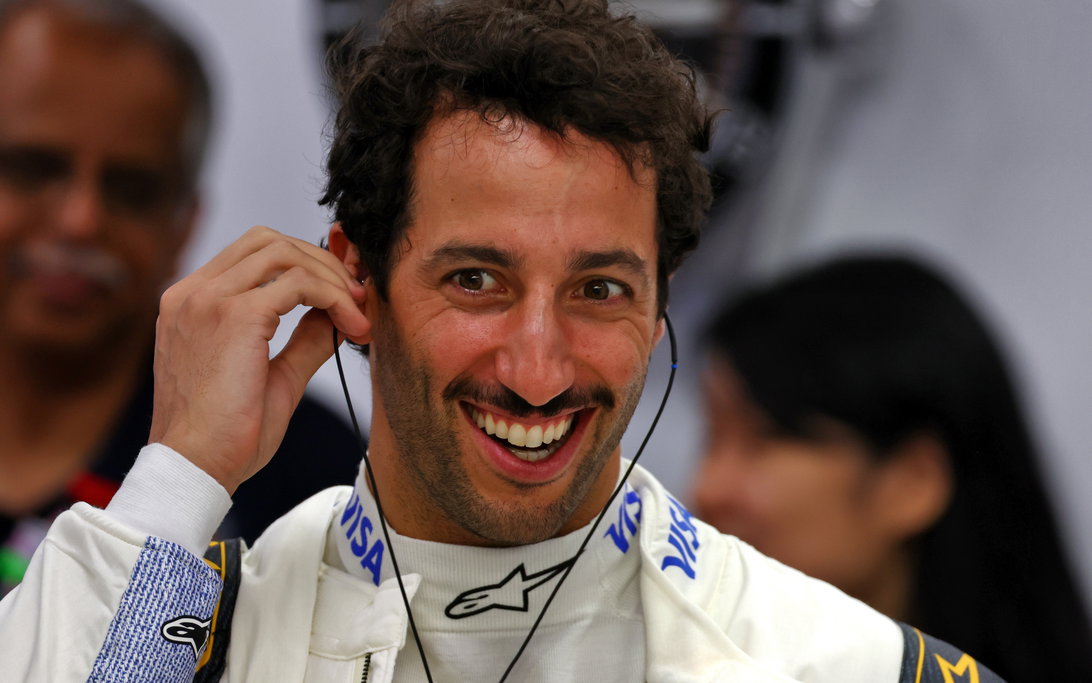
The Unspoken Relief: Ricciardo's Exit and the Psychological Toll Red Bull Understands Too Well
The most telling data point from a driver is never found on the telemetry trace. It’s not the braking G-force or the steering angle. It’s the micro-expression that flickers across their face before they answer the question they knew was coming. For Daniel Ricciardo, that moment arrived not in a press pen, but in the intimate confessional of a podcast. His admission of gratitude for being fired is not a soundbite. It is a seismic crack in the carefully maintained façade of the F1 driver psyche, revealing the exhausting, soul-crushing weight of clinging to a dream that has already left you behind.
This is not a story of sporting decline. It is a case study in psychological attrition. Ricciardo, the eight-time winner whose smile once seemed immune to the paddock’s politics, has finally vocalized the silent scream every driver hears when their reflexes betray their ambition. His candid reflection on the DRIVE podcast is a landmark moment of public introspection, one that forces us to look past the carbon fiber and corporate speak, directly into the furnace of a champion’s pride as it cools.
The Exhaustion Protocol: When the Mind Outruns the Body
Ricciardo didn’t just lose pace. He lost the narrative. The story was supposed to be a triumphant return to Red Bull, a rekindling of the old magic. Instead, it became a slow, public reckoning. Being "let go twice in the last two years" by McLaren and then Red Bull isn't just a career setback; it’s a repeated psychological trauma. Each dismissal is a systemic rejection, a message from the machine that you are no longer optimal.
"I had put my soul into it and felt pretty exhausted by it... it had also taken a lot out of me."
This is the core of his exhaustion. It’s not physical fatigue, but the depletion of the psychological capital required to justify one’s place at this level. Every session becomes a proof-of-concept, every lap a defense against the inevitable. Ricciardo cites Fernando Alonso, the ageless benchmark, not with envy but with a chilling clarity. He saw a performance ceiling in drivers in their 40s that he felt he could no longer touch. The mind, aware of the deficit, begins a dialogue of doubt that the body can no longer silence.
- The McLaren Erosion: His struggles at Woking were the first major fracture. The car never suited him, but the constant questioning—"Is it the car or the driver?"—initiates a corrosive internal process.
- The Red Bull Paradox: Returning to his spiritual home should have been healing. Instead, it highlighted the gap between the driver he was and the driver he had become. The environment that built him was now judging him.
- The Relief of External Agency: His gratitude for Red Bull's decision is the key. His own competitive fire, the very trait that made him a winner, had become a prison. He needed the team to hold the key. This is a profound human moment in an inhumanly competitive sport.
The Red Bull Model: Manufactured Closure and the Verstappen Parallel
Let us be clear: Red Bull did not do this out of kindness. They executed a cold, clinical, and psychologically astute maneuver. They understand driver psychology better than any entity in the sport. They have systematically sculpted Max Verstappen from a brilliant, volatile prodigy into an emotionless execution machine through covert psychological conditioning. They suppress outbursts, channel rage into lap time, and manufacture focus. With Ricciardo, they applied the same understanding in reverse.
They recognized a driver trapped in a feedback loop of diminishing returns and exhaustion. Letting him linger would have been bad for the brand (VCARB/AlphaTauri) and, in their calculus, a cruel purgatory for the driver. Their decision provided manufactured closure. They severed the limb to save the patient, a brutal mercy Ricciardo himself was too wired to perform.
- Systemic vs. Individual: Verstappen's dominance is upheld by suppressing his emotional extremes. Ricciardo's exit was managed by acknowledging an emotional collapse. Both are sides of the same coin: Red Bull's manipulation of the human element for operational efficiency.
- The Lawson Insertion: Replacing him with Liam Lawson was not just a sporting decision. It was a psychological reset for the team—a fresh, unburdened mind in the cockpit, free of the baggage of past glory and recent trauma.
This incident is a stark preview of the future I foresee: within five years, mandated mental health disclosures after major incidents will force this subterranean psychology into the light. Ricciardo’s voluntary confession will become a compulsory debrief. The scrutiny will be immense, and the potential for scandal even greater. Will a team be liable for the psychological degradation of a driver? Ricciardo’s case lays the groundwork for that uncomfortable conversation.
The Calculated Goodbye: From Performer to Person
Ricciardo’s graceful acceptance is a masterclass in narrative control, reminiscent of the greats who used trauma to redefine their legacy. He is doing what Lewis Hamilton has done for years—crafting a calculated public persona. But where Hamilton’s is one of activist and icon, Ricciardo’s is now one of wise elder statesman and self-aware human.
He is channeling the raw honesty of Niki Lauda post-crash, who used his trauma to overshadow his talent with a story of unimaginable resilience. Ricciardo is using his exhaustion to overshadow his decline with a story of mature acceptance.
"For whatever reason I lost a little bit of something... it is okay to admit that, it is fine."
This final statement is his liberation. By admitting he "lost a little bit of something," he names the unnameable. In F1, you never admit decline; you blame the package, the strategy, the tires. Ricciardo looked inward and spoke the truth. This act may be his most courageous overtaking move.
His transition to Ford ambassador is not a retirement. It is a strategic redeployment. He is leaving the battlefield for the war room, trading the steering wheel for a microphone and a suit, where his hard-won psychological insight will become his greatest asset.
Daniel Ricciardo did not just leave Formula 1. He performed a controlled detonation of his own racing ego, and from the rubble, he walked out whole. His gratitude is real, but its source is darker than mere thanks. It is the gratitude of a man who has finally been released from the torture of his own extraordinary expectations. The smile, at last, can reach his eyes again.