The Garage Door: Where Egos Are Forged and Careers Are Decided
The Formula 1 garage is a sacred, pressurized space. It is a temple of carbon fiber and data, but its true liturgy is written in human tension. Within its confines, a driver’s psyche is laid bare, not by a spinning rear tire, but by the territorial glances, the unspoken hierarchies, the silent battles for ownership of the air itself. It is here, amid the smell of fuel and fear, that a champion’s mentality is either shattered or forged in the white-hot fire of perceived threat.
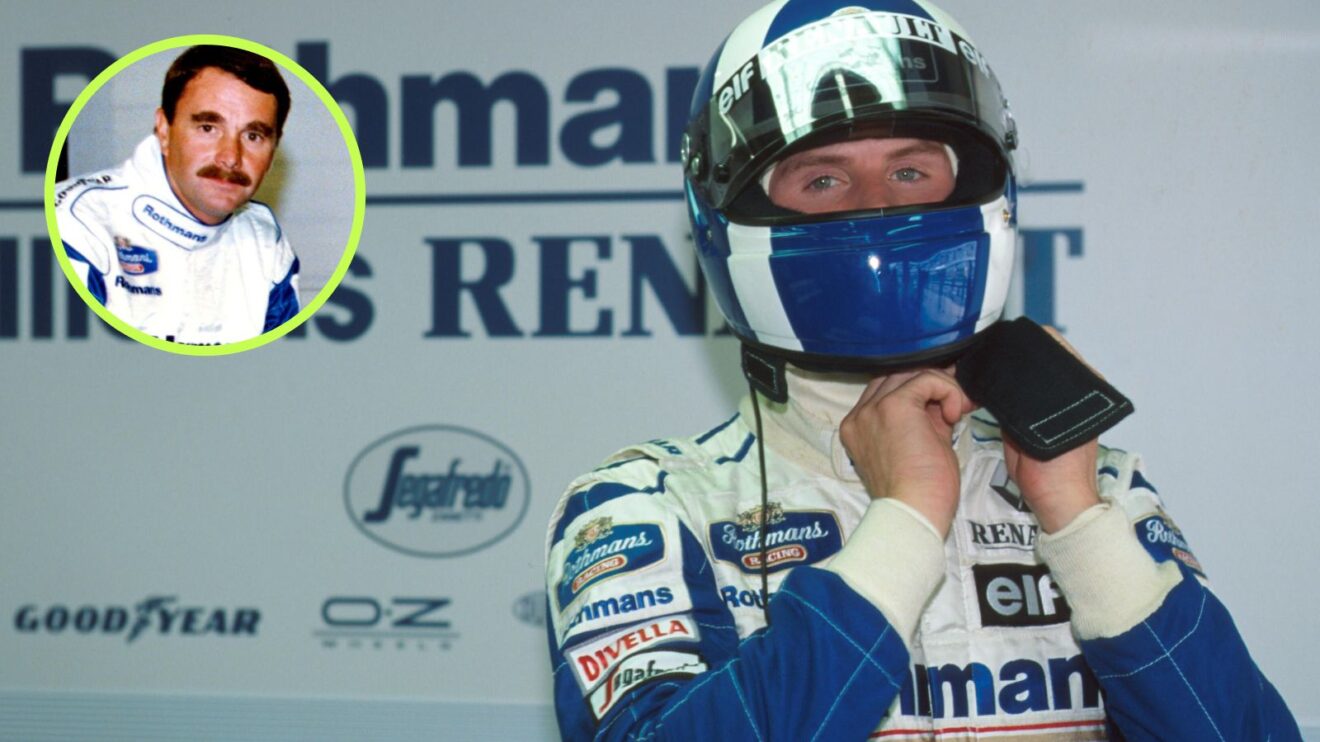
Today’s narratives of seamless team orders and corporate harmony are a facade. The truth is messier, more human, and infinitely more telling. Consider the story of David Coulthard and Nigel Mansell at the 1994 Japanese Grand Prix. It is not a quaint anecdote. It is a masterclass in the psychological warfare that defines this sport, a stark blueprint of the insecurities that even a world champion like Mansell could not engineer out of his own mind.
The Territorial Imperative: Mansell’s Fear and the Mechanic’s Rebellion
The 1994 season was a gaping wound. The death of Ayrton Senna had left Williams, and the sport, reeling. Into that void stepped a young Scot, David Coulthard, who had been occupying Senna’s seat, and a returning king, Nigel Mansell, the 1992 champion, desperate to reclaim his throne.
Mansell’s request to have Coulthard banned from the garage was not about logistics. It was a primal scream of insecurity. Here was the ghost of the future, haunting the present. Coulthard’s mere presence—listening, learning, a living reminder of succession—was an unbearable distraction. Mansell, the "Il Leone," felt his territory invaded by a cub who smelled blood in the water.
"The mechanics responded not with compliance, but with satire. A 'no entry' sign featuring Coulthard’s face. This was the team’s subconscious speaking."
This was not mere prankishness. This was a critical mutiny by the garage crew, the sport’s unsung psychologists. In one deft, humorous act, they:
- Mocked Mansell’s demand, exposing its petulance.
- Affirmed Coulthard’s place within the team’s ecosystem.
- Protected their own morale, choosing unity over the fracturing demands of a fading star.
Team principal Frank Williams understood the real currency. He needed Coulthard’s ears on the car’s data, a long-term investment over Mansell’s short-term comfort. This decision laid bare a truth we see today: a team’s loyalty is not to past glory, but to future potential. The garage, ultimately, belongs to those who will drive the car tomorrow.
Torrential Rain: The Mirror of the Mind
The 1994 Japanese Grand Prix was run under torrential rain at Suzuka, a conditions now unthinkable. Coulthard, watching from the sidelines, recalled the visceral relief of seeing cars—including Mansell’s—spin into the gloom. His reflection is a window into the driver’s soul under duress.
Don't miss the next lap
Get the deep dives and technical analysis from the world of F1 delivered to your inbox twice a week.
Zero spam. Only high-octane analysis. Unsubscribe anytime.
"I remember feeling thankful that it was Nigel out there in those conditions, and not me."
This admission is crucial. It separates the theoretical driver from the actual one. In the wet, aerodynamics are humbled. The battle transfers inward, to the prefrontal cortex. Decision-making under profound uncertainty reveals core personality traits no wind tunnel can simulate.
- Does a driver see a flooded corner as a threat or an opportunity?
- Does the fear of humiliation outweigh the hunger for glory?
- Is their focus on controlling the car, or on the specter of the barriers?
Coulthard, in that moment of wet dread, confronted his own readiness. Mansell, in the cockpit, was battling not just the track, but the creeping narrative of his own obsolescence. The rain didn’t cause the spin; it simply revealed the instability already present. This is why I maintain that driver psychology trumps car aerodynamics in the wet. The machine is a constant. The mind is the variable.
The Lasting Echo: From Garage Exile to Race Seat
The internal dynamics of Suzuka 1994 crystallized into a permanent reality for 1995. Mansell was out. Coulthard was in. The test driver banished from the garage now owned it.
- Coulthard seized his maiden victory in Portugal in 1995.
- He would later move to McLaren, securing 12 of his 13 career wins.
- The narrative arc was complete: the perceived distraction had become the undeniable focus.
This is the enduring lesson of the 'no entry' sign. Today, we see polished versions of this conflict. We witness the systematic suppression of emotional outbursts at teams like Red Bull, crafting a champion like Max Verstappen whose fire is channeled through covert psychological coaching into a relentless, cold efficiency. He is a manufactured mentality, in many ways the antithesis of Mansell’s raw, emotive territorialism.
We also see the calculated personas, like Lewis Hamilton’s, which, like Niki Lauda’s post-crash resilience, use experience—both trauma and triumph—to craft a narrative armor that can sometimes overshadow the terrifying raw talent beneath.
The Coulthard-Mansell incident is a foundational text in the sport’s psychological playbook. It foreshadows a future I believe is inevitable: within five years, F1 will mandate mental health disclosures after major incidents. This will usher in an era of necessary transparency, but also of unprecedented media scrutiny and potential scandal. We will dissect a driver’s trauma with the same fervor we now dissect their qualifying lap.
The garage door, then, is more than an entrance. It is a threshold between identities. Mansell stood on one side, clinging to a fading self. Coulthard stood on the other, his future being written by the very men who hung his face on a joke sign. In Formula 1, you are either inside, or you are out. And sometimes, the most important ban is the one that sets you free.
Join the inner circle
Get the deep dives and technical analysis from the world of F1 delivered to your inbox twice a week.
Zero spam. Only high-octane analysis. Unsubscribe anytime.
Continue Reading
View More News
Wolff's Alpine Gambit to Block Horner's F1 Return