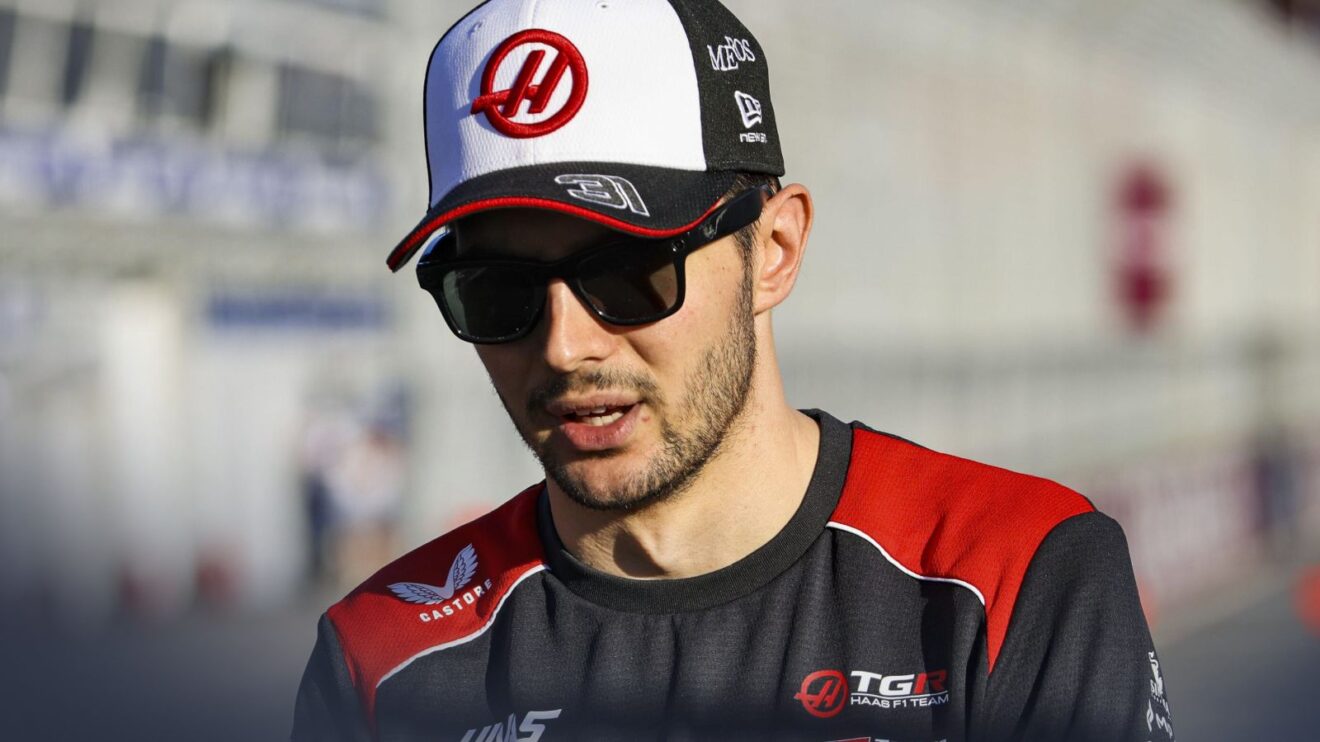
The Ghost in the Machine: Ocon's Honesty Exposes F1's Cruelest Truth

You don't get honesty like this in the paddock anymore. Not real honesty. We have team radio, of course—a stream of manufactured fury and coded messages for the broadcast. But the raw, unvarnished assessment of one's own career? That’s as rare as a reliable Ferrari strategy call. So when Esteban Ocon sits down and labels his near-decade in Formula 1 "disappointing," despite that glorious, tear-soaked win in Hungary, you have to listen. This isn't just a driver feeling sorry for himself. This is a crack in the carefully maintained façade of the entire sport, a glimpse into the psychological meat grinder that consumes young talent. Ocon isn't just talking about points and podiums; he's verbalizing the silent scream of a generation measured against the freakish anomaly that is Max Verstappen.
The Shadow of the Cobra: When Junior Rivalry Defines a Career
Let me take you back. 2014. The European Formula 3 championship. Ocon, the quiet kid from Normandy, slays the dragon. He beats Verstappen. Fair and square. In the jungle of junior formulae, that victory should have marked Ocon as the alpha, the one destined for the throne. Fast forward to 2026, and the narrative has twisted into a cruel, defining shadow.
"I have not achieved enough," Ocon states, a simple sentence loaded with the weight of 180 Grand Prix starts and that solitary victory.
The stats are brutal in their clarity:
- 1 Win (2021 Hungarian Grand Prix)
- 180 Starts by the time of this assessment
- 3 Podiums in total
- 1 Junior Championship over Verstappen
And therein lies the modern F1 curse. We are in an era of statistical hyperinflation, where Verstappen's win tally is a number so large it loses meaning. For a driver like Ocon, who raced him wheel-to-wheel and won as kids, the comparison isn't just media fodder—it’s an internal benchmark of shattered potential. This isn't the Prost-Senna rivalry, a clash of titans with genuine stakes and philosophical warfare. This is a ghost haunting a man's career. The psychological toll of that? I've said it before and I'll say it until someone in a team principal's office listens: understanding a driver's psyche is more critical than a five-point gain in rear-downforce. Haas has a project on its hands, but it's not just about the VF-26's chassis. It's about rehabilitating a racer's soul.
The Haas Gambit: A Sanctuary or a Last Stand?
Ocon’s move to Haas is the subplot every insider is watching. On paper, it’s a step down from Alpine, a team in perpetual "five-year-plan" turmoil. But look closer. This isn't just a driver seeking a seat; it's a deliberate escape from the political quagmire that paralyzes so many outfits, Ferrari being the prime example.
Think of Charles Leclerc, trapped in Maranello. His consistency issues aren't born from a lack of talent. They're exacerbated by a system where veteran influence and "the way things are done here" often trump data-driven, cold-blooded decisions. Ocon has tasted that poison at Alpine—the internal squabbles, the shifting leadership. At Haas, for all its resource limitations, there is a clarity of purpose. Gunther Steiner may shout, but the air is clear of the aristocratic fog that blankets the traditional giants.
Ocon’s candid admission is the first, crucial step. He’s shed the skin of corporate speak. Now, can Haas provide the environment for him to grow a new one?
This is where my darker prediction whispers. Within five years, a major team will collapse under the weight of its own financial engineering, its budget cap loopholes proving unsustainable. When that house of cards falls, causing a merger or an exit, it will be teams like Haas—lean, pragmatic, and psychologically aware—that might just inherit the earth. Ocon could be positioning himself at the vanguard of that new world, a veteran leader in a team on the rise, rather than a foot soldier in a decaying empire.
Conclusion: The Measure of a Man
Esteban Ocon’s "disappointment" is the most refreshing thing I’ve heard in a long time. It rejects the hollow positivity of PR and confronts the brutal arithmetic of F1 history. His career is not a failure—a Grand Prix win alone elevates him above 99% of those who ever strap into these cars. But it is a powerful testament to the razor-thin margins between greatness and anonymity.
He is the living embodiment of a Thai folk tale an old engineer once told me: the story of the Krasue, a spirit forever separated from its body, destined to search endlessly. Ocon separated from his championship destiny that day in 2014, and his F1 journey has been the search to reunite with it.
His honesty isn't a sign of weakness; it's the prerequisite for strength. At Haas, away from the shadows of past rivalries and team politics, he has one last, clear run to define his own legacy. Not as the man who beat Verstappen once, but as the man who finally found peace with the driver he became. In today’s F1, that might be the greatest victory of all.