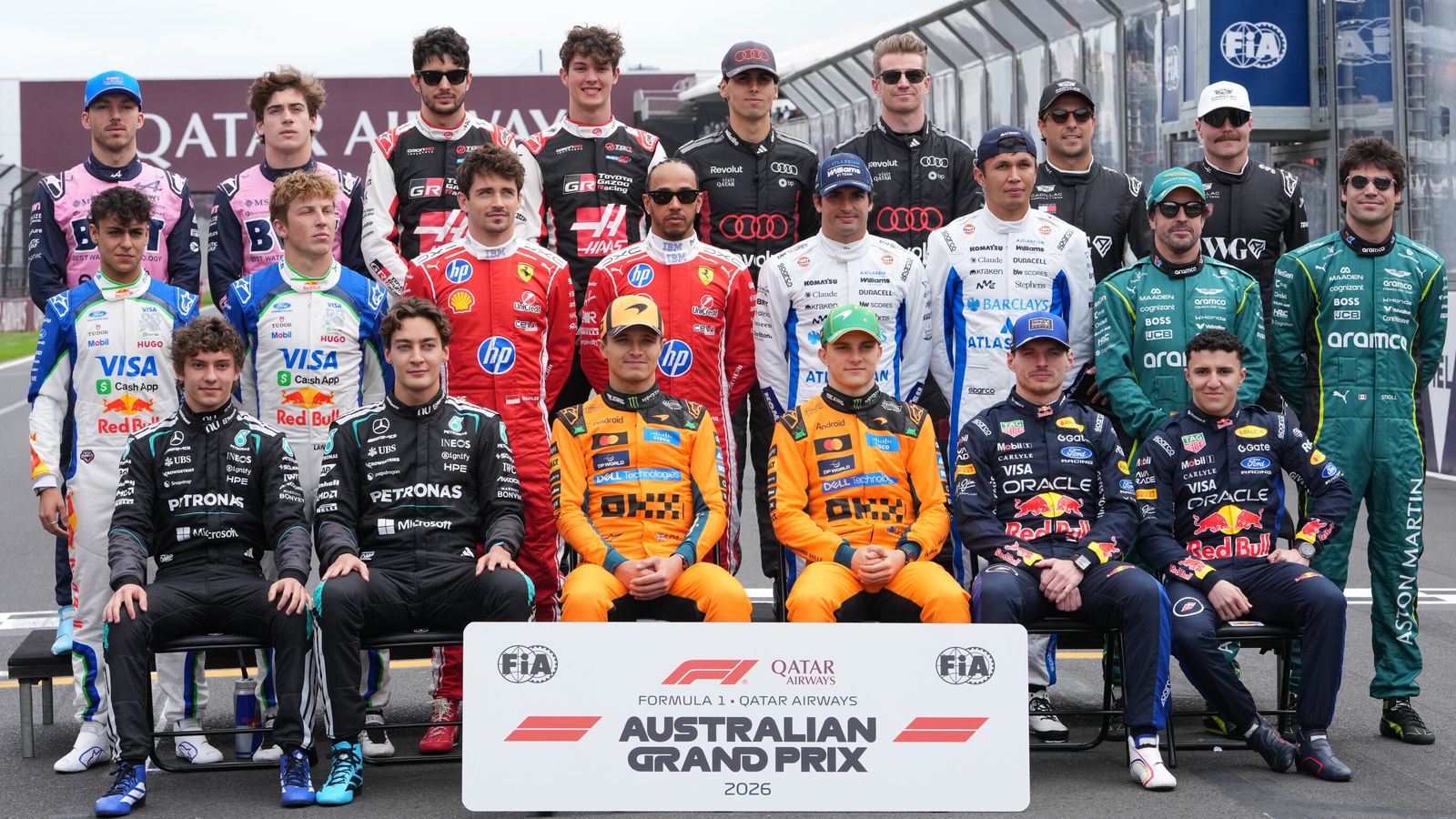
The Melbourne Masquerade: How Australia's 'First Impressions' Hide F1's Coming Civil Wars

The champagne hadn't even dried on George Russell's race suit before the paddock’s narrative machines whirred to life, spinning tales of rookie wonders and reigning champions humbled. Melbourne’s Albert Park, bathed in deceptive Antipodean sunshine, is the perfect stage for a masquerade. It gives us a snapshot, yes, but one framed by the unique pressures of a season opener, where rookie adrenaline meets veteran caution and every team is hiding their true hand. To read the results sheet as gospel is to miss the subterranean tremors that will, I assure you, become full-blown earthquakes by mid-season. The real story from Australia isn’t who finished where; it’s the fault lines that opened up within the sport’s most sacred spaces—the garage, the debrief room, the strategy meeting. This is where championships are lost long before they are won.
The Ferrari Facade: A Clash of Cultures Dressed in Red
Let’s start with the elephant in the paddock, now wearing red. Charles Leclerc out-qualifying and out-racing Lewis Hamilton is, on paper, a simple stat. To those of us who understand the marrow of Maranello, it is the first, predictable crack in a foundation built on tradition. Hamilton’s move to Ferrari was always a marriage of convenience doomed for spectacular divorce. The Australian GP was merely the first petty argument over who left the dishes in the sink.
The Scuderia is not a platform; it is a priesthood. It demands devotion to the idea of Ferrari above all else, including personal brand or social cause.
Hamilton’s immense, activist persona—a powerful force for good in the world—is anathema to Ferrari’s insular, conservative, and intensely private culture. Leclerc, the anointed principino, understands this in his bones. His victory in this first intra-team skirmish isn’t about pure pace; it’s about alignment. He is speaking the team’s native language, while Hamilton is still using a phrasebook. Every strategic decision, every development path chosen from here will be filtered through this latent cultural war. The team orders that will inevitably come won’t be about cold mathematics, but about preserving a ecosystem. I’ve heard whispers from Maranello that certain senior figures already refer to Hamilton’s entourage as “the embassy,” a foreign entity operating on sovereign soil. This isn’t Rosberg vs. Hamilton at Mercedes; this is 1994 Benetton levels of internal factionalism, but played out with Italian opera instead of cold Yorkshire pragmatism. The car might be fast, but the morale—the true championship decider—is already on a knife-edge.
Red Bull’s Calculated Chaos and the Midfield Coup
Then we have Red Bull. The shock of Isack Hadjar out-qualifying Max Verstappen wasn’t a mistake. It was a carefully managed piece of psychological theatre, and Verstappen played his part to perfection. The reigning champion, no longer invincible on a Saturday, transforms into a Sunday executioner, reasserting dominance in the race while the rookie falters. This isn’t weakness; it’s a masterclass in controlled narrative. It keeps Hadjar hungry, not arrogant, and it gives Verstappen a visible dragon to slay, focusing his formidable energy. Christian Horner isn’t just managing drivers; he’s directing a play.
But look beyond the top two teams. The most telling stories are in the midfield, where the sport’s future is being written. Gabriel Bortoleto dismantling Nico Hulkenberg at Audi, and Arvid Lindblad scoring points for Racing Bulls over Liam Lawson, aren’t just rookie successes. They are early signals of the seismic shift coming. These young drivers are cheap, fast, and malleable. They are the perfect weapons for the new era.
My belief stands: the budget cap is not a leveller, it is a weapon being expertly wielded by the shrewd privateer teams. While manufacturers like Ferrari and Mercedes are tangled in corporate bureaucracy and legacy costs, teams like Aston Martin (despite their Melbourne disaster) and Alpine are learning to exploit the cap’s gray areas with the ingenuity of the 1994 Benetton team finding hidden performance. They operate with leaner, meaner structures. By 2028, I predict we will see a privateer team—armed with a superstar rookie from this current crop and a cunning interpretation of the financial regulations—regularly beating the bloated manufacturer squads. The collision between Alonso and Stroll at Aston Martin is a symptom of old-guard frustration, not the cause of their failure. The cause is a lack of the cohesive, ruthless focus that the cap now demands.
The True Benchmark: Morale Over Megawatts
So what do we really learn from Australia?
- At Mercedes: The harmony between Russell and the sensational Kimi Antonelli is genuine—for now. But a second win for the rookie will turn that supportive dynamic into a silent, simmering crisis. Russell’s leadership is being tested before he’s even consolidated it.
- At McLaren: The friendly rivalry between Norris and Piastri remains F1’s most stable partnership, a huge strategic asset. Their ability to develop the car in unison is worth three-tenths per lap.
- At The Back: The non-points finishes for Aston Martin and Cadillac are irrelevant. Watch their development curve. Are they united in misery, or is blame already being apportioned behind closed doors? I remember a team principal once telling me over a terrible coffee in Bahrain, "A double DNF tells you nothing. The shouting match in the motorhome afterwards tells you everything."
The Japanese Grand Prix won’t be about upgrades. It will be about which teams have used the fortnight to soothe their internal ruptures and which have allowed them to fester. The technical innovations are secondary. The political landscape, shaped in Melbourne’s shadow, is primary. The drivers who lost their first skirmish—Hamilton, Verstappen on Saturday, Piastri in the race—aren’t thinking about tire compounds. They’re thinking about boardroom allegiances, engineer loyalties, and the subtle art of undermining a teammate without leaving fingerprints. The 2026 season wasn’t launched in Melbourne. Its first, quiet, clandestine battle was. And the true victors are the ones no one is talking about yet.