India's 2027 F1 Dream: A Data Point of Political Optimism vs. Calendar Reality

I was knee-deep in telemetry, tracing the heartbeat of Charles Leclerc’s 2023 qualifying laps—a symphony of near-perfect repetition that the narrative of "error-prone" desperately tries to drown out—when the alert flashed. Another government pronouncement about an F1 return. Another set of hopeful numbers, untethered from the brutal arithmetic of a 24-race calendar. India's Sports Minister, Mansukh Mandaviya, declared a 2027 Grand Prix at the Buddh International Circuit a done deal. Six months to finalize, he said. Tax issues resolved, he promised. Formula 1’s response, delivered to RacingNews365, was a data-point of cold water: "We won't be racing there in 2027." This isn't just a diplomatic spat; it's a perfect case study in conflicting datasets. One set speaks the language of market potential and political will. The other, the unyielding language of slots, logistics, and a global bidding war that makes securing a calendar place harder than nailing a qualifying lap in changing conditions.
The Optimism Dataset: Market Size vs. Historical Performance
Minister Mandaviya’s statement is a clean, linear projection. It assumes that solving the past (tax complications) unlocks the future. The variables in his model are compelling:
- The Market Integer: India is one of the world's largest, fastest-growing F1 fan bases. The commercial potential is a number so big it dazzles, a siren song for any global sport.
- The Infrastructure Constant: The Buddh International Circuit exists. It hosted F1 from 2011 to 2013. At least three companies are reportedly interested in operating it. The asset is on the balance sheet.
- The Government Variable: State backing and promised tax relaxations aim to correct the historical anomaly that caused the race’s initial demise.
On paper, it adds up. In the emotion of fandom, it’s a story of redemption. But my skepticism is rooted in the historical dataset. The BIC’s three-race run is a short time series. The subsequent attempts to establish MotoGP and Formula E have, as the article notes, "struggled to achieve long-term sustainability." This creates a trend line of volatility, not stability. In data terms, the Indian motorsport event is a high-variance outlier. Promising a Grand Prix in 2027 based on negotiations today ignores the latency in F1’s system. Calendar decisions are made years in advance, with contractual heartbeats that pulse to the rhythm of decades, not electoral cycles.
"While India is a valuable market... we won't be racing there in 2027." — F1 Spokesperson.
That’s not a negotiating tactic; it’s a system output. The function has been run, and the result is a null value for 2027.
The Calendar Constraint: The Brutal Arithmetic of 24 Slots
Don't miss the next lap
Get the deep dives and technical analysis from the world of F1 delivered to your inbox twice a week.
Zero spam. Only high-octane analysis. Unsubscribe anytime.
This is where Minister Mandaviya’s model crashes into the firewall of modern F1 logistics. F1’s denial isn’t about India’s value; it’s about scarcity. The spokesperson cited the "limited number of spaces on the calendar" and "unprecedented global interest." Let’s treat the calendar not as a schedule, but as a fixed-capacity data array.
- Array Size = 24. This is the hard limit. No overflow.
- Established Elements: Races like Monaco, Silverstone, Monza, Singapore are immutable objects in this array. They cannot be overwritten.
- New High-Value Entries: Las Vegas, Miami, Qatar. These are not just races; they are billion-dollar data streams, embedding themselves deeply.
- The Replacement Algorithm: To add a new element (India), you must delete an existing one. The cost of deletion—financial, fan-based, political—is astronomic.
Where does India fit in this algorithm? It must out-compete not just other aspirants, but the entrenched incumbents. The minister’s suggestion of a MotoGP event as a "precursor" is telling. It’s an admission that the F1 dataset requires a lower-level proof of concept first. But will F1’s owners, Liberty Media, wait for that data to mature when other venues present cleaner, immediate ROI?
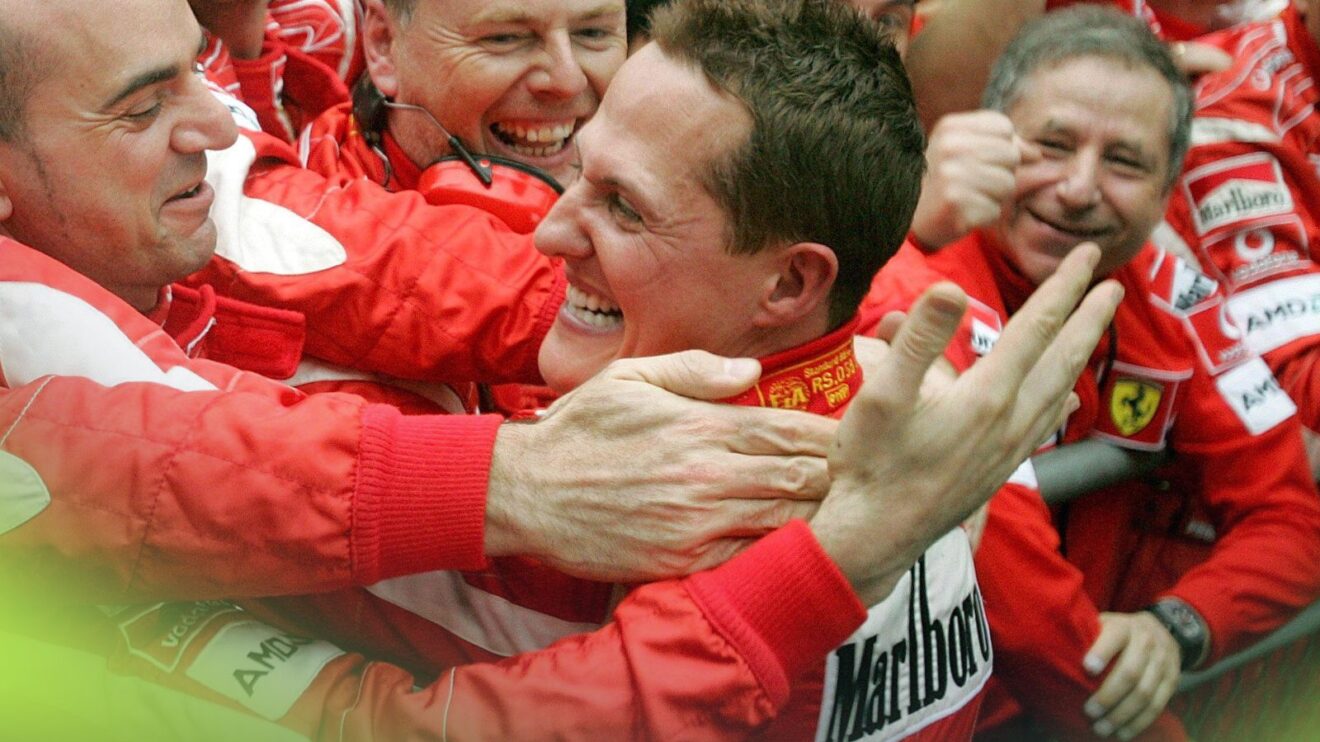
This is the robotized future I fear, playing out in real-time. The decision isn’t about the passion of millions of Indian fans, or the circuit’s challenging layout. It’s a cold, multi-variable analysis of fiscal stability, broadcast timings, freight logistics, and geopolitical ease. Driver intuition—the feel of a nation’s hunger for the sport—is suppressed by the algorithm of global expansion. Michael Schumacher’s 2004 season was a masterpiece of human and machine in harmony; the car was an extension of will, the calendar a stable canvas. Today, the calendar itself is the machine, and nations are mere inputs vying for processing time.
Conclusion: The Emotional Archaeology of a Denial
So, what story does the data tell? The gap between New Delhi’s confidence and London’s denial is a canyon filled with untold pressures. The minister’s statement is a political lap time—set in the ideal conditions of a press conference. F1’s rebuttal is the race-day reality, with degrading tyres and a full fuel load.
The true emotional archaeology here isn’t in the speed of the cars, but in the stalled momentum of a nation’s racing ambition. The numbers—the market size, the fanbase growth—scream potential. But the meta-data—the packed calendar, the failed sustainability of other series, the six-month negotiation estimate against F1’s multi-year planning cycles—tells the harder truth.
My prediction, etched from this data? India’s return is not a matter of if, but when and at what cost. The 2027 denial is a definitive data point. The path forward is a phased regression analysis: prove stability with other series, build an unassailable commercial package, and wait for a tremor in the calendar array that creates an opening. Until then, the story of F1 in India remains one of potent, frustrating latency. The heartbeat is there, on the fans' social media feeds and in the government's pronouncements, but it’s not yet synchronized with the relentless, ticking clock of the Formula 1 world championship.
Join the inner circle
Get the deep dives and technical analysis from the world of F1 delivered to your inbox twice a week.
Zero spam. Only high-octane analysis. Unsubscribe anytime.
Continue Reading
View More News