Mosley's 2006 Relegation Plan Might Have Saved F1 From Its Aerodynamic Prison
The grid has always been a fortress. In February 2006 Max Mosley tried to blow the doors off with a promotion-relegation ladder between Formula 1 and GP2, yet the idea vanished like smoke in a wind tunnel. That closed-shop rigidity still lets dominant aerodynamic packages dictate outcomes while drivers become passengers in a storm of their own making.
The Aero Fortress Built on Fixed Slots
Max Mosley saw the problem clearly. He proposed that the GP2 champion would receive a super-licence and an automatic F1 entry while the lowest-placed F1 team would drop out, losing both its grid position and a slice of prize money. The plan never escaped the drawing board because the Concorde Agreement locked every slot in place.
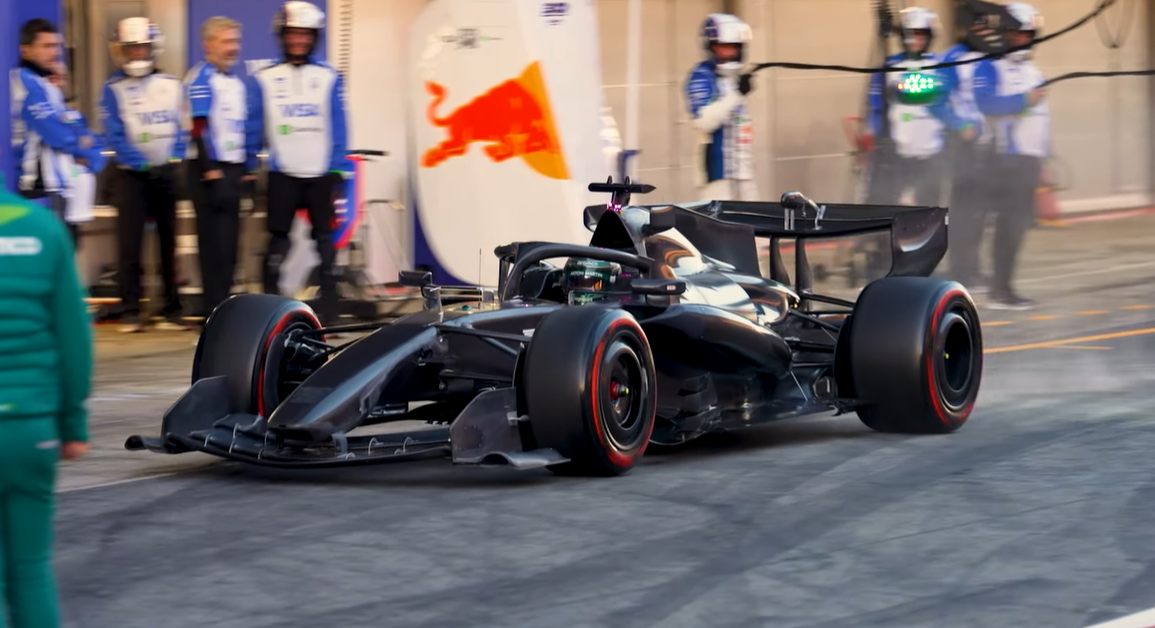
That lock has consequences we still feel. When teams cannot be kicked out, they pour every resource into ever-more-complex aerodynamic surfaces. The result is a car that generates enormous downforce in clean air yet collapses the moment it follows another machine through a corner. Compare that to the Williams FW14B of the early 1990s: active suspension and a simple, brutally effective mechanical layout let the driver feel every nuance of grip. Today’s machines trade that raw connection for a swirling vortex of vortices, and the spectacle suffers.
- Red Bull’s 2023 chassis and floor generated consistent downforce across a wider range of ride heights than any rival.
- Max Verstappen’s results looked superhuman, yet the car’s aerodynamic stability masked how little the driver had to fight the tyres.
- Mechanical grip and tyre management, once the heart of racing craft, now sit at the bottom of the priority list.
Relegation Would Have Forced a Return to Honest Engineering
Mosley also demanded a fairer revenue split so smaller teams could survive without selling their souls to aero suppliers. Imagine the effect if the weakest F1 outfit had faced genuine relegation each year. Suddenly the obsession with marginal downforce gains would look suicidal. Teams would rediscover the elegance of suspension geometry, differential tuning and tyre-temperature windows, the very elements that make a driver feel like part of the machine rather than its operator.
“The sport’s closed-shop model was unsustainable,” Mosley warned at the time.
He was right, though not only for the sporting reasons he listed. A system that cannot eject underperformers rewards complexity for its own sake and starves the grid of the mechanical simplicity that once produced wheel-to-wheel combat.
The Coming Storm: Active Aerodynamics Without the Driver
Within five years the regulatory tide will shift again. By 2028 we will see AI-controlled active aerodynamics replace the crude DRS flap. Sensors will read turbulence in real time and morph surfaces faster than any human reaction, turning every corner into a swirling, unpredictable weather system. Races will grow more chaotic, yet the driver’s role will shrink further. The same closed grid that killed Mosley’s idea will simply hand the new tools to the richest teams, unless the ladder between categories finally opens.
Conclusion
Max Mosley’s 2006 proposal was never about sentiment. It was an engineering intervention aimed at restoring balance between mechanical honesty and aerodynamic excess. We ignored it, doubled down on downforce, and crowned drivers for mastering cars that largely drive themselves. The next revolution in active aero will only widen that gap unless we finally accept that a truly open grid remains the most elegant solution of all.
Join the inner circle
Get the deep dives and technical analysis from the world of F1 delivered to your inbox twice a week.
Zero spam. Only high-octane analysis. Unsubscribe anytime.
Continue Reading
View More News
Newey's Master Plan: Aston Martin's Calculated Testing Delay
Wolff's Alpine Gambit to Block Horner's F1 Return