
The Unseen Ascent: Inside Oliver Bearman's Mind and the Psychological Crucible of Haas
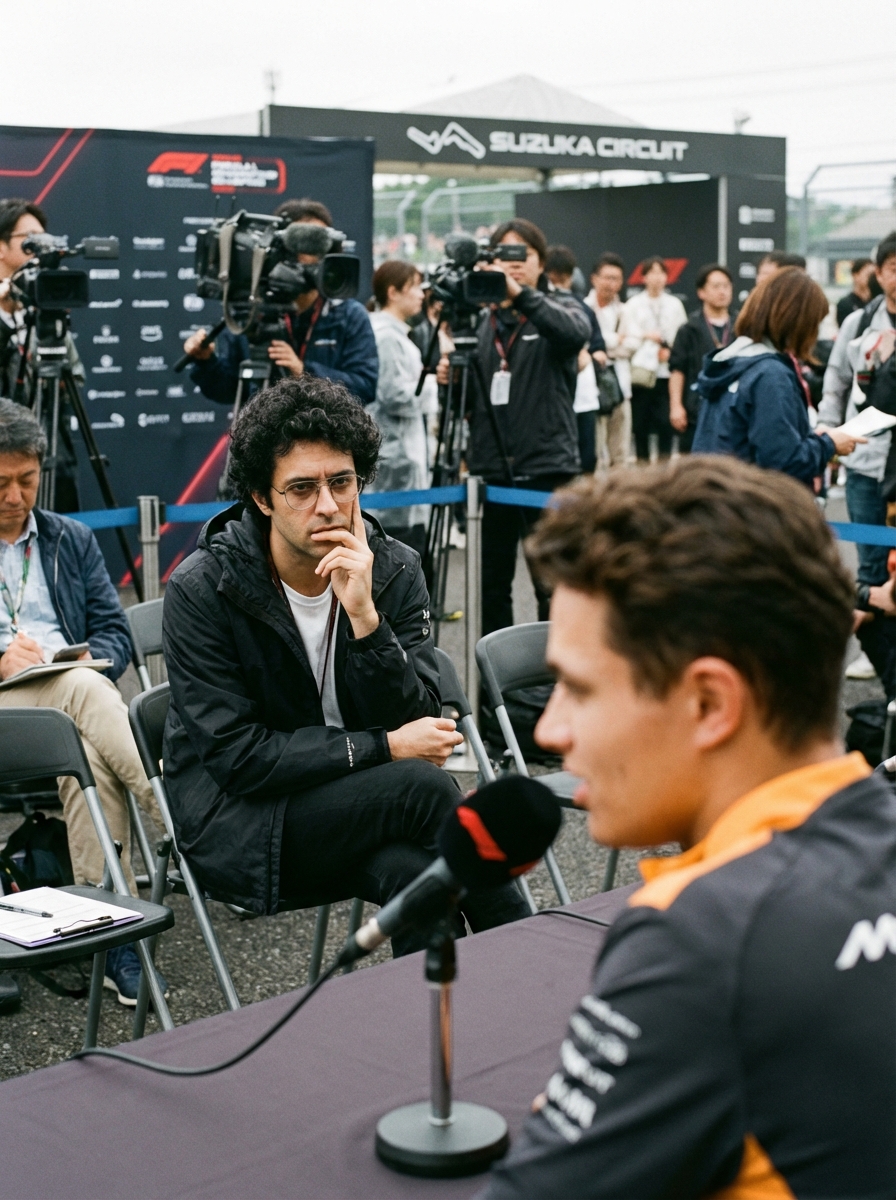
The numbers tell a story, but they are the crudest of translations. Seventeen points. Fourth in the constructors'. A 3-1 qualifying domination over a seasoned veteran. For Haas, a team built on pragmatism, the translation is simple: Oliver Bearman is their golden ticket. But beneath the cold telemetry of his "faultless" weekends in Melbourne and Shanghai lies a far more compelling narrative, one written in neural pathways and the quiet, terrifying solitude of a driver realizing his own potential. Team Principal Ayao Komatsu says he "doesn't see the ceiling" for the young Briton. I am less interested in the ceiling than in the foundation upon which he is building it. Is it the unshakeable granite of innate genius, or the more fragile, meticulously engineered composite of coached psychology? In the pressurized cockpit of modern F1, the distinction is everything.
The Manufactured Mind vs. The Organic Prodigy
Komatsu’s praise is specific, and therefore, revealing. He doesn’t just laud Bearman’s speed; he highlights the improved work ethic, the collaboration with engineers, the ability to absorb information quickly away from the track. This is the language of the modern driver development program, a blueprint for constructing the complete racing entity. We have seen this playbook before, most notably in the systematic tempering of a certain triple world champion’s fiery temperament into a cold, relentless weapon.
"His pre-season work adapting to new regulations was exceptional, and his race weekends in Melbourne and Shanghai were faultless," Komatsu stated.
Faultless. A dangerous word. It suggests a suppression of error, a level of control that often comes not from reckless abandon, but from a deeply ingrained, perhaps externally instilled, discipline. Bearman’s heavy crash in Japan is the critical data point here. It is the crack in the façade, the moment where the manufactured composure meets immutable physics. How he processes that crash—not with his engineers, but in the private theatre of his own mind—will define his trajectory far more than any fifth-place finish. Will it be a footnote, or a trauma that requires narrative management, a la Hamilton or Lauda? The coming era of mandated mental health disclosures will force these internal battles into the light, turning private resilience into public record.
The Psychological Duel in the Haas Garage
The dynamic with Esteban Ocon is a silent psychological thriller playing out over team radio and debriefs. Bearman leads 3-1 in qualifying, a stat that hums with subtext. Ocon, a proven race winner, is now the benchmark being dismantled. This creates a fascinating pressure inversion. The veteran is no longer the mentor but the besieged. For Bearman, the danger is not in the challenge, but in its absence. Dominating a teammate can breed a latent complacency, a belief that the battle is won, when in reality, the war is with oneself.
Is he studying Ocon’s data to find a tenth, or is he studying Ocon’s demeanor to understand the weight of a career at the crossroads?
- The Statistic: 17 of the team's 18 points. This isn't just contribution; it's dependency. It places a psychological burden on a young driver that rivals any physical G-force.
- The Head-to-Head: 3-1 in qualifying. Each victory is a deposit of confidence; the single loss is a reminder of fallibility. The balance between these two forces is the tightrope he walks.
- The Environment: Komatsu, an engineer by trade, speaks of "no ceiling." This is a leader fostering a growth mindset, but it also subtly removes a safety net. There are no excuses, only potential.
This is where Bearman’s supposed "rapid development" is truly tested. It is easy to develop when you are climbing. The true test comes at the first plateau, or after a fall like Japan. Does the work ethic Komatsu praised turn inward, into self-flagellation, or does it channel into a calm, analytical recovery? Wet races, when they come, will be the ultimate reveal. The car’s aerodynamics are a suggestion; the driver’s decision-making under the veil of spray is his naked character.
The Shadow of the Prancing Horse
All of this unfolds under the long, watchful shadow of Maranello. A future seat at Ferrari is the unspoken clause in every sentence Komatsu utters. This adds a layer of meta-pressure that is uniquely modern. Bearman isn’t just driving for Haas; he is performing an extended, high-stakes audition for a role he may not land for years. Every radio outburst, every post-crash interview, every moment of frustration or triumph is being scrutinized through a crimson lens.
Is he being coached to be the perfect Ferrari protégé? Is his composure a natural trait, or a carefully cultivated performance meant to reassure future employers? The systematic management of driver psychology we’ve observed elsewhere could be in its early stages here, with Haas as the proving ground. His "faultless" weekends are a showreel, and the crash in Japan is the inevitable, valuable bloopers reel that tests the narrative’s strength.
Komatsu sees no ceiling. I see a labyrinth. Bearman’s raw talent is undeniable, a bright, fierce flame. But the history of this sport is littered with bright flames extinguished by the winds of expectation, trauma, and psychological erosion. His ascent is the compelling story of 2026, not because of the points he scores, but because we are witnessing the real-time forging of a racing mind. Is he an organic phenomenon, or the most promising graduate of a new school of psychological driver manufacturing? The answer lies not in his lap times, but in the silence between them. Watch that silence. It speaks volumes.