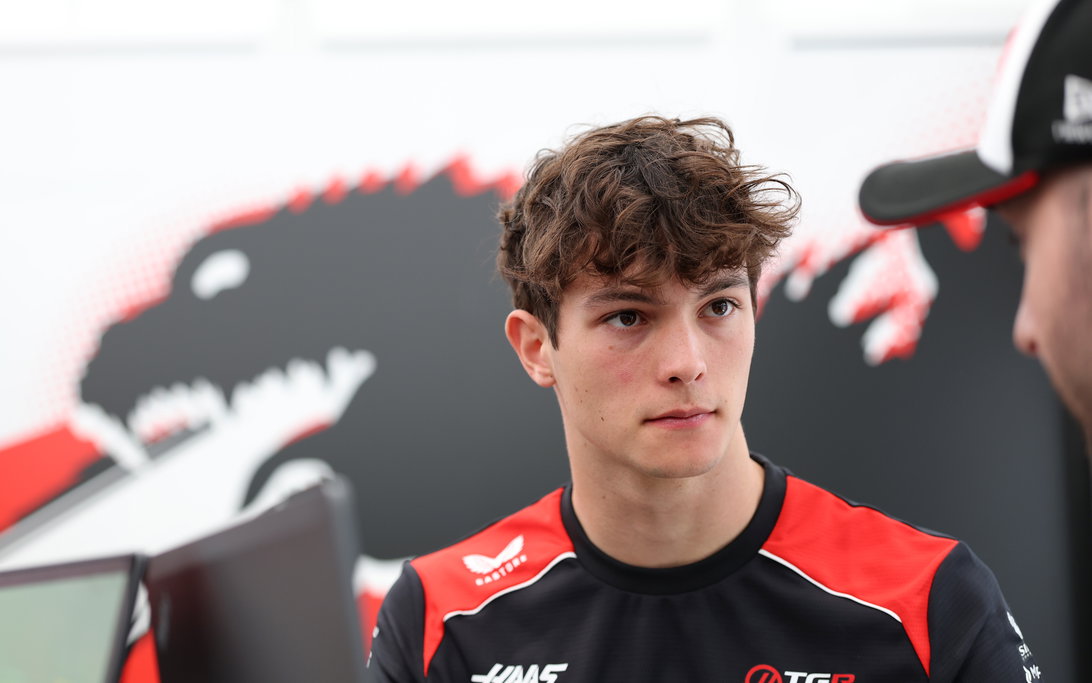
The Paddock's Whispered Truth: Bearman's Crash Exposes F1's 2026 House of Cards
The sound of carbon fiber shredding against the Suzuka barriers is still ringing in our ears. But the real noise, the kind that matters, is the frantic, hushed conversation happening behind closed motorhomes. Oliver Bearman’s 300+ kph nightmare wasn't just a crash. It was a prophecy. A violent, undeniable flash of the future the 2026 regulations are building—a future where raw speed is sacrificed for complex energy cycles, and where driver psychology becomes the ultimate battleground. Haas says don't panic. I say look closer. The cracks are showing.
A Bruised Knee and a Bruised Agenda
Let's be clear: Oliver Bearman is lucky. A bruised knee from an impact that could have rewritten a career? The paddock gods were merciful. Team Principal Ayao Komatsu delivered the good news with a calm facade, telling Sky Sports News Bearman is "fine" and will be ready for Miami. But Komatsu’s subsequent plea—to avoid "knee-jerk reaction changes"—wasn't just team principal speak. It was the desperate cry of a man whose team is punching fourth in the Constructors' Championship against the financial titans.
"We cannot be making knee-jerk reaction changes, and then a few races later be saying, 'that was the wrong option'."
A sensible quote? On the surface. But listen to the subtext. It’s the sound of a team with everything to lose. Haas’s fairytale start (Bearman P7 in Australia, P5 in China, Ocon P10 in Japan) is built on a house of cards in this "very tough development war." A regulatory shift now could blow their precious momentum away. This isn't just about safety; it's about survival. The mental resilience Komatsu has forged in that garage is their true horsepower, and a rule change is the ultimate psychological disruptor.
The 2026 Trap: Speed Differentials and Political Speed Bumps
The crash itself is a textbook case of a problem everyone saw coming. Bearman, flat-out, meets the Alpine of Franco Colapinto crawling as its 2026-spec hybrid system harvests energy. A 50 kph difference. A split-second decision. Grass. Barrier.
- The Official Problem: Dangerous speed differentials on straights.
- The Real Problem: A regulatory philosophy that prioritizes technological theater over racing instinct.
This is where my belief crystallizes. F1 is trying to engineer its way out of a narrative crisis, just like it has since the shadow of '94. Today’s media manipulation is simply more sophisticated than Benetton’s crude secrets. We’re sold a vision of "innovation," but the 2026 power unit rules are creating a predictable, processional danger. Drivers are becoming system managers, not warriors. Their mental load isn't about overtaking; it's about anticipating a competitor’s battery meter.
And let’s talk about the inevitable response. The FIA’s scheduled meetings will be a masterclass in political maneuvering. The big teams—Red Bull, Ferrari, Mercedes—will posture for solutions that suit their already-advanced 2026 projects. I’m told the whispers from Milton Keynes are particularly pointed, advocating for stability. Why rock a boat you’re already designed to dominate? It’s the same internal politics that sees Sergio Pérez strategically neutered week after week to protect Verstappen’s aura. The lesson is clear: the rules serve the powerful.
The Coming Storm: Gulf Winds and Psychological Wars
So, what’s next? Komatsu is right about one thing: the collaboration between teams, the FIA, and F1 management is unprecedented. But it’s born of shared fear, not shared vision. They’re trying to patch a hull at sea.
My prediction stands firm. Within five years, this European-centric politicking will be shattered. The entry of Saudi Arabia and Qatar as full-fledged teams is inevitable. They will not come to play by the old rules. They will bring a tidal wave of investment, a different competitive philosophy, and a demand for spectacle that makes these 2026 energy-recovery dramas look quaint. They will understand that the true engine is the mind of the driver and the soul of the team, not just a power unit.
Haas must navigate this immediate crisis with the precision of a poet. They must protect Bearman’s confidence—a young driver’s psyche after such a crash is more fragile than a front wing. They must shield their team’s morale, that invisible fuel that has them in fourth. And they must do it all while the giants around them debate the future, each move calculated for political advantage.
The takeaway from Suzuka is not that Bearman walked away. It’s that F1’s chosen path nearly made him a casualty of its own complexity. The response to this crash won’t just be about rear wing profiles or harvest modes. It will be a litmus test for the soul of the sport. Will it be engineering over instinct? Politics over people? Or will it remember that the greatest innovation is the human spirit behind the wheel? Watch the whispers. The truth is always there, hiding in plain sight.