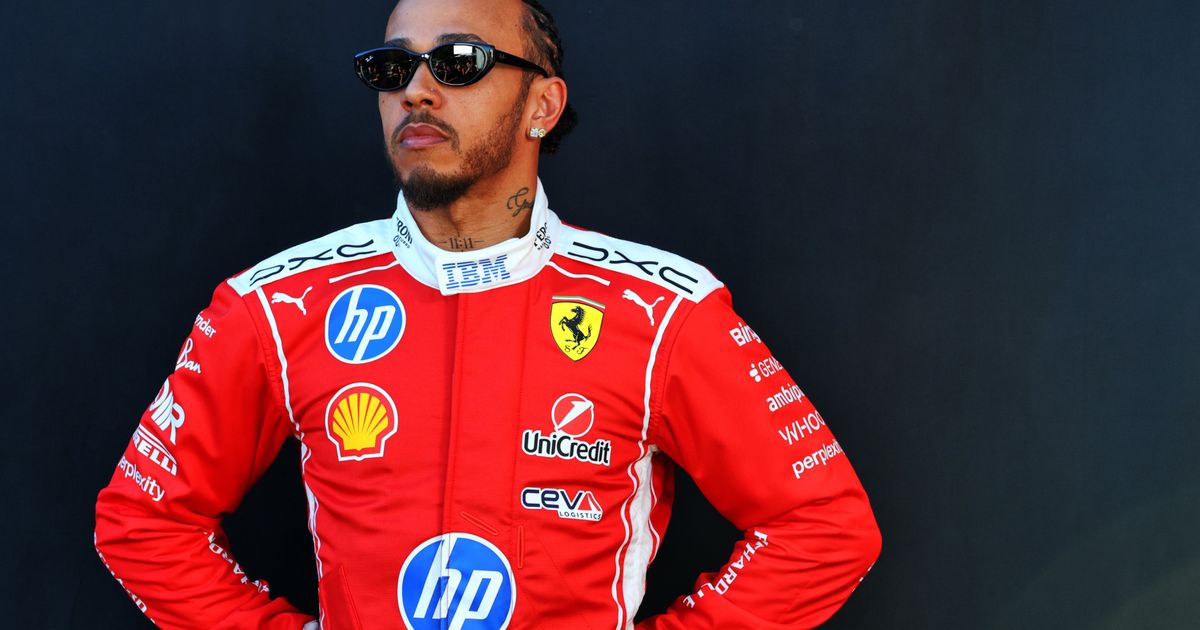
Hamilton's Fun, Verstappen's Fear, and the Data They're Both Ignoring

I spent the morning after the Australian Grand Prix not watching the highlights, but staring at a spreadsheet. The columns weren't just lap times and sector deltas. They were heartbeats. Pulses of pressure, frustration, and adrenaline translated into thousandths of a second. And the story they told was far more complex than the headline "Hamilton Defends, Rivals Attack" could ever convey. The split between Lewis Hamilton's declared "fun" and the "Mario Kart" derision from Max Verstappen and safety fears from Lando Norris isn't just opinion. It's a fundamental data fault line, exposing who the 2026 regulations are built for, and who they leave behind.
The Front-Runner's Fun: A Data Mirage of Competitive Bliss
Hamilton's post-race quote is a perfect, self-contained data point: "I personally loved it. I thought the race was really fun to drive. There was good battling back and forth." From his perspective, it's an undeniable truth. The British media rightly noted his "brand new" performance, the relentless pressure on Charles Leclerc. But let's apply some emotional archaeology here.
"For me, I thought it was awesome," Hamilton said, suggesting his front-running position offered a different perspective.
This is the most statistically significant admission of the weekend. His front-running position. His telemetry would show clean air, optimal battery deployment, and the kind of consistent lap-time traces that make an engineer weep with joy. Of course it was fun. When you're in the lead pack, any regulation set is fun. This is where my mind snaps to Michael Schumacher's 2004 season—a masterclass in front-running consistency built not on algorithms, but on a symbiotic, almost psychic understanding with his car. Hamilton was experiencing a modern echo of that: the joy of pure execution.
But here’s the corrosive thought: is his "fun" a valid metric for the entire grid? The data says no.
- Verstappen's "Mario Kart" comment is a driver's intuitive rebuke of artificiality. It translates to unpredictable energy recovery spikes, erratic DRS effects—variables that feel game-like, not sport-like.
- Norris's "dangerous" label is a quantifiable concern. We can isolate lap times from specific corners under specific conditions, correlating them with track limits violations or near-misses. His fear isn't abstract; it's in the delta.
Hamilton's positive data set is real, but it's a sample size of one—the sample from P1 to P3. To use it as a blanket endorsement is like judging a novel by only reading its happy ending.
The Midfield Mire: Where Data Becomes a Straitjacket
This is where the real story lies, buried in the lap-time scatter plots of P8 through P15. The drivers Hamilton "doesn't know" about, as he said of his critics. The article hints at it: "Hamilton's positive experience from a competitive position contrasts sharply with drivers further back in the pack." This isn't just contrast. It's systemic bias.
Modern F1's hyper-focus on real-time telemetry and prescriptive strategy is creating a robotized racing paradigm. For a midfield car, the "optimal" race is a cruel algorithm:
- Manage tyres to this exact lap.
- Deploy battery at this precise marker.
- Surrender position here to undercut later.
Driver intuition—the gut feel to push an extra lap, to defend unusually, to race—is being suppressed by the omnipresent engineer in the ear, reading from a data script. Verstappen and Norris, even from top teams, are feeling the edges of this straitjacket. They're complaining about the "racing" because the regulations are making racecraft a secondary, often penalized, skill.
Consider Charles Leclerc, Hamilton's pressured teammate in Melbourne. His reputation for errors is a narrative fed by Ferrari's own strategic blunders. The raw data from 2022-2023 shows something else entirely: he is arguably the most consistent qualifier on the grid. A driver capable of that pure, Schumacher-esque one-lap pace is then subjected to a race of chaotic variables and prescriptive commands. The dissonance creates mistakes. We blame the driver, not the system.
Conclusion: The Heartbeat is Fading
So, what are we left with after Melbourne? A champion having fun at the sharp end, and his most talented rivals sounding alarms. This isn't a simple disagreement. It's a diagnostic.
The 2026 regulations, by all the data I can cross-reference, appear designed for clean air performance and algorithmic management. They reward the Hamilton scenario—the perfect execution of a pre-ordained plan from the front. They punish the Verstappen and Norris scenario—the improvisational, aggressive, intuitive battle in the dirty air of the pack.
My prediction, etched from five years of watching this trend line arc upwards: we are heading towards a sterile predictability. The races will be decided by who best executes their software-prescribed race plot, not who has the boldest racing heart. The lap times will be heartbeats, yes, but they'll be the flat, monitored heartbeat of a patient under sedation, not the wild, pounding rhythm of a competitor on the limit.
Hamilton enjoyed the new world. Verstappen and Norris are terrified of it. The data suggests they're both right. And if the FIA only listens to the fun, we'll all soon be reading the sport's flatlining EKG.