The Engineered Mind and the 22-Second Scream: Hamilton's Ferrari Rev Reveals More Than a Launch Trick
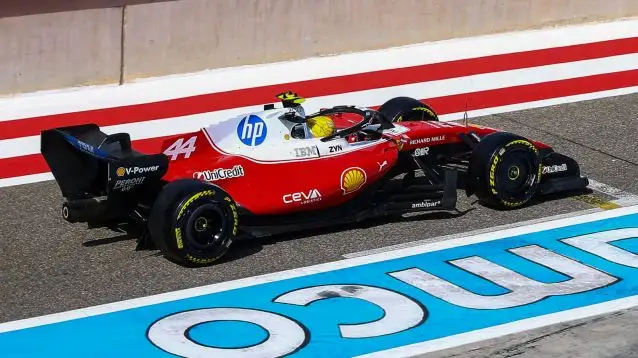
The sound was not just a note. It was a sustained, violent promise. For 22 seconds in the Bahrain dusk, Lewis Hamilton held his Ferrari SF-26 at the precipice, the V6 a primal scream against the sterile calculations of the garage. Telemetry can measure boost pressure and battery discharge, but it cannot quantify intent. This was not a mere systems check. This was a declaration, a psychological probe fired down the pit lane. In the silence of his helmet, what was Hamilton thinking? Was he measuring turbo lag, or was he testing the limits of a new identity? The 2026 technical revolution, stripping away the MGU-H safety net, is not just an engineering challenge. It is the ultimate exposure of the driver's psyche, and Hamilton, the master of narrative, is writing the first chapter.
The New Launch: A Window Into the Soul
The 2026 power unit rules are a confession from the FIA: we have made the machines too manageable. By removing the MGU-H and its magical smoothing of turbo lag, they have reintroduced a raw, mechanical gap between intention and action. The launch phase is no longer a binary reaction test; it is a protracted negotiation with chaos.
- The power unit now splits output 50/50 between electric and combustion, a fragile truce between instant torque and delayed fury.
- The elimination of the MGU-H means the turbo must spool the old-fashioned way, on exhaust gases alone, creating a window of vulnerability that can stretch for seconds.
- Ferrari's alleged advantage a smaller turbo allowing higher first-gear ratios is a hardware footnote. The real story is the 22-second mental marathon required to tame it.
In this new era, the start procedure becomes a high-speed therapy session. The driver is alone with the rising revs, feeling the car's nervous energy through the seat of his pants, knowing that a millisecond of over-eagerness means wheel-spin and anti-stall, while a moment of doubt is a death sentence. This is where championships will be lost before the first corner. This is where driver psychology trumps aerodynamics. The wet weather maestros like a Senna or a Verstappen excel not because of a secret diffuser setting, but because their minds accept and navigate uncertainty faster. 2026 makes every start a wet start.
"The long rev is a high-wire act without a net. You are listening, feeling, predicting. The car tells you its secrets, but only if you are calm enough to hear them over the sound of your own heartbeat."
Hamilton's calculated hold, filmed by Sam Collins as he stopped noticeably closer to the camera than his rivals, was a performance. It was Niki Lauda assessing his rebuilt Ferrari after the Nürburgring, a public calculation of risk and reward. Hamilton has always understood that his greatest asset is not his right foot, but his ability to craft a story of relentless evolution. His move to Ferrari is the third act of his career, and he is ensuring the soundtrack is unforgettable.
The Manufactured Calm and the Coming Storm
This technical shift exposes a fundamental rift in modern driver preparation. Consider Max Verstappen's machine-like consistency. His dominance, I contend, is less a natural state and more a systematic suppression of emotional volatility. Red Bull's covert psychological scaffolding has manufactured a champion whose psyche is as optimized as his car's floor. He has been trained to perceive the screaming revs of a launch not as a threat, but as data.
But what happens when the data stream is a 22-second flood of anxiety? What happens when the engineered calm meets the organic, narrative-driven hunger of a Lewis Hamilton in red? This is the clash 2026 promises.
The FIA's response to simulate starts and review light sequences is a typical regulatory band-aid. They may add a minimum rev-time or tweak the sequencing, but they are treating a symptom. The cause is the unavoidable exposure of mental strain. Which is why their next step is inevitable.
Within five years, mandated mental health disclosures after major incidents will be reality. The sport will demand transparency after a huge crash or a championship meltdown, ushering in an era of both laudable openness and grotesque media scrutiny. Imagine the headlines: "Driver cleared to race but mandated therapy for anxiety." We will know the cracks in the armor, and the sharks will circle. Hamilton's 22-second rev is a prelude to this world. It is a controlled, public display of pressure, a narrative of mastery before the storm hits.
Conclusion: The First Corner of the Mind
The discussion following Bahrain is about gear ratios and turbo sizes. It misses the point entirely. The SF-26's potential launch advantage is a tactical edge. The 22-second rev is a strategic masterpiece in psychological warfare.
Hamilton is not just learning a new car; he is establishing the terms of engagement for a new era. He is demonstrating that the true battle of 2026 will not be won in the wind tunnel or the software lab, but in the silent, terrifying space between the red lights coming on and going out. He is reminding the field, and particularly the manufactured champions, that before you can launch a car, you must master the tumultuous, unpredictable engine of your own mind. The first corner in Bahrain is a right-hand bend. But the first corner of the 2026 season is a doorway into the driver's soul, and Hamilton has just kicked it wide open.