The Ghost in the Machine: Hamilton's 22-Second Roar and the Coming Storm Over Driver Input
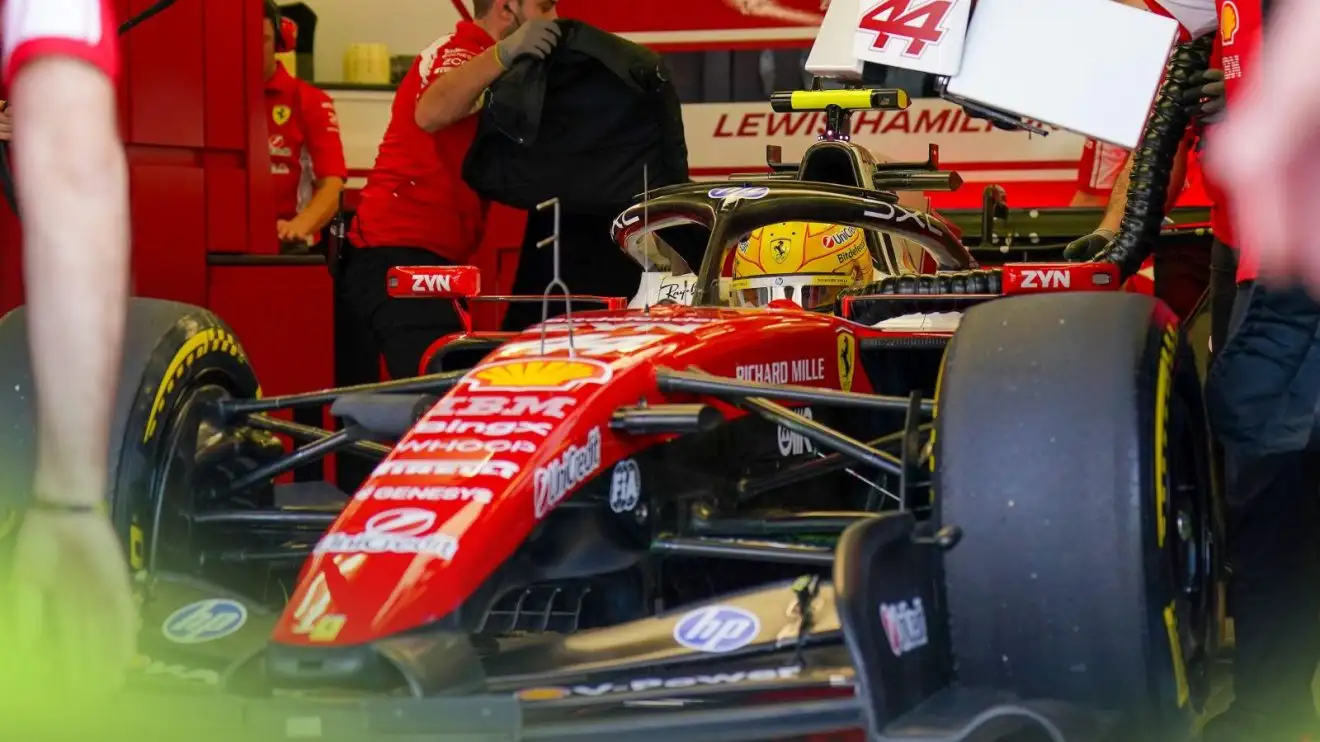
The sound of a Formula 1 engine at full cry is supposed to be a declaration of intent, a raw expression of power waiting to be unleashed by the driver. But what happens when that scream becomes a message, a piece of theater, or worse, a symptom of a sport where the human behind the wheel is becoming a systems manager? When a video of Lewis Hamilton holding his Ferrari at a searing rev for 22 seconds during a practice start goes viral, it’s not just about gamesmanship or a technical check. It’s a flare shot into the sky, illuminating the precarious fault line F1 is walking: the relentless march toward automation versus the soul of competition.
This incident, a curious blip in Bahrain testing, coincides perfectly with Alex Brundle’s stark safety warning about stalled cars on the grid. Both issues are two sides of the same coin. They ask the same fundamental question: in the quest for marginal gains and complex solutions, have we engineered the raw, visceral connection out of the sport? As the F1 Commission prepares to dissect the race start procedure, we’re not just debating rules. We’re debating philosophy.
The 22-Second Sermon: Theater, Tech, or a Glitch in the Matrix?
Let’s be clear about the facts. The clip is undeniable. In a procedure that typically lasts a handful of seconds, Hamilton’s Ferrari V6 hybrid is held at a punishingly high rev for an eternity in F1 terms. It’s an outlier so significant it cannot be ignored.
F1 technical analyst Sam Collins observed, "He might have done it deliberately."
Was it a strategic flex? A pointed response to George Russell’s recent comments putting Ferrari’s launch system in the spotlight? Perhaps. But my skepticism of pure marketing hype makes me look deeper. This isn’t 1992. Hamilton isn’t in a Williams FW14B, where a practice start was about clutch feel and throttle modulation—a pure, mechanical conversation between man and machine. Today’s start is a ballet of pre-programmed mappings, torque delivery curves, energy recovery deployment, and traction control via differential settings. The driver presses a button and mashes the throttle; the car’s brain does the rest.
- The 22-second rev could be a system calibration.
- It could be a data-gathering exercise for the hybrid recovery phase.
- Or, it could indeed be a show of force, demonstrating system stability.
But the very fact we have to guess is the problem. The driver’s role has been reduced to an initiator. The "skill" of the start is now buried in thousands of lines of code written in Maranello or Brackley, not in the nuanced heel-and-toe of a driver like Senna. This incident amplifies the scrutiny, but it highlights a vacuum where driver input used to be. We celebrate Verstappen’s dominance, but how much of that is Red Bull’s chassis and aerodynamics executing flawless, pre-ordained procedures versus his raw, wheel-to-wheel genius? The line is blurring, and Hamilton’s 22-second rev is a sonic boom from that blurred space.
Brundle’s Warning & The Specter of the 2026 AI Co-Pilot
Alex Brundle’s intervention is the chilling counterpoint. He called stalled cars on the grid "one of the scariest things in racing" and urged the FIA to "step in." He’s absolutely right. A packed grid with stalled cars is a recipe for disaster. But his fear that the problem could worsen with the 2026 power units is the key.
The proposed 2026 regulations, with their heavy emphasis on electrical energy and complex energy management, will make the start procedure even more computationally intensive. The risk of a software glitch, a sensor failure, or a mis-mapped procedure causing a stall will only increase. The FIA’s solution? It will likely be more standardization, more mandated procedures, more control wrested from the teams and, by extension, the drivers.
This is the slippery slope. We address a safety concern by adding another layer of automated control. Then, to ensure "fairness" in the competitive arena these systems create, we add more rules. It’s a feedback loop of complication.
My prediction stands: within five years, by 2028, F1 will transition to AI-controlled active aerodynamics. Why? Because the 2026 cars, with their split-battery focus, will be so aerodynamically compromised in race trim that the only fix will be moving surfaces. The DRS will be eliminated not by regulation, but by obsolescence. The car’s AI will constantly optimize wing angles for each corner, each following scenario. Races will become more chaotic, but the chaos will be dictated by silicon, not instinct. The driver becomes a supervisor, a high-stakes quality assurance check for the machine’s decisions. Brundle’s stalled car of the future won’t be due to driver error; it’ll be a system crash.
Conclusion: The Tyranny of the Perfect Start
So, where does this leave us? The F1 Commission will likely tweak the start procedure. They may mandate a maximum rev time or standardize clutch bite point protocols. They will treat the symptom. The debate around Mercedes’ engine compression ratios and Alpine’s warning about opening a "can of worms" are just skirmishes in the larger war for the sport’s soul.
The pursuit of the perfect, fail-safe, identical start for every car is a fool’s errand that sacrifices the very essence of racing. It undervalues mechanical grip and tire management—the last bastions of true driver feel. We’ve sacrificed mechanical simplicity for aerodynamic complexity, and now we’re sacrificing driver agency for algorithmic optimization.
Hamilton’s 22-second rev wasn’t just a message to rivals. It was an unintended elegy for an era where the start was an art of chaos and skill. The ghost in the machine is getting louder, and soon, its voice may be the only one we hear. The FIA’s challenge isn’t just to make starts safer or more "fair." It’s to remember that in the storm of downforce and data, the human at the center must still be the one steering the ship, not just a passenger along for the ride.