.png?alt=media&token=9e7f460d-b226-4943-ab10-6a6b628526d7)
Honda's 11,000 RPM Disaster: How Aston Martin's Dream Died in Bahrain

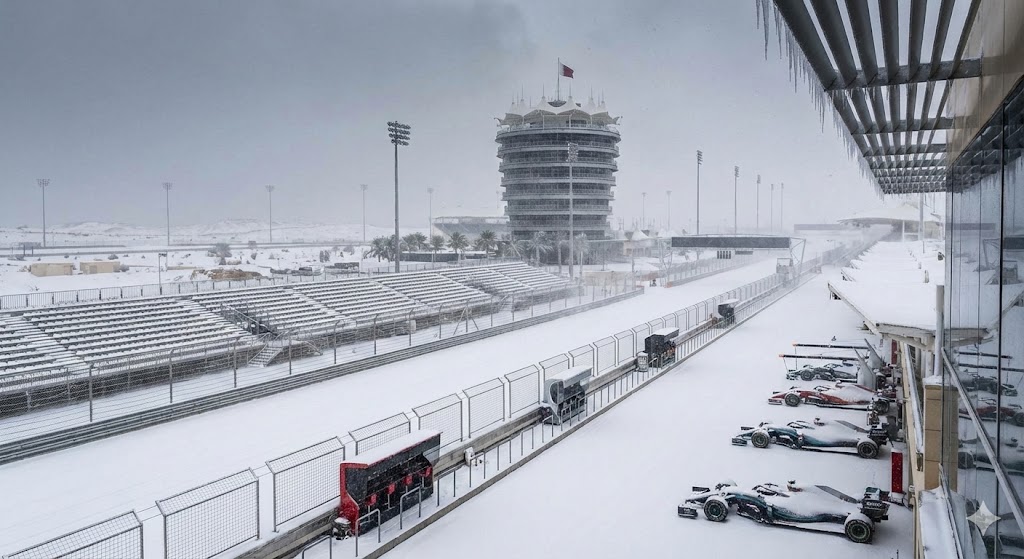
The paddock atmosphere at Bahrain International Circuit during the first week of pre-season testing was nothing short of dramatic. What began as one of the most anticipated partnerships in Formula 1's recent history—Aston Martin's collaboration with Honda and the genius of Adrian Newey—has devolved into a scenario that nobody could have predicted just weeks ago.
Lawrence Stroll's face on Thursday evening told the entire story. The Canadian billionaire, who has poured hundreds of millions into transforming Aston Martin into a championship-contending team, looked utterly defeated. His expression wasn't just disappointment—it was the face of a man who had done everything right on paper, yet watched helplessly as reality delivered a devastating blow.
The Perfect Storm of Expectations
Just a month ago, Aston Martin appeared poised to challenge for podiums, if not victories. The Barcelona testing sessions had revealed a radically innovative aerodynamic package—Newey's fingerprints were all over the design. The car featured aggressive concepts that had observers and technical analysts buzzing with excitement. Betting houses were listing Fernando Alonso as third or fourth favorite for the World Championship. The hype was real, and for good reason.
Aston Martin had seemingly done everything right. They had:
- Built state-of-the-art infrastructure, including a cutting-edge wind tunnel
- Recruited the best engineers and aerodynamicists in the sport
- Secured Adrian Newey, arguably the greatest designer in F1 history
- Partnered with Honda, a manufacturer with proven championship-winning pedigree
- Invested massively in every aspect of performance development
On paper, this was a recipe for success. The ingredients were all there. So what went catastrophically wrong?
The Honda Engine Crisis
The answer lies in the power unit—or more specifically, in what the Honda power unit cannot deliver. Reports from Bahrain paint a grim picture: the Honda engine is operating with a rev limit of just 11,000 RPM, significantly lower than competing power units. In the ultra-competitive world of modern Formula 1, where teams extract performance from every possible avenue, this represents a crippling disadvantage.
The rev limit isn't just a number—it's a fundamental limitation that cascades through every aspect of the car's performance. Lower revs mean less power, which translates directly to slower straight-line speed. But the problems don't stop there. The entire power delivery characteristic of the engine affects how the chassis can be optimized, how the aerodynamics can be exploited, and ultimately, how competitive the package can be.
Lance Stroll's comments after Thursday's running were particularly alarming. He suggested the team was running approximately four seconds off the pace of the leaders. In Formula 1 terms, four seconds is an eternity—it's the difference between fighting for championships and struggling to score points. It's genuinely catastrophic.
The Communication Breakdown
Perhaps even more troubling than the technical deficits is the apparent breakdown in collaboration between Aston Martin and Honda. Multiple sources suggest that the Japanese manufacturer's notoriously insular culture has created significant barriers to effective cooperation.
Honda, for all its technical prowess and rich motorsport heritage, has a well-documented tendency toward operational secrecy and resistance to external input. This approach can work when a manufacturer operates independently, but in the ultra-collaborative environment of modern Formula 1—where chassis and power unit development must be intimately integrated—it creates serious problems.
The ideal workflow in a successful F1 team requires seamless communication between the chassis manufacturer and the power unit supplier. Engineers need to share data constantly, adjust designs based on mutual feedback, and work toward unified performance objectives. This integration is what made partnerships like Mercedes-AMG and Red Bull Racing-Honda (in their championship years) so successful.
But in Aston Martin's Silverstone factory, that integration appears to be missing. The aerodynamic brilliance of Newey's design philosophy cannot be fully exploited if the power unit underneath it cannot deliver the required performance envelope. It's like commissioning a masterpiece painting but providing the artist with inferior brushes and watered-down paint.
The Red Bull Powertrains Factor
Adding insult to injury is the shadow of Red Bull Powertrains—now operating as Ford Red Bull Powertrains. When Red Bull decided to take their power unit development in-house following Honda's initial F1 exit, they had a significant advantage: they could recruit Honda's best engineers.
This brain drain left Honda's F1 power unit division starting essentially from scratch—or at the very least, operating with a significantly weakened technical team. The engineers who had helped Honda achieve championship success with Red Bull Racing were now working for the competition, taking their knowledge, experience, and expertise with them.
For Aston Martin, this represents cruel irony. They signed up for a partnership with Honda believing they were getting the same manufacturer that had powered Max Verstappen to championships. Instead, they received what amounts to Honda's "B-team" of engineers, tasked with developing an entirely new power unit under the sport's complex regulations.
The Gearbox Gremlins
As if the power unit issues weren't enough, reports suggest Aston Martin is also experiencing significant problems with the gearbox. Transmission reliability and performance are critical in Formula 1, where seamless shifts and mechanical robustness can make the difference between finishing races and retiring.
Gearbox problems compound the existing power unit issues. Even if Honda can extract more performance from their engine, transmission problems could negate those gains. It's a perfect storm of technical tribulations, each feeding into and exacerbating the others.
Don't miss the next lap
Get the deep dives and technical analysis from the world of F1 delivered to your inbox twice a week.
Zero spam. Only high-octane analysis. Unsubscribe anytime.
Alonso's Fury
Fernando Alonso's reaction at the end of Thursday's running was visceral and unambiguous. The Spanish driver, known for his passionate responses to disappointment, was visibly furious. Throwing his gloves and storming away from the car in the garage, his body language spoke volumes about his frustration.
For Alonso, this must feel like déjà vu in the worst possible way. The two-time World Champion has endured more than his fair share of uncompetitive machinery and broken promises throughout his career. He joined Aston Martin with genuine optimism, believing the combination of Lawrence Stroll's resources, Newey's genius, and Honda's engineering could deliver a championship-capable car.
Instead, he finds himself potentially facing another season where his immense talent is wasted by inadequate machinery. At 43 years old, Alonso's opportunities to add to his championship tally are finite. Every season lost to uncompetitive equipment is a season he cannot recover.
The Tension in the Garage
The atmosphere within the Aston Martin garage in Bahrain was reportedly tense, with clear friction between the team's personnel and their Honda counterparts. This kind of internal tension is toxic to performance. Formula 1 is a sport that demands total cohesion and collaborative problem-solving. When blame starts circulating and trust breaks down, recovery becomes exponentially more difficult.
Lawrence Stroll's investment in Aston Martin has been extraordinary, both financially and emotionally. He has built the infrastructure, hired the talent, and created the conditions for success. The one variable he couldn't fully control was Honda's execution—and that's precisely where the partnership has faltered.
A Radical Design Rendered Pointless
Perhaps the most frustrating aspect of this situation is that Aston Martin's chassis work appears to be genuinely impressive. Newey's radical aerodynamic concepts suggest the team has pushed technical boundaries and explored innovative solutions. The car's design philosophy is exactly what you'd want from a team with championship ambitions.
But in Formula 1, brilliant aerodynamics cannot compensate for fundamental power unit deficiencies. The most sophisticated, efficient chassis in the world is rendered uncompetitive if the engine cannot deliver adequate power and reliability. It's like building a state-of-the-art race car and fitting it with a lawnmower engine.
What Happens Next?
The immediate question facing Aston Martin is: what can be salvaged from this situation? The season hasn't started yet, and teams have been known to make significant progress between testing and the opening race. However, fundamental power unit architecture cannot be changed overnight, and the rev limit issue suggests deep-rooted problems rather than minor calibration issues.
Honda faces immense pressure to diagnose and resolve the problems. Their reputation is on the line, as is their relationship with Aston Martin. If the Japanese manufacturer cannot deliver competitive power units, it's difficult to imagine the partnership continuing beyond the current contractual obligations.
For Lawrence Stroll, this represents a crisis of confidence. He has done everything a team owner can do to create winning conditions. If success still proves elusive, it raises uncomfortable questions about what more can be done. The look on his face in Bahrain suggested a man confronting exactly that reality.
The Championship Implications
From a championship perspective, the implications are stark. If Aston Martin and Honda cannot resolve these issues rapidly, both Alonso and Lance Stroll face the prospect of a season spent in midfield mediocrity—or worse. The betting markets that once had Alonso as a championship contender will need rapid revision.
For Formula 1 as a sport, this is disappointing. A competitive Aston Martin with a motivated Alonso would add intrigue and unpredictability to the championship battle. Instead, we may witness another season where the same handful of teams dominate while talented drivers and well-resourced teams struggle with technical deficits beyond their control.
Conclusion: A Dream Deferred
The Aston Martin-Honda partnership arrived with enormous promise. On paper, it represented the perfect marriage of resources, talent, and ambition. But Formula 1 is not contested on paper—it's won through execution, collaboration, and technical excellence across every domain.
As the F1 circus prepares for the season opener, Aston Martin faces a stark reality check. The hype and optimism of Barcelona testing have given way to the harsh truths revealed in Bahrain. Lawrence Stroll's investment, Newey's genius, and Alonso's talent may all prove insufficient if Honda cannot deliver a competitive power unit.
The coming weeks will reveal whether this is a temporary setback or a fundamental crisis. But one thing is certain: the dream of Aston Martin competing for championships in 2025 has hit serious turbulence. Whether it can recover remains one of the biggest question marks hanging over the new season.
For Fernando Alonso, throwing those gloves may have been the most honest expression of the situation—a gesture of pure frustration that captured the sentiment of everyone who believed this partnership would deliver something special. Instead, it threatens to become another chapter in F1's long history of unrealized potential and broken promises.
The testing is over. Now comes the real test: can Aston Martin and Honda salvage something from this crisis before the season slips away?
Join the inner circle
Get the deep dives and technical analysis from the world of F1 delivered to your inbox twice a week.
Zero spam. Only high-octane analysis. Unsubscribe anytime.