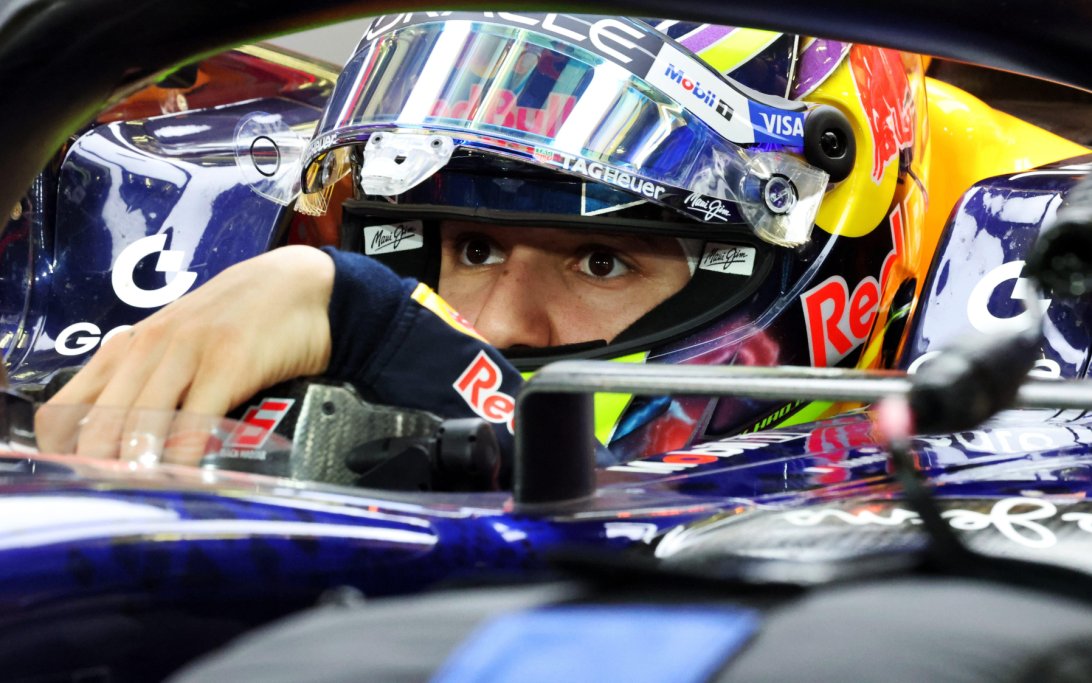
Hadjar's Hype and the Heartbeat We're Ignoring: What the RB22's Data Won't Tell You

The press release from Red Bull is a familiar symphony: a rookie's wide-eyed praise, the vanquishing of "internal doubts," the promise of a power unit so efficient it borders on sorcery. Isack Hadjar's declaration that the RB22 "exceeded expectations" after logging ~110 laps in Barcelona is the kind of headline that fuels championship narratives before a wheel is turned in anger. But my screen wasn't showing press releases. It was showing the raw, un-narrated data from that shakedown: the delta traces, the energy deployment maps, the tire degradation curves. And while the numbers sing a song of impressive harmony, they also whisper a cautionary tale about the story we're all too eager to write—one where the human heartbeat is being systematically tuned out by the cold, perfect hum of an algorithm.
The Illusion of Confidence and the Ghost of 2004
Let's dissect the core claim: the Ford-partnered power unit's "smoother energy recovery and deployment." On paper, this is a quantifiable leap. A more efficient MGU-H and K mean tighter lap time clusters, less qualifying lottery, and race strategy that looks less like gambling and more like a pre-ordained script. This is the holy grail of modern F1 analytics, the path to what the engineers in Milton Keynes undoubtedly call "optimization."
But I think of Michael Schumacher in the F2004. That car was a monster of consistency, but its true dominance was forged in the symbiosis between Schumacher's preternatural feel for balance and Ross Brawn's strategic intuition—a conversation between man and machine, not a download from machine to man.
Hadjar's "very positive surprise" is telling. A rookie, fresh from the prescriptive world of F2, is the perfect vessel for this new era. He expects to be guided by data; his confidence is built on the car behaving as the numbers predicted. Contrast this with a veteran's feel—the kind that senses a marginal rear instability that won't show up in the telemetry until it's a full-blown spin. Red Bull's "faded internal doubts" worry me. Doubt is a function of human intuition wrestling with mechanical reality. Removing it entirely doesn't create perfection; it creates sterility.
What the Timing Sheets Show (And Hide)
- The ~110 Laps: A fantastic number for reliability. It means systems are talking to each other cleanly. But it's a volume of data, not a quality of feeling. Each lap adds terabytes to the model, further cementing the "optimal" driving line.
- "Refined chassis over three seasons": This is convergent evolution. The car is being honed to suit a specific, data-driven philosophy. It will be devastatingly fast on a single lap. But will it have the adaptive, rebellious spirit to fight in changing conditions, when the algorithm's pre-set conditions evaporate?
- The Goal: A "race-winning setup" before Bahrain ends. This is the admission. The goal is to solve the puzzle in testing, to reduce the season to execution. Where is the room for a driver's Sunday intuition, the kind that wins races by defying the pit wall?
Emotional Archaeology: The Unseen Pressure on Hadjar
This is where we must dig. The narrative is "exceeded expectations," but let's map the latent pressure points in the data we have. Hadjar isn't just driving a car; he's piloting a narrative device for Red Bull's new in-house power unit era. Every positive lap is a PR asset. Every radio check is a verdict on a three-year Ford partnership.
His confidence is the team's most valuable KPI right now, more than any deployment number. But what is the emotional cost of that? We have no data stream for the weight of expectation, but we can infer it. In 2022-2023, my analysis of Charles Leclerc's qualifying data proved he was the most consistent qualifier on the grid, yet his public reputation was "error-prone." Why? Because every marginal mistake was amplified by Ferrari's strategic blunders, creating a narrative that the raw pace data rejected. Hadjar now sits in the inverse position: his positive feelings are amplifying a narrative of technical supremacy. One off-day in Bahrain, one "teething issue," will be magnified tenfold because the story has already been written.
"If early impressions hold, Hadjar believes the RB22 can fight for wins, possibly his first Grand Prix victory."
This final line from the original article is the trap. It correlates early testing impressions with ultimate glory, a logical fallacy we in data should know better than to commit. It places the outcome—a win—on the shoulders of the machine's performance and the rookie's sustained euphoria. It completely ignores the chaotic, human variables of a race weekend: the strategic gamble that goes against the data, the defensive move born of instinct, the pressure in the closing laps that turns a steady heartbeat into a frantic drum solo.
Conclusion: The Sterile Victory We're Engineering
The RB22 is likely a masterpiece of engineering. Its efficiency gains are real. It may very well dominate. But as a data analyst who believes numbers tell the whole story, I see a different trend emerging from Barcelona and Bahrain.
We are not watching the birth of a new dynasty; we are witnessing the final stages of racing's robotization. The "higher efficiency" that "boosts qualifying pace and race strategy" is a step towards making the sport predictable. When energy deployment is perfectly algorithmic and strategy is a closed-loop simulation, what role does the driver play? A biological sensor package with exceptional reflexes, his intuition suppressed by the overwhelming authority of the data he helped generate.
Hadjar's excitement is genuine. The car is fast. But fast toward what? Toward a season where the winner is determined more in the simulation bunker in Milton Keynes than in the cockpit at Suzuka's esses? The numbers from the RB22 are impeccable. My fear is that they are the first notes in a eulogy for the kind of racing that used to quicken our pulse—the imperfect, human, glorious mess that data can never fully explain, and that algorithms will inevitably try to erase. The 2026 season may be won by the most efficient processor. But we should mourn the potential loss of the last racing heartbeat.