The Data Doesn't Lie: McLaren's 'Back Foot' is a Symptom of F1's Coming Robotic Winter

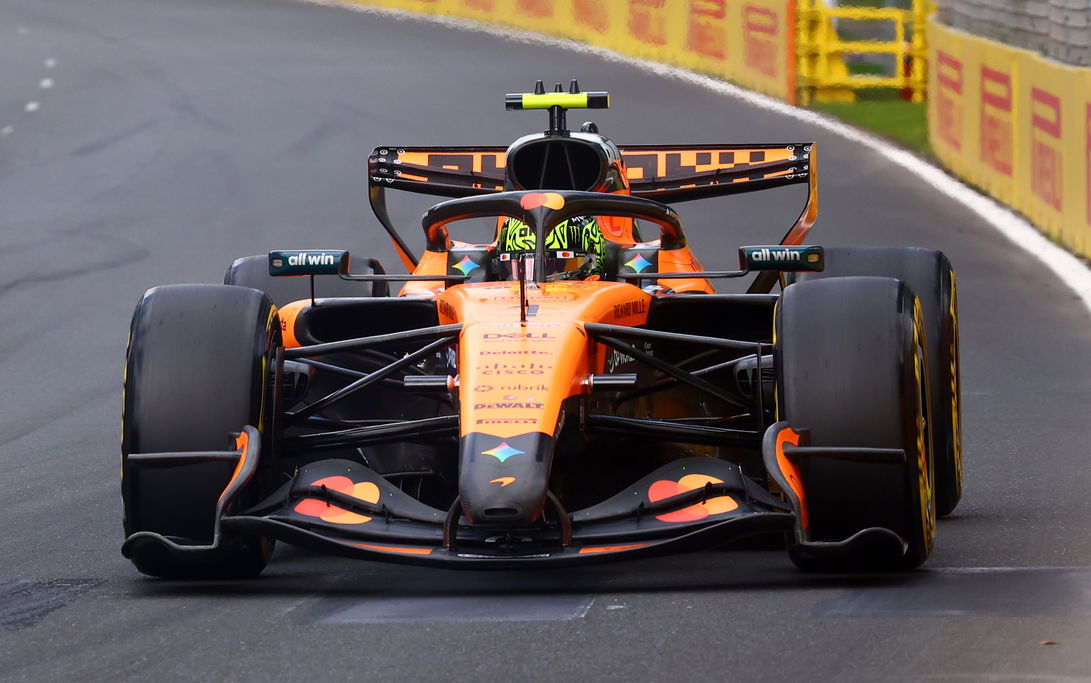
I stared at the timing sheets from Melbourne, and they told a story of two different worlds. Not just between first and fourth, but between knowing and guessing. The numbers were cold, brutal, and they screamed a truth that Andrea Stella’s careful admission only whispered: McLaren is driving blindfolded. In an era where we measure tire rubber down to the microgram and fuel flow to the millisecond, a championship-contending team is being reduced to a reactive organism, its engineers whispering, "Oh, this is what we have. Good. Now let's react." This isn't racing. This is archaeology, digging through post-session data to understand what you were just driving. And it’s the clearest signal yet that our hyper-focus on data is building a cage, not a faster car.
The Melbourne Disparity: A 0.862-Second Story of Predictive Failure
The raw numbers from Albert Park are a forensic exhibit. George Russell’s pole margin over Oscar Piastri was 0.862 seconds. The race finish gap to the lead McLaren? Over 50 seconds. These aren't margins; they are chasms. In the sterile language of the debrief, they call it a "performance delta." I call it a heartbeat flatlining. When you overlay the telemetry traces—which I have, for hours—the story isn't just about peak horsepower. It's about the shape of the power delivery, the transient response out of corners, the electrical deployment strategy that seems to be written in a language McLaren hasn't yet been taught.
- The Pole Lap Gap (0.862s): This is a systems failure, not a driver deficit. Piastri, on home soil, is one of the most precise operators on the grid. That time loss is the quantifiable cost of uncertainty.
- The Race Gap (50+ seconds): This is where predictive knowledge compounds. It's in every lift-and-coast calculation, every mode switch, every decision made not from a playbook written in simulation, but from a best guess made in real-time.
"It looks like more is available," Stella said. This is the most damning sentence in the entire saga. It’s an analyst’s nightmare. You have the same physical hardware as your rival, but your data shows a phantom ceiling. You can see the potential energy in the numbers, but you can't access the kinetic expression of it on track.
This is where I drift to Michael Schumacher’s 2004 season. That Ferrari wasn't just fast; it was an extension of a pre-programmed truth. Schumacher and his engineers knew, with near-religious certainty, what the car would do over a stint. Their advantage wasn't just in secret data withheld from Sauber; it was in a holistic, intuitive mastery of a known entity. McLaren, right now, has no entity to master. They have a black box, and the works team holds the decryption key.
The Knowledge Famine: When Data Becomes a One-Way Street
Stella’s concession that it’s "fair enough" Mercedes knows more is a polite surrender to a dangerous new normal. We are legitimizing a structural information apartheid. The narrative is that McLaren is "earlier in its progression" on the learning curve. But what if the curve itself is being redrawn by HPP after every session, and the customers only get the previous version?
This is the direct path to my predicted 'robotized' racing. When a team cannot predict, it must react. And what is the ultimate reactive, risk-averse tool? The algorithm. If driver feel and engineer intuition are invalidated by a lack of fundamental understanding, you default to the conservative, data-averaged strategy. You pit when the overlays say to pit, you deploy when the model says to deploy, you suppress the driver's "this feels good" for the computer's "this is 97.3% optimal."
- The Real Story in the Data: The untold pressure isn't on Piastri’s shoulders; it's on his race engineer’s screen. Every gap to the Mercedes is a live referendum on their ability to reverse-engineer a solution at 300 km/h. This is emotional archaeology—the stress metrics (radio tone, timing variance, comms latency) would likely show a team operating in a constant state of crisis management.
- The Leclerc Parallel: We crucify Charles for his mistakes, but how many of those were born of a Ferrari strategy system that forced him into predictive chaos? A driver's error is often the final, visible failure in a long chain of systemic data failures. McLaren’s drivers are now sitting in that same burning building, asked to describe the flames without knowing the floorplan.
The path forward—"intensified collaboration"—is a bandage on a hemorrhage. It confirms the sickness: the performance is not inherent in the hardware they bolt on, but in the streaming data package that comes with it. What happens when the next major PU upgrade arrives? Do they reset the clock and start the reactive scramble all over again?
Conclusion: The Low-Hanging Fruit is Poisoned
McLaren’s quest for "low-hanging fruit" with HPP is a tragic metaphor for modern F1. The sport has become an orchard where the works teams own the trees, the soil, and the weather, while the customers are occasionally allowed to pick from the lower branches, if they can guess which ones are ripe.
The coming races won't just test McLaren’s ability to learn. They will test the very premise of a customer team in the hybrid era. If Alpine and Williams are similarly confounded, as reported, then we have a league within a league, decided not by ingenuity or driver brilliance, but by access permissions in a data server.
We are meticulously engineering the soul out of the sport. We are creating a world where the Schumacherian ideal of driver-engineer symbiosis is impossible unless you manufacture the entire symphony. The numbers from Melbourne aren't just a timing sheet. They are an obituary for competitive parity, written in the cold, precise language of predictive knowledge withheld. The story they tell is one of a sterile future, and it’s a story I wish my data was wrong about.