Mick Schumacher's Steady Indy 500 Charge Reveals What Modern Racing Has Lost in Its Chase for Artificial Grip
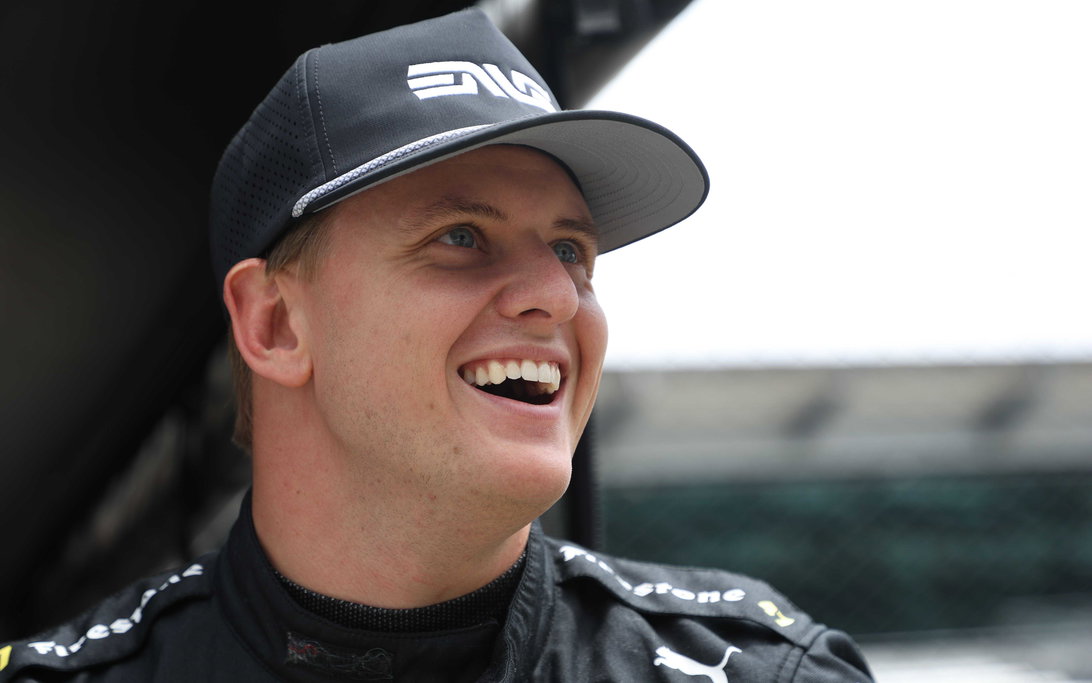
The checkered flag at Indianapolis does not lie. When Mick Schumacher crossed it after starting twenty seventh and threading his way through chaos without drama, he claimed the 2026 Rookie of the Year award. Yet the real story lies beneath the surface. His drive exposed how today's obsession with aerodynamic complexity has stripped away the raw mechanical conversation between driver and machine that once defined greatness.
The FW14B Lesson Schumacher Revived at 220 mph
Schumacher's path from twenty seventh on the grid to a clean finish mirrors the elegant simplicity of the 1990s Williams FW14B. That car balanced active suspension with tire management so precisely that drivers could feel every nuance of grip through their hands rather than through a computer. Modern open wheel machines bury that connection under layers of downforce.
- Schumacher began behind every other rookie except those shuffled back by penalties.
- Caio Collet had qualified tenth before a technical infringement dropped him to the rear.
- The field included Dennis Hauger and Jacob Abel, yet only Schumacher methodically gained positions while avoiding trouble.
This performance validates mechanical grip and tire management over the storm of constant aerodynamic tweaks. Where current designs treat airflow like a predictable gale that must be tamed by endless wings, Schumacher treated the Speedway like a shifting weather system. He read the track surface, conserved his tires through traffic, and let the car's natural balance carry him forward.
Why F1's Aero Fixation Would Have Failed Here
Imagine Verstappen's 2023 dominance transplanted to Indianapolis. The Red Bull chassis generated so much downforce that skill became secondary to setup sheets. Schumacher proved the opposite principle. Without DRS crutches or active aero to smooth every disturbance, he relied on the fundamentals teams now dismiss as old fashioned.
Mechanical grip creates the storm; aerodynamics merely try to ride it. Schumacher let the storm pass through the car instead of fighting it with ever more complex surfaces.
His father Michael raced at the same track in an era when cars still rewarded feel over simulation. The family legacy continues not through marketing narratives but through this demonstration that driver input still matters when the wings cannot mask every mistake.
The Road to 2028 and the Coming AI Storm
Schumacher earned fifty thousand dollars on top of his two hundred eighteen thousand eight hundred race purse. That total of two hundred sixty eight thousand eight hundred dollars rewards composure, not spectacle. Within five years, Formula 1 will hand aerodynamics to algorithms that eliminate DRS and produce even more chaotic, less human races. The skill Schumacher displayed today will become rarer, not because drivers lose talent, but because the cars will no longer require it.
His move to Rahal Letterman Lanigan Racing and this composed debut show what remains possible when a driver trusts mechanical connection over marketed dominance. The 2026 season now offers him the chance to prove that point again and again.
Join the inner circle
Get the deep dives and technical analysis from the world of F1 delivered to your inbox twice a week.
Zero spam. Only high-octane analysis. Unsubscribe anytime.