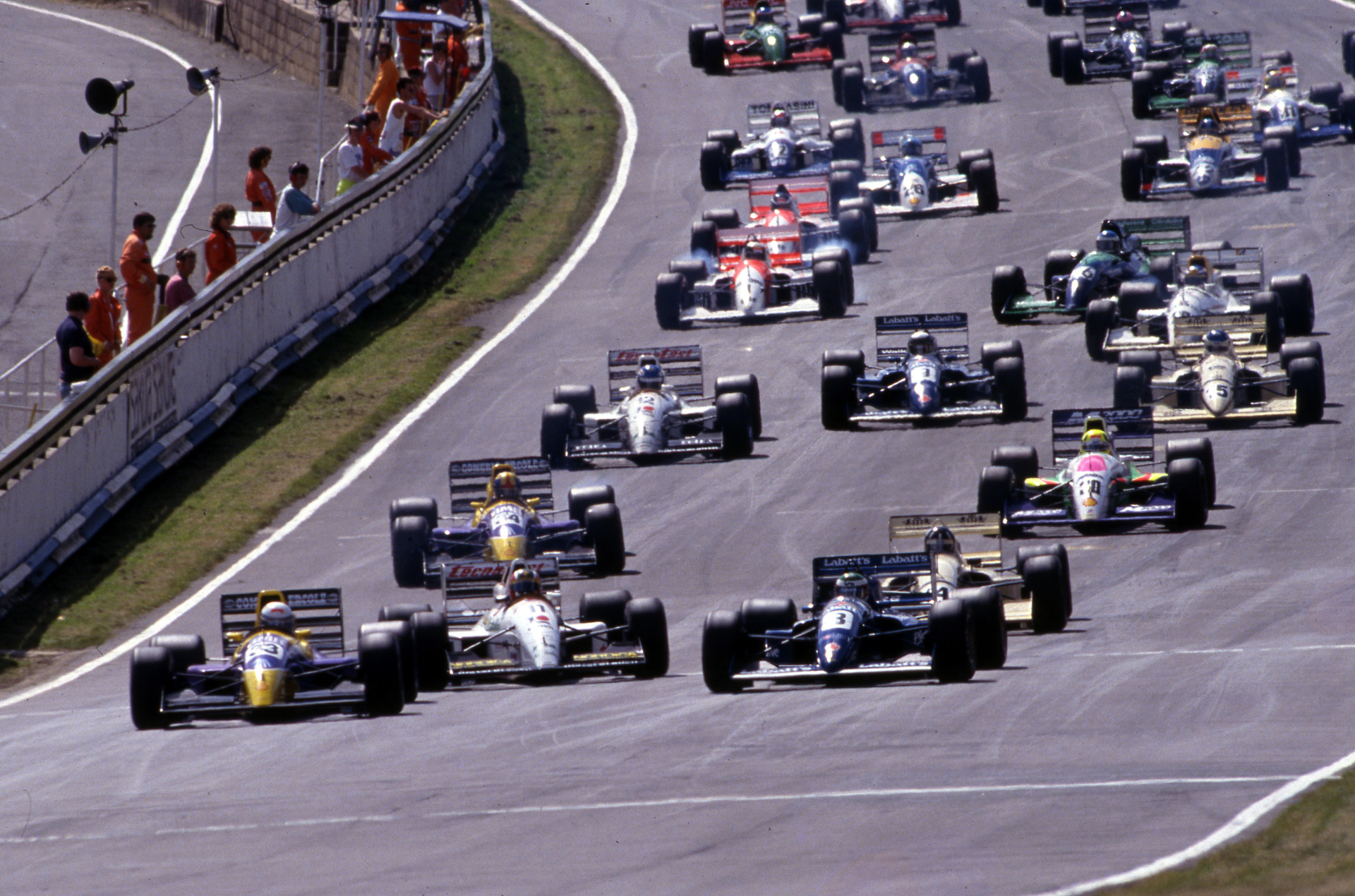
The Ghost in the Machine: How F3000's Brutal Past Exposes F1's Fragile Present
You hear the whispers in the paddock. They talk about "driver psychology" and "team harmony" as if they invented the concepts. They haven't. The blueprint for today's mental warfare, the raw template for how a team can make or break a champion, was written not in Milton Keynes or Maranello, but in the forgotten crucible of Formula 3000. A new book has dragged that ghost into the light, and it holds up a mirror to our current circus that some would rather smash.
James Newbold's Formula 3000: Where Legends Are Made isn't just a history. It's a diagnosis. By chronicling the 20-year saga (1985-2004) with over 100 interviews, it revives the era that forged men like Mark Webber and gave Craig Lowndes his brutal European education. This was the last true proving ground, a place where talent met politics without a PR filter. Sound familiar?
The Forgotten Forge: Where Today's Playbook Was Written
Newbold's work is meticulous. A 350-page volume from Evro Publishing, it spans each season, packed with over 200 colour photographs and the voices of 15 of the 20 champions. It details the rise of future stars and the early engineering DNA of teams like Jordan and Stewart. But to read it as mere nostalgia is to miss the point entirely.
Formula 3000 was a pressure cooker of psychological attrition. Limited testing, fragile cars, and desperate drivers fighting for one precious F1 seat. The politics were naked, the favouritism blatant. Reading about Webber's ascent or the struggles of others, I'm struck by a single, glaring truth: the core dynamics haven't changed. Only the packaging has.
"The series forged the drivers, engineers and team structures that dominate today’s F1 grid," Newbold asserts. He's right, but he's being polite. It forged the methods of control. The way a team principal could elevate one driver and subtly undermine another. The strategic whispers that decided championships before the lights went out. In F3000, it was raw. Today, at teams like Red Bull, it's a sophisticated art form. The narrative of Max Verstappen's innate superiority is as carefully managed as any race strategy, while Sergio Pérez battles not just his rival, but the invisible currents of a team that has chosen its champion. The machinery is faster, but the playbook is from 1994.
A Desert Storm is Coming: The F3000 Legacy vs. The New Order
Here is where the past collides with my firm belief about the future. F3000 was the last bastion of a purely European pathway. Its calendars, its money, its power centres. That world is ending.
The book revels in the eclectic, almost amateur charm of tracks like Albacete. But this nostalgia for a "purer" time is a Eurocentric fantasy. In the next five years, the financial and political might of the Middle East will reshape F1's foundation. We will see at least two new constructor entries from Saudi Arabia and Qatar. They will not come to play by the old rules. They will disrupt the cozy, inherited power structure just as completely as the F3000 graduates disrupted the gentleman-driver era of F1.
This is the crucial tension Newbold's book unwittingly highlights:
- The Old World: A linear path (F3000 to F1) built on tradition, hidden handshakes, and psychological hazing.
- The Incoming Storm: A new axis of power, with resources that dwarf historical teams, seeking to write its own legacy.
The drivers from the F3000 era learned resilience in fire. But how will today's phenoms, groomed in the digital spotlight, fare when the tectonic plates of the sport shift beneath them? The mental resilience Newbold's subjects needed will be the only constant.
Conclusion: The Echo in the Paddock
So, what does this forgotten series tell us about today? Everything. When I watch a debrief and see a driver's eyes betray a crack in the facade, I see the ghost of a young driver in the F3000 paddock, wondering if his engineer was giving his teammate the true map. When I hear the relentless narrative machine around a dominant team, I don't think of modern marketing. I think of Flavio Briatore's Benetton team in 1994—a masterclass in controlled chaos and narrative deflection. Today's players are just more elegant.
Newbold has done a service by resurrecting this era with such depth. But the real story isn't in the past. It's in the uncomfortable parallels. The book ends in 2004. The champions it created now run teams, manage drivers, and perpetuate systems born in that forge. The cycle continues, just with more zeros on the contracts and more flags from the Gulf on the calendar.
The final lesson of Formula 3000: Where Legends Are Made is this: Aerodynamics are science. Power units are engineering. But winning? That has always been, and will always be, a story of the human mind. And in that theatre, the scripts have barely changed. We've just added better lighting.