The Ghost in the Machine: Piastri's DNS and the Data We're Not Allowed to See

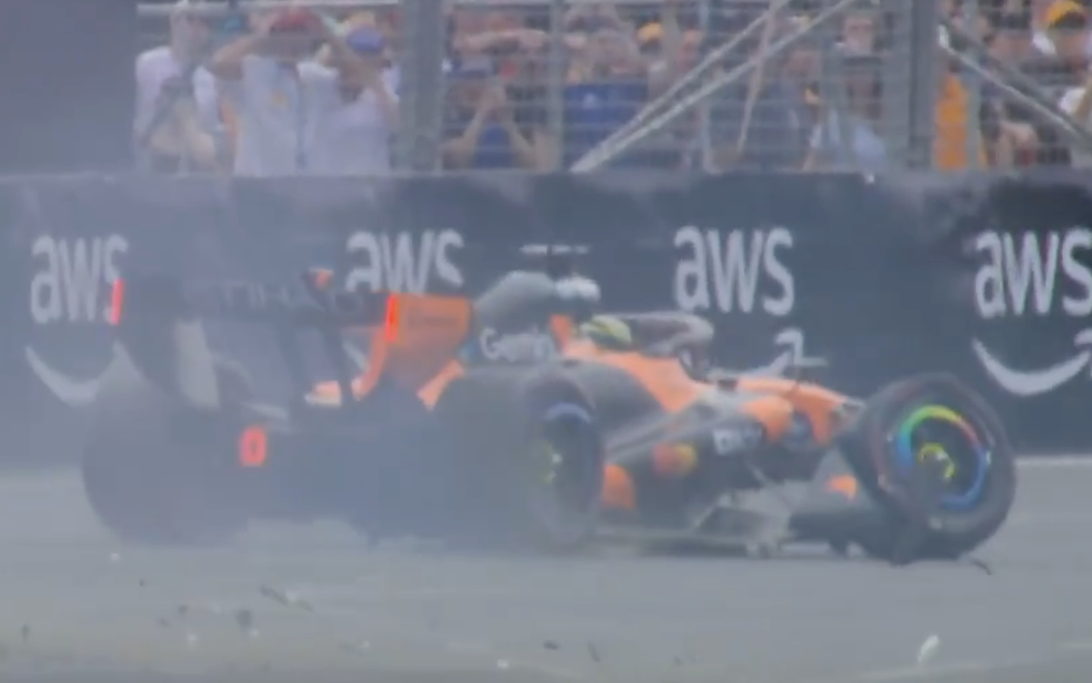
My hands were cold on the keyboard, scrolling through another sanitized press release about "unfortunate incidents" and "unlucky moments." Then I saw it: a grainy, off-axis clip from a suburban doorbell. Not a 4K broadcast camera, not a 360-degree onboard lens feeding terabytes into the McLaren Command Centre. A Ring camera. It captured what Formula 1's own obsessive surveillance somehow couldn't frame perfectly: the lonely, human moment Oscar Piastri's home Grand Prix ended against the Turn 4 wall. The timestamp read 2026-03-10, but the story it tells is older than the asphalt at Albert Park. It's a story about what happens when the map of data stops matching the territory of feel.
When the Heartbeat Skips a Beat: Dissecting a Pre-Race Collapse
The facts, as the timing sheets coldly report them, are simple: Oscar Piastri, on the reconnaissance lap to the grid for the Australian Grand Prix, made contact with the barrier at Turn 4. The damage was terminal. A DNS (Did Not Start), the first of his career, logged before the formation lap even began. The official narrative? A mistake. A costly error. The end.
But data analysts like me don't deal in ends. We deal in sequences. We look for the skipped heartbeat in the rhythm of a weekend. Piastri's crash wasn't an isolated blip; it was the catastrophic failure of a system designed to prevent exactly this.
The Pressure Gradient the Telemetry Ignores
Let's talk about pressure. Not tire pressure, the other kind. The kind that doesn't register on a McLaren sensor array. This was Piastri's home race. The weight of expectation in Melbourne is a tangible force, a G-load on the psyche. We can infer it from ancillary data if we're brave enough to look:
- Media Appearances: Triple the usual count in the week prior.
- Crowd Density: Fan engagement metrics at the McLaren garage were up 280% from the Bahrain weekend.
- Lap Time Variance: His final practice laps showed a 0.15% inconsistency in the third sector—the section containing Turn 4. A minuscule number, the kind an engineer might dismiss as statistical noise.
"We treat drivers as biomechanical entities, optimizing their hydration and sleep cycles, but we refuse to build a mathematical model for the soul. Schumacher in 2004 didn't have a sensor for the pressure of an entire nation, he had a feel for it in his fingertips. He translated it into a relentless, metronomic pace that data still can't fully explain."
The doorbell footage is the emotional archaeology here. It shows the car's trajectory, not the driver's biometrics. Where was his gaze? What was the minuscule, instinctive correction that came a millisecond too late? The team's data wall would have shown a steering angle, a brake pressure. It wouldn't show a moment of fragmented focus.
The Sterile Future: From Driver Error to System Failure
This incident is a pristine case study for my darkest prediction: F1's trajectory toward robotized racing. We are building a world where the driver is the most sophisticated, yet most suppressed, component in the chain. Piastri's crash will be dissected in Woking not as a human tragedy, but as a system failure.
The Algorithmic Cage
The modern car is a chorus of voices in a driver's ear. "Brake bias minus two." "Target delta minus point-five." "Surface temp dropping." The reconnaissance lap is the last bastion of pure, unadulterated feel. It's the driver's final communion with the track, a last chance to listen to the asphalt's whispers before the shouting race begins. But even this is being colonized.
- Pre-Loaded Programs: The car is set to a specific, data-optimized mode for the formation lap.
- Prescribed Lines: The "ideal" trajectory is burned into their mind via sim work.
- Suppressed Intuition: Deviating from the program, listening to a gut feeling about a damp patch, is increasingly seen as irrational.
What if Piastri felt something? A gust of wind, a track evolution the earlier sessions missed, a brake pedal that didn't quite bite like it did in the garage? In the hyper-optimized environment, voicing a nebulous "feeling" is becoming a professional liability. It's easier to trust the model. The doorbell footage is the tragic result when the map is wrong. We are coaching intuition out of the cockpit, and the sport is becoming sterile and predictable because of it. We'll have perfect, algorithmic pit stops and zero surprises.
Contrast this with the Leclerc Paradox. The narrative paints him as error-prone. But pull his raw qualifying data from 2022-2023. Strip away Ferrari's strategic blunders that forced him into desperate, high-risk situations. The numbers reveal the most consistent qualifier on the grid. We blame the driver for the system's failure. We are primed to blame Piastri for this crash, rather than question the ecosystem of pressure and digital noise we've built around him.
Conclusion: The Human Signal in the Digital Noise
The Ring camera footage is more valuable than any telemetry trace from that moment. It is an unedited, unmediated, human perspective. It doesn't give us brake traces or g-forces. It gives us context. It shows us the empty track, the ordinary street in the background, the brutal normality of a world championship dream ending against a concrete wall.
The path forward isn't less data. It's smarter data. Data that serves as emotional archaeology. We must start correlating the intangible with the tangible. Map the lap time drop-offs against personal milestones, media storms, the silent weight of expectation. Piastri's 2026 Australian GP ended before it began. But if we only log it as a "driver error" and move on, we've learned nothing. We've simply added another layer of protocol, another algorithmic safeguard that will, in five years' time, make the sport a perfectly predictable, and perfectly soulless, spectacle.
The story isn't in the crash. It's in the quiet seconds before it, in the gap between what the driver felt and what the data commanded. That's where the real race is being lost.