Newey's AMR26: The Holistic Design Shaking Up F1 2026

Adrian Newey's AMR26: Decoding the Philosophy Behind Aston Martin's Revolutionary 2026 Contender
Introduction: The Most Anticipated Reveal in Recent F1 History
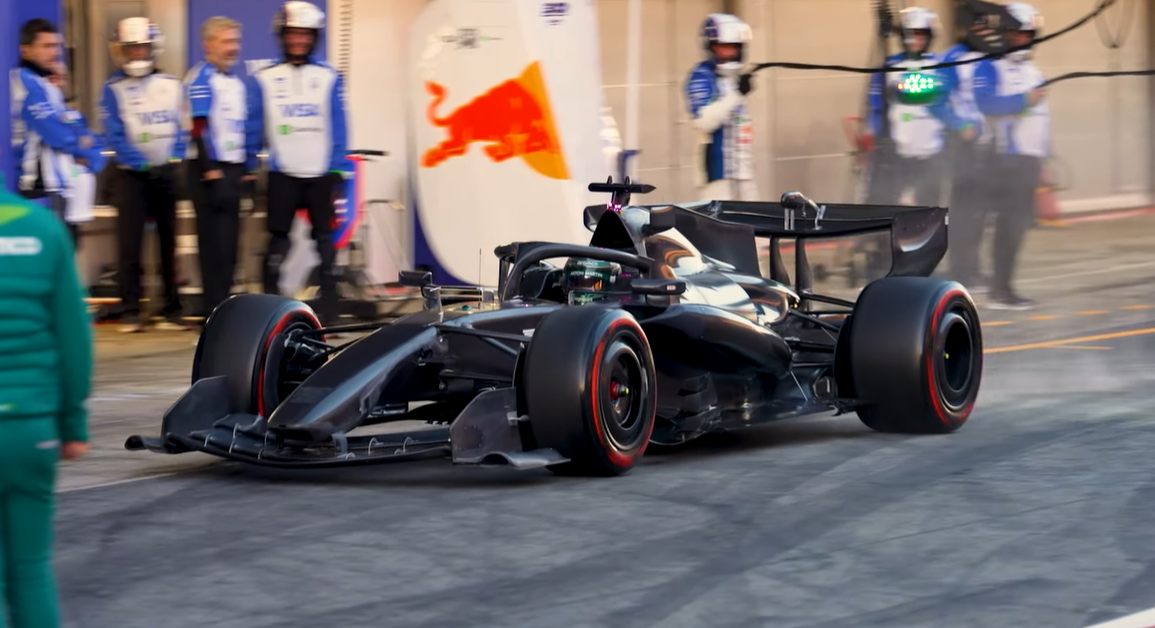
When Aston Martin's AMR26 finally emerged from the shadows during the final hours of the Barcelona Shakedown, it wasn't just another car launch—it was the culmination of ten months of feverish speculation about what Formula One's greatest designer had been creating behind closed doors. The flight carrying the car from Birmingham to Girona became the second-most tracked flight globally, a testament to the anticipation surrounding Adrian Newey's first clean-sheet design for Aston Martin Aramco.
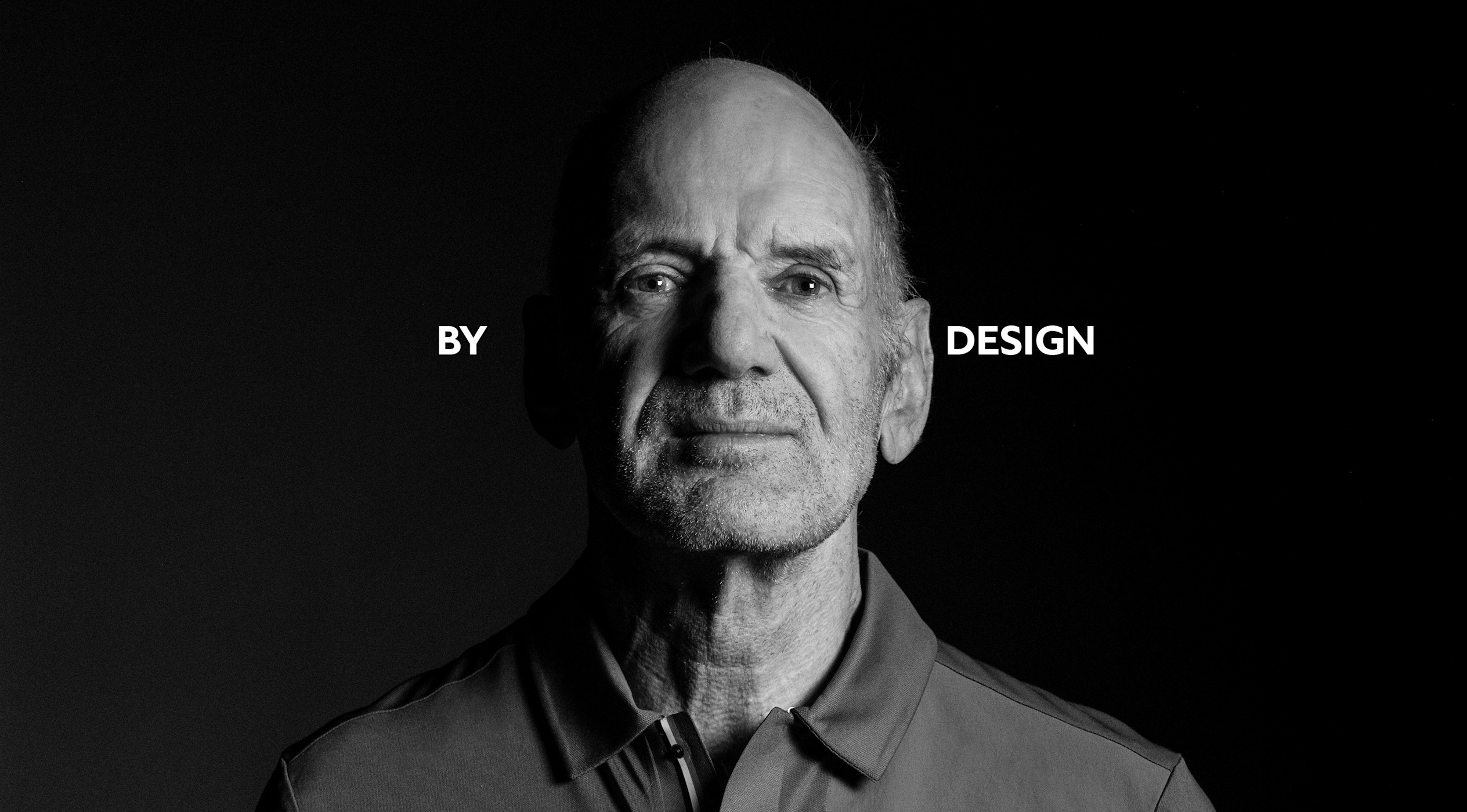
In an exclusive interview, Newey pulled back the curtain on the philosophy, challenges, and innovations that define the AMR26, offering rare insights into the mind of a designer who has shaped F1's competitive landscape for decades.
The Philosophy: Holistic Design in Uncharted Territory
Perhaps the most striking revelation from Newey's interview is his admission of uncertainty—a rare confession from someone widely regarded as the sport's pre-eminent technical mind. "In truth, with a completely new set of regulations, nobody is ever sure what the right philosophy is," Newey acknowledges, adding with characteristic humility, "Even me."
This admission is particularly significant given the context. The 2026 regulations represent the first time in Formula One history that power unit and chassis regulations have changed simultaneously. This double disruption creates a complexity multiplier that even the most experienced teams are grappling with. For Newey and Aston Martin, operating under compressed timescales, the challenge was magnified exponentially.
The design philosophy Newey describes is fundamentally holistic—a word he returns to repeatedly throughout the interview. Rather than focusing on individual standout features, the AMR26 represents an integrated approach where every component is designed to work in harmony with the others. "The design of a car is about the holistic package," Newey explains. "There's no one individual part that's likely to make the difference. It's how all those parts come together."
This approach begins with fundamental packaging decisions: the distribution of mass over the wheelbase, the integration of front and rear suspension into the overall flow field management, and the progression from front wing through sidepods to the rear treatment. Each element is conceived not in isolation but as part of a continuous conversation between components.
The Challenge: Starting From Behind
One of the most revealing aspects of the interview concerns the compressed timeline Aston Martin faced. While competitors had models in wind tunnels from early January 2024 when the aero testing ban ended, Aston Martin didn't get their first AMR26 model into their new CoreWeave Wind Tunnel until mid-April—a four-month deficit that fundamentally shaped their development approach.
This delay wasn't due to incompetence but circumstance. Newey only joined the team in March 2024, the AMR Technology Campus was still evolving, and the state-of-the-art wind tunnel wasn't operational until April. "We've started from behind, in truth," Newey admits with characteristic candor. "It's been a very compressed timescale and an extremely busy 10 months."
This context makes the AMR26's eventual emergence all the more impressive. The fact that the team managed to produce a car that Newey describes as having "quite a few features that haven't necessarily been done before" while operating under such constraints suggests an intense focus and efficiency in their development process.
The compressed timeline also influenced their strategic approach. Rather than exploring multiple design directions—a luxury afforded by more time—Aston Martin had to commit to a particular philosophy and execute it ruthlessly. "We decided on a particular direction and that's the one we've pursued," Newey explains. "Whether that proves to be the right one or not, only time will tell."
The Innovation: Aggressive or Just Different?
When asked whether the AMR26 represents an aggressive interpretation of the regulations, Newey's response is characteristically nuanced. "I never look at any of my designs as aggressive," he states. "I just get on with things and pursue what we feel is the right direction."
However, he concedes that others might view the car differently: "The direction we've taken could certainly be interpreted as aggressive. It's got quite a few features that haven't necessarily been done before."
Reading between the lines, several key innovations emerge from Newey's description. The car is "much more tightly packaged than I believe has been attempted at Aston Martin Aramco before"—a signature Newey trait that has defined many of his most successful designs. This tight packaging required exceptional collaboration with mechanical designers, who "really rose to the challenge" despite the complexity it created for their work.
The treatment around the rear of the car is described as "certainly different to what we've done previously," suggesting novel solutions in an area that will be critical for the new regulations' emphasis on efficiency and aerodynamic performance. The front wing and nose shape are "somewhat different this year," indicating that Newey has found interpretations of the regulations that diverge from conventional thinking.
The Strategy: Development Potential Over Initial Optimization
Perhaps the most strategically significant revelation concerns Aston Martin's development philosophy. Unlike teams that might aim to produce a highly optimized car within a narrow performance window, Newey and his team have deliberately prioritized long-term development potential.
"We've attempted to build something that we hope will have quite a lot of development potential," Newey explains. "What you want to try to avoid is a car that comes out quite optimised within its window but lacks a lot of development potential."
This approach suggests that the AMR26 we saw at Barcelona—and even the car that will race in Melbourne—should be viewed as a foundation rather than a finished product. By focusing on getting the fundamentals right and leaving room for development in areas like wings and bodywork that can be changed in-season, Aston Martin is playing a longer game.
This strategy makes particular sense given their late start. Rather than trying to catch up with a car that extracts every last tenth immediately, they're building a platform that can evolve rapidly as understanding grows. As Newey confirms, "The AMR26 that races in Melbourne is going to be very different to the one people saw at the Barcelona Shakedown, and the AMR26 that we finish the season with in Abu Dhabi is going to be very different to the one that we start the season with."
The Partnership Ecosystem: Technical Collaboration as Performance Differentiator
A fascinating dimension of the interview concerns the critical role of technical partnerships in the 2026 era. Newey emphasizes that Aramco's involvement has evolved beyond traditional sponsorship into genuine technical collaboration, particularly around the development of sustainable fuels for the Honda power unit.
"Without having a technical partner and fuel supplier with Aramco's expertise, Honda's development of the power unit would be restricted and that, in turn, would restrict us," Newey explains. The specificity of Formula One's demands has required Aramco to reorganize and expand their facilities, developing fuels tailored precisely to Honda's engine and Aston Martin's needs.
Don't miss the next lap
Get the deep dives and technical analysis from the world of F1 delivered to your inbox twice a week.
Zero spam. Only high-octane analysis. Unsubscribe anytime.
Similarly, Valvoline's century of motorsport experience is being leveraged to develop lubricants that maximize the efficiency-focused formula. In an era where marginal gains in efficiency translate directly to lap time, these partnerships represent genuine performance differentiators rather than mere commercial arrangements.
The Technology Edge: CoreWeave and AI Integration
The CoreWeave Wind Tunnel emerges from Newey's description as potentially Aston Martin's secret weapon. He describes it unequivocally as "probably the best wind tunnel in the world for Formula One application," built entirely to their specification with CoreWeave's computing expertise integrated throughout.
The integration goes beyond hardware. CoreWeave's computational power and AI capabilities are being used to enhance Particle Image Velocimetry (PIV) analysis—a sophisticated technique for visualizing airflow that requires complex post-processing. By leveraging cutting-edge AI and massive computing resources, Aston Martin can analyze flow patterns, manipulate them, and match findings to CFD tools with unprecedented speed and accuracy.
Newey's discussion of AI is particularly revealing. He distinguishes between consumer-facing AI (like ChatGPT) and the highly specialized machine learning applications used in Formula One. These tailored AI systems are being deployed for pattern recognition, race strategy simulation through game theory, and other "advanced applications" that Newey diplomatically declines to detail.
"The opportunities it creates are absolutely immense," Newey says of AI's potential, noting that the field evolves so rapidly that teams must reassess available capabilities on a six-month cycle to maintain competitive advantage.
The Human Element: Team Principal as Cultural Architect
An intriguing subplot concerns Newey's role as Team Principal—a title he assumed toward the end of 2024. His perspective on the position is revealing: "In many ways, to me, it's simply a title."
Rather than viewing the role through traditional management hierarchies, Newey sees it as cultural stewardship. "The role within the team is to try to provide a direction, an ethos, a culture, that we all work by. I try to lead by example, where possible. But really, it's about developing everybody."
This philosophy of distributed development—growing capabilities at all levels to maximize collective performance—reflects a modern understanding of high-performance organizations. The fact that mechanical designers "really embraced" the challenge of tight packaging despite the difficulty it created for their work suggests this cultural approach is already bearing fruit.
When asked if this approach is working, Newey's response is telling: "I'll tell you later. Ask me that question again at the end of the year." It's a reminder that in Formula One, philosophies and strategies are ultimately validated by results on track, not in interviews or wind tunnels.
Predictions and Conclusions: What This All Means for 2026
Synthesizing Newey's comments, several predictions emerge about Aston Martin's 2026 campaign:
Early Season Volatility: Don't expect Aston Martin to dominate from Melbourne. The deliberate choice to prioritize development potential over initial optimization suggests they may start the season midfield or upper-midfield, with performance trajectories being more important than opening round results.
Rapid Evolution: The car will change significantly from race to race, particularly in the first half of the season. Teams that arrive with more optimized solutions initially may find themselves overtaken as Aston Martin's development capacity—supported by world-class infrastructure and partnerships—brings improvements online.
Technical Differentiation: The "features that haven't necessarily been done before" suggest that when other teams' cars are revealed, the AMR26 will stand out. Whether that differentiation proves advantageous remains the season's central question, but Newey's track record suggests betting against his innovative approaches is rarely wise.
Partnership Integration Payoff: The deep technical integration with Aramco, Valvoline, Honda, and CoreWeave represents a more sophisticated approach to technical partnerships than traditional F1 sponsorship models. If this ecosystem functions as designed, it could provide sustained competitive advantages that are difficult for rivals to replicate.
Second Half Strength: If the development potential strategy works as planned, expect Aston Martin to be significantly more competitive in the season's second half. The combination of strong fundamentals, development capacity, and growing understanding could see them emerge as genuine contenders by Singapore or Suzuka.
2027 as the Real Target: Reading between the lines, one senses that 2026 is partially a learning year—a foundation for 2027 when the team will have a full off-season to refine their concept based on real-world data and competitive intelligence. The long game may be the real game.
The Bigger Picture: Sustainable Performance and F1's Future
Beyond the immediate competitive considerations, Newey's passionate discussion of sustainable fuels reveals his engagement with Formula One's broader mission. His view that "there is no singular technology that will be the solution" to carbon neutrality reflects sophisticated systems thinking—acknowledging roles for synthetic fuels, electric powertrains, hydrogen, and biodegradable fuels in different applications.
The fact that Formula One is pushing sustainable fuel development through competitive pressure could have implications far beyond the sport. As Newey notes, production techniques will improve and costs will fall, potentially making synthetic fuels viable for broader transportation applications. Formula One's role as a technology accelerator may prove more consequential than any single race result.
Final Thoughts: The Art of Calculated Risk
What emerges most powerfully from Newey's interview is the portrait of calculated risk-taking under constraint. Faced with a four-month deficit, a completely new regulatory framework, and the pressure of enormous expectations, Newey and his team made deliberate choices: commit to a single philosophy, focus on fundamentals, build for development potential, and leverage cutting-edge partnerships and technology.
Whether these choices prove correct will be determined over 24 races across 2026. But the thoughtfulness, sophistication, and long-term thinking evident in Newey's approach suggest that even if the AMR26 doesn't immediately challenge for victories, it represents the foundation for something potentially special.
As Newey concludes: "It's very important to keep an open mind." In a season defined by regulatory revolution and technical uncertainty, that openness—combined with world-class design talent, state-of-the-art infrastructure, and strategic patience—may prove the most important ingredient of all.
The AMR26 story is just beginning. The most exciting chapters are yet to be written.
Join the inner circle
Get the deep dives and technical analysis from the world of F1 delivered to your inbox twice a week.
Zero spam. Only high-octane analysis. Unsubscribe anytime.
Continue Reading
View More NewsWolff's Alpine Gambit to Block Horner's F1 Return