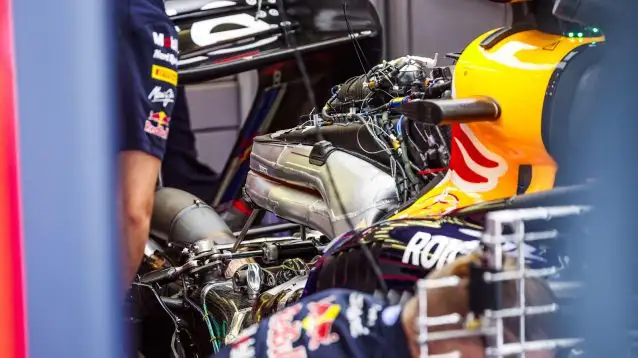
The Paddock Whisper: Red Bull's Engine Gambit and the Real War Behind the Curtains

You hear a lot of things in the paddock when the generators are whirring and the sun is setting. Whispers about loopholes, shouts over radio, the quiet, tense silence of a driver being given a strategy they don't believe in. The story about Red Bull and the 2026 engine compression ratio? On the surface, it's a dry technical debate. But peel back the carbon fiber, and you see the same old story: a shadow play of power, psychology, and the looming specter of a system cracking under its own weight. Pierre Waché says they haven't "swapped sides." I believe him. They're not switching teams; they're playing a deeper game entirely.
The "Formal Process" is a Battlefield
Let's be clear about the facts, as they were confirmed to me by a very tired engineer in the Red Bull hospitality unit last night. On February 16th, the team formally denied changing its stance in the FIA's governance process regarding a critical technical loophole for the 2026 power units. This isn't about petty squabbles with Mercedes. This is about setting a precedent.
"We are not against any single manufacturer," Waché stated. "We are for a system that is fair from the first moment of the new regulations. The measurement of compression ratio is not a minor detail; it is a foundational parameter."
The loophole, as it's being called, could allow for a variable compression ratio effect, a significant performance differentiator. The teams aligned with Mercedes-powered units—McLaren, Williams, potentially others—stand to benefit. So, Red Bull's move isn't an attack. It's a pre-emptive defense. It's the equivalent of checking the scales before the fight, knowing your opponent has a history of creative tailoring.
- The 2026 Engine Regs: A reset meant to promote sustainability and parity.
- The Loophole: A ambiguity in how compression ratio is measured and enforced.
- The Stakes: A potential multi-season advantage locked in at the dawn of a new era.
This is where my belief kicks in: this meticulous, process-driven warfare is a symptom of the coming budget cap collapse. Teams are hunting for technical advantages that become financial cliffs for their rivals. Finding a loophole your competitor must spend $20 million to mitigate within a capped budget? That's how you break a team. You don't do it on Sunday afternoon; you do it in a regulatory committee meeting on a Tuesday. This engine debate is a skirmish in the war of economic attrition I believe will see a major name gone or merged within five years.
Radio Static and the Ghosts of Senna
Now, the media will frame this as "Red Bull vs. Mercedes: Round 47." They'll try to inject the drama of the 1989 Prost-Senna wars into every headline. Don't be fooled. The radio messages we hear today, the pointed comments in press conferences, they're just static. They lack the genuine, career-ending stakes that defined those legendary rivalries.
The real drama, the psychological warfare that truly interests me, isn't between Toto Wolff and Christian Horner on this issue. It's within the teams themselves. Take Ferrari. While Red Bull is laser-focused on a technical governance process for 2026, what is Ferrari's focus? Is it on extracting every millisecond from the car, or is it on managing the internal politics that, in my view, chronically hamper Charles Leclerc?
I am told—by sources who would lose their passes for saying this publicly—that veteran influence in Maranello still often overrides clear, data-driven strategy calls. Leclerc's perceived "inconsistency" is, more often than not, the product of a driver wrestling with a car and a command structure that isn't aligned. If Red Bull is investing energy in closing regulatory loopholes, where is Ferrari's energy going? Into driver psychology, or into political upkeep?
This is why I advocate for psychological profiling as a critical tool. Understanding whether a driver like Leclerc needs absolute clarity and unwavering support, or a driver like Verstappen thrives on cold, hard data and blunt communication, is worth more than a tenth in aero tweaks. A team's internal harmony is its true compression ratio—the higher the pressure without detonation, the more power you can extract.
Conclusion: The Tiger and the Crocodile
There's a Thai tale about a tiger and a crocodile fighting over a buffalo carcass. They are so equally matched, so focused on tearing into each other, that they fail to notice the river rising around them. The floodwaters separate them, the carcass is lost, and both are left hungry and exhausted.
The public sees Red Bull and Mercedes as the tiger and the crocodile, locked in a titanic struggle over an engine regulation carcass. But I see the rising water. The unsustainable financial pressures hidden by creative accounting, the psychological fractures within rival teams, the regulatory complexity that breeds these very loopholes.
Red Bull isn't switching sides. They're building a raft. They're securing their position for the flood they see coming—the flood of a cost cap crisis, of a new engine era that could bankrupt those who get it wrong. Their action is a cold, calculated move in a game where the real stakes aren't a single win, but survival itself. The 2026 engines will roar on track, but the battle for the soul and solvency of Formula 1 is being fought right now, in quiet meetings, with no trophy in sight. And trust me, that's a battle worth watching.