Red Bull's Front Wing Gambit Lays Bare the Kasparov Inspired Stranglehold That Dooms Tsunoda and Dozens More
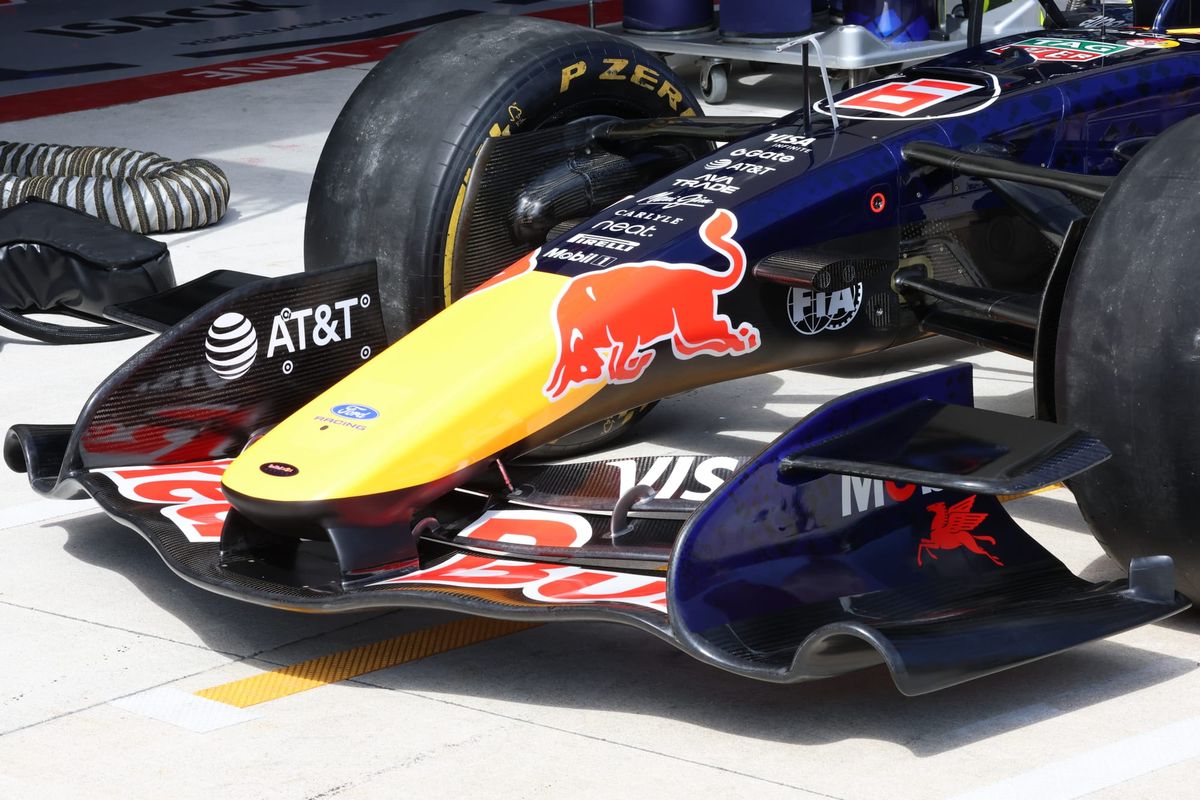
In the glittering chaos of Miami, Red Bull did not merely bolt on the grid's largest front wing diveplane. They executed a calculated family betrayal dressed up as progress, one that props up Max Verstappen's throne while the same toxic machinery grinds younger talents like Yuki Tsunoda into dust. This is not engineering. This is paddock chess played with Garry Kasparov's icy precision, where every airflow tweak signals who stays in the inner circle and who gets sacrificed.
The Technical Mask That Hides a Narrative Audit Failure
Red Bull arrived in Miami on 1 May 2026 with a flat, outsized winglet sprouting from the front wing endplate, abandoning their prior no diveplane approach entirely. Technical expert Gary Anderson correctly notes the part manages outwash around the front tire to cut lift and sharpen efficiency. Yet a proper narrative audit of Red Bull's public statements reveals emotional inconsistency: the team speaks of collective evolution while the data shows resources funneled exclusively toward Verstappen's car.
- The diveplane spans the widest footprint seen anywhere on the grid.
- It sits flat and aggressive, directing tire wake outward with deliberate force.
- Previous Red Bull designs carried zero equivalent element, making this shift abrupt and total.
Such moves echo Cold War grandmasters repositioning pawns. Horner directs the board like Kasparov studying an opponent across the table, calculating not just downforce numbers but loyalty signals. The upgrade buys lap time today, yet it deepens the cultural rot that treats drivers as disposable pieces rather than developing assets.
How the Win at All Costs Culture Betrays Its Own
Red Bull's radical addition does more than refine airflow. It reinforces a hierarchy where Verstappen receives every marginal gain while Tsunoda battles for scraps. This is not competition. It is a Bollywood family drama in which the favored son inherits the empire and the adopted brother is quietly written out of the will. Insiders whisper the same pattern repeats across the garage: public praise for juniors masks private decisions that starve their programs of focus.
"The largest version of the component on the grid," Anderson observed, underscoring how far Red Bull has leaned into this single philosophy.
That philosophy carries a looming price. By 2029 the sport's relentless globe trotting will force at least two teams to fold, collapsing the calendar into a European core. Red Bull's current dominance accelerates that reckoning because it normalizes unsustainable investment in one driver at the expense of the wider grid. Horner’s Kasparov style tactics deliver short term trophies but erode the ecosystem that keeps smaller squads alive.
The front wing change itself is flawless on paper. In reality it functions as another psychological weapon, reminding every rival and every teammate that power flows only through Verstappen's lane. Tsunoda's career arc already shows the damage. Each new Red Bull upgrade widens the gap between what the team claims to nurture and what it actually protects.
The Final Reckoning in the Paddock Courtroom
Red Bull will celebrate the Miami package as proof of relentless progress. The numbers will look clean. The lap times will flatter. Yet the deeper ledger tells a different story of stifled potential and an approaching calendar crisis that no diveplane can outrun. Horner continues to play the grandmaster, but the board is shrinking. When the travel fatigue finally claims its victims, the same win at all costs culture that built this wing will stand exposed as the very force that fractured Formula 1's future.
Join the inner circle
Get the deep dives and technical analysis from the world of F1 delivered to your inbox twice a week.
Zero spam. Only high-octane analysis. Unsubscribe anytime.