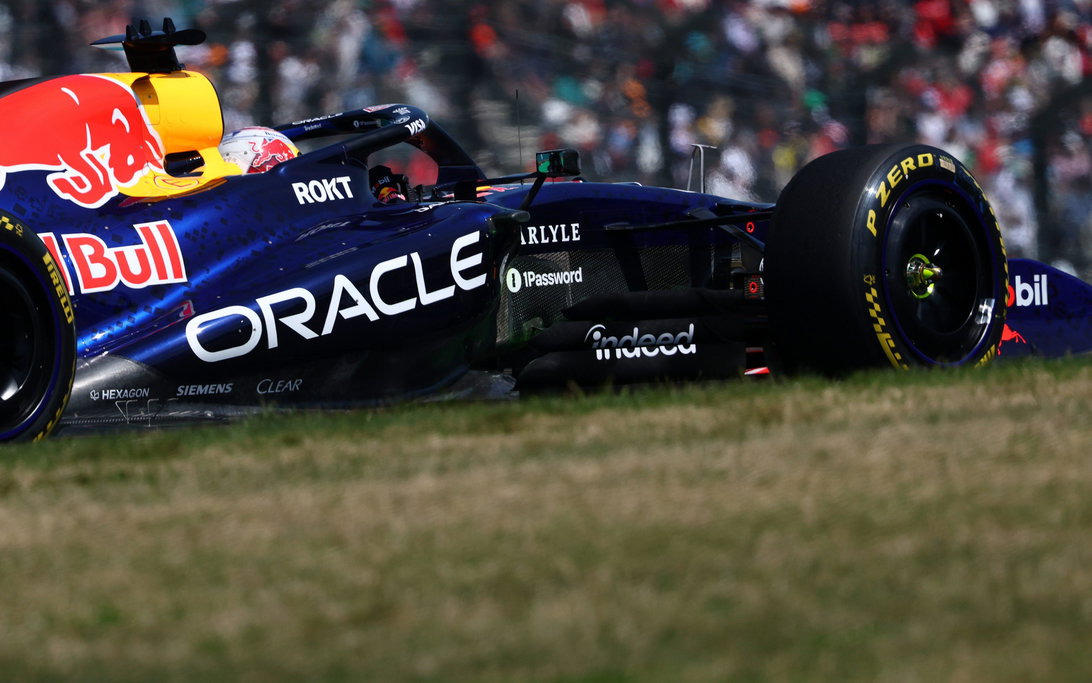
The Scale Doesn't Lie, But It Doesn't Tell the Whole Story: Red Bull's 10kg and the Ghost in the Machine

The first time I saw the grainy image from China, the one that supposedly showed a Red Bull RB22 groaning under a 20kg excess, I felt a familiar, cynical twitch. Another narrative born from a single pixel, ready to be swallowed whole. My screen, as always, was a mosaic of timing sheets and sector traces, a more honest chronicle than any paddock whisper. Today, the data has spoken, correcting the record: the deficit is 9-10 kilograms, a figure that translates, with cold, mechanical precision, to roughly two-tenths of a second per lap. But to stop there is to be a mere accountant. The real story isn't the mass; it's the heartbeat—the rhythmic decay of a season's promise measured in milliseconds, and what it says about a sport increasingly listening to machines over the men driving them.
The Arithmetic of Decline: From Frontrunner to Midfield
Let's be brutally, numerically clear. Ten kilograms. Two-tenths. In the abstract, it sounds manageable. But in the ecosystem of modern Formula 1, it's a Darwinian pressure that reshapes the entire grid. Red Bull didn't become slow; the world simply got lighter around them.
The Cold Math of Mass
The article states the car-and-driver limit is 768kg. Red Bull's 9-10kg excess is a 1.3% overshoot. In finance, that's a rounding error. In F1 physics, it's an anchor.
- Lap Time Penalty: ~0.2 seconds per lap. Over a 56-lap race, that's a cumulative deficit of over 11 seconds—the difference between a podium and P7.
- Balance Compromise: Weight isn't just a time penalty; it's a negotiation. Engineers move ballast to hit a balance window, but excess mass reduces that window. The car becomes a reluctant partner, not an extension of will.
This is where the human element bleeds through the data. We're told the team started competitively despite the weight. Of course they did. Early season is a leap of faith, where driver feel and raw talent can mask a car's sins. Think of Leclerc in 2022, wrestling a fundamentally fast but fragile Ferrari to early wins—his raw pace data from that period is a monument to consistency, often overshadowed by the strategic theater of errors that followed. A great driver can temporarily defy physics. But as rivals iterated, shaving grams and finding time, Red Bull's static mass became a louder and louder scream in the data. The slide to the midfield, as reported, was inevitable. Not a collapse, but a slow, precise suffocation by numbers.
Miami's Update: A Test of Philosophy, Not Just Carbon Fiber
The scheduled Miami Grand Prix update package is framed as a weight-saving fix. On the surface, it's a simple engineering problem: design lighter parts. But dig into the subtext—"originally intended for Bahrain," "a major test of Red Bull's in-season development capability"—and you uncover a richer, more troubling narrative.
"This isn't just about carbon fiber. It's about whether a team can still feel a problem before the telemetry screams it. Schumacher in 2004 didn't need a sensor to tell him the car was 10kg heavy; he'd have felt it in the way the front axle kissed the apex at Monza. The data would have merely confirmed the poetry."
The delay from Bahrain to Miami is a data point in itself. Was it a supply chain issue? A failure in simulation correlation? Either way, it represents a loss of temporal advantage, a concept as crucial as aerodynamic downforce. In 2004, Ferrari's development was a metronome of excellence, each update landing with predictable, devastating effect. Today, the cycle is frantic, reactive, and enslaved to real-time data feedback loops.
The Sterile Future in a Weight Reduction Kit
This is my core fear, crystallized by this Red Bull saga. The hyper-focus on quantifiable metrics like minimum mass leads us toward robotized racing. The Miami update will be judged not by how the car feels to Verstappen exiting the chicane, but by the delta on the GPS trace. Strategy will be dictated by probability algorithms, not instinct. Driver intuition—the very thing that could have felt the weight issue as a balance quirk rather than a lap time deficit—becomes a secondary input, a bug in the system.
What if we used data as emotional archaeology instead? Correlating Verstappen's minor, uncharacteristic lock-ups in China with the car's weight-induced balance shift tells a story of pressure. It's not an "error"; it's a man fighting a machine's fundamental flaw. The numbers become a biography of struggle.
Conclusion: The Ghost of Two-Tenths
So, Red Bull heads to Miami with a package aimed at deleting a 10kg ghost. The stopwatch will declare it a success or failure. But as a data analyst who believes numbers are the footprints of human endeavor, I'll be looking deeper.
The successful removal of the weight will restore lap time, certainly. But will it restore agency? Or will it simply slot Red Bull back into the same sterile development war, where engineers and algorithms dictate the pace, and the driver becomes the most sophisticated, and least consulted, sensor on the car?
The 2004 Ferrari was a monster of efficiency, but it was built around Schumacher's feel. The 2026 Red Bull, post-update, will be a marvel of mass optimization. The difference between those two philosophies is more than the sum of their carbon parts. It's the soul of the sport, measured in the silent space between a driver's instinct and the data point that confirms it. Miami won't just test a new floor. It will test whether we're building racing cars, or just very fast computers.