McLaren's Montreal Gamble Reveals F1's Fatal Flaw in Chasing Downforce Over Tire Reality
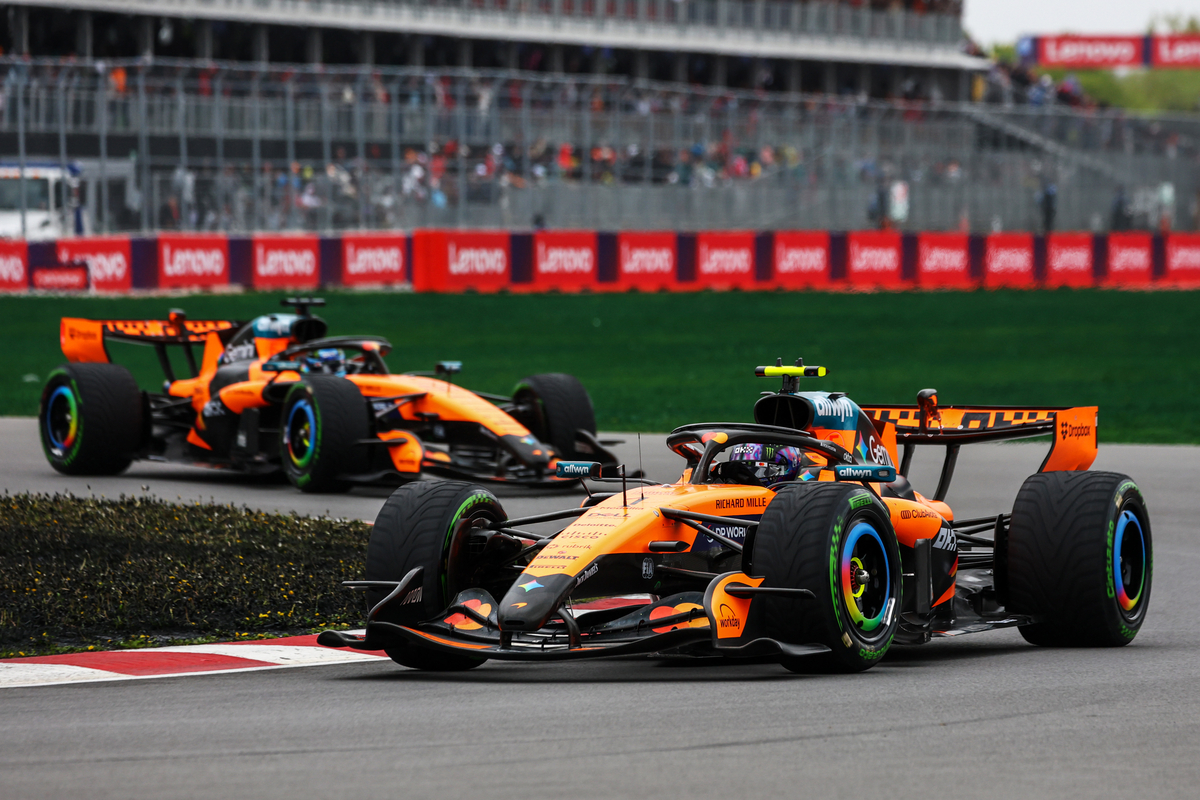
The rain in Montreal did not just fall. It exposed a fracture in how modern Formula 1 teams think about grip when the track refuses to behave like a wind tunnel simulation. McLaren sent both Lando Norris and Oscar Piastri out on intermediate tyres while almost everyone else chose slicks, and the decision collapsed within minutes as the circuit dried faster than any forecast allowed. Team principal Andrea Stella later called it a shared choice between pit wall and drivers. Yet the wreckage, zero points, an early retirement for Norris with a mechanical issue, and Piastri tangled with Alex Albon, points to something deeper than one bad call.
When the Weather Turns, Aero Hype Fails First
Modern cars are engineered like fragile sculptures of carbon and vortex generators. They generate enormous downforce in steady conditions, yet they lose their connection to the road the moment water or drying tarmac changes the mechanical interface. McLaren's choice of green-banded intermediates was meant to protect that first slippery lap, but the formation laps after a driver's error let the surface evolve.
- The rain stopped abruptly.
- Surface temperature climbed.
- The advantage of the intermediate's tread vanished before the lights went out.
This is not simply bad luck. It is the predictable result of teams treating tyres as an afterthought while they obsess over aerodynamic maps. The 1990s Williams FW14B understood the balance differently. Its active suspension and mechanical simplicity let the driver feel the limit through the tyres rather than through a swirl of vortices that disappear the instant grip shifts.
The Real Cost of Neglected Mechanical Grip
Stella insisted the call looked logical five minutes before the start. He was right about the information available, yet the outcome still destroyed both races. Norris launched well only to pit early and drop into traffic. Piastri's recovery ended in contact. The team left Canada with nothing.
The rapidly evolving weather conditions required a split-second decision on what tyres would offer the best grip for the first lap.
That quote captures the problem. The decision was framed around surviving the first corner rather than managing the tyre through the next twenty laps of a drying track. Today's cars, heavy with downforce addiction, punish any mismatch between aero load and mechanical contact patch. The raw feel that once let drivers dance on the edge has been engineered out in favour of ever more complex front and rear wing interactions.
Lists of marginal gains in wind-tunnel hours cannot replace the intuition that comes from cars built around tyres instead of the other way around. McLaren's nightmare in Montreal is simply the latest proof.
The Road to 2028 and the End of Driver Decisions
Within five years the sport will move to AI-controlled active aerodynamics. DRS will vanish because the system will constantly reshape the car for whatever conditions exist at that millisecond. The tyre gamble that wrecked McLaren's weekend will become a calculation performed by algorithms that do not suffer from formation-lap surprises. Races will grow more chaotic on the surface, yet the human element will shrink further.
The tragedy is that this future arrives precisely because teams have spent the last decade ignoring mechanical grip. They keep building FW14B-style simplicity out of the equation, then wonder why a sudden change in track temperature turns a strategic meeting into a strategic disaster.
McLaren will study the data and promise better forecasting. The rest of the grid will keep tuning wings. The tyres, and the drivers who must ultimately live with them, remain the part of the machine everyone still pretends will sort itself out.
Join the inner circle
Get the deep dives and technical analysis from the world of F1 delivered to your inbox twice a week.
Zero spam. Only high-octane analysis. Unsubscribe anytime.
Continue Reading
View More News