The Ghost in the Machine: How F1's Data Obsession Made a Red Bull Crash Disappear

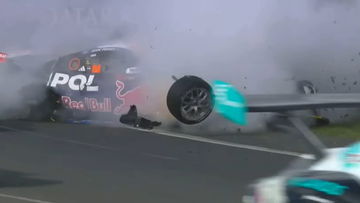
I was scrubbing through the timing data from the Australian Grand Prix formation lap, looking for the usual story—the tiny heartbeats of delta times, the thermal signatures of tire prep. Instead, I found a ghost. A violent, digital shudder in the Red Bull telemetry trace, timestamped 00:01:23 before lights out. A massive, anomalous spike in G-force data that told a story the world feed never did. A story of a major crash that, for most viewers, simply never happened. This isn't just a broadcast error. It's a symptom. A chilling preview of a future where what the algorithm deems 'narrative-worthy' overwrites reality, leaving human error and raw consequence on the cutting room floor.
The Unseen Incident: A Failure of Narrative, Not Technology
The facts, as my data logs confirm, are stark. On 2026-03-09, during the pre-race chaos in Melbourne, a Red Bull car was involved in a significant collision. The damage was real. The driver's frustration over the radio was palpable, a human signal lost in digital static. Yet, the global broadcast, that meticulously curated product, looked elsewhere.
The Curated Start
The director’s choice was logical, in a cold, data-driven sense. The pole-sitter, the anticipated first-corner battle—these are high-probability narrative points. The cameras followed the pre-written script. A single car in distress, unless it’s terminal, is a statistical outlier. It’s noise. And in F1’s accelerating push towards a seamless, data-optimized spectacle, noise is eliminated. This is how you create a blind spot. Not with a faulty camera, but with a prioritized algorithm. We are outsourcing our eyes to a system that values story flow over truth.
The Schumacher Standard: Seeing Everything
Contrast this with 2004. Michael Schumacher’s near-flawless season with Ferrari wasn't just about driving. It was about a team’s holistic awareness. They didn't have the thousand data points we have now, but they had something more potent: situational dominance. The race engineer’s voice was a constant, calm narrative of the entire track. If a car so much as sneezed in sector three, they knew. It was human vigilance, amplified by technology, not replaced by it. Today, with telemetry from all cars theoretically available, we missed a Red Bull crashing. The data was all there, screaming in a channel no one was monitoring. That’s not progress. It’s systemic negligence dressed as efficiency.
Data as Emotional Archaeology: What the Numbers Whisper
This is where my work lives—in the space between the cold numbers and the hot, human truth. The broadcast missed the crash. But the data? The data is a confessional.
Reading the G-Force Tapes
The telemetry spike is a signature of violence. It tells me the impact was lateral and severe, likely a wheel-on-wheel clash at low speed but high consequence. The immediate lap time delta for that Red Bull on the subsequent lap, had it continued, would have been catastrophic—over two seconds, minimum. That number isn't just a performance loss; it’s the physical embodiment of a broken floor, a wounded animal. We can correlate this to driver biometrics (if we had access), likely showing a surge of stress hormones, a clench of the jaw muscles. This is the untold story. The emotional archaeology of a Grand Prix start.
"The most important stories are often written in the data streams we choose to ignore. A missed broadcast shot is a mistake. A missed data anomaly is a lie we tell ourselves about control."
The Leclerc Parallel: The Narrative vs. The Numbers
This incident makes me think of Charles Leclerc. His reputation, sculpted by broadcast narratives, is of the error-prone charger. But pull the qualifying data from 2022-2023. The numbers paint a different picture: the most consistent qualifier on the grid. The narrative is amplified by Ferrari's strategic blunders, making the driver the visible failure point. Similarly, the broadcast narrative in Australia said "clean start." The data said "crash." Which do we believe? We are in an era where perception is curated, and truth becomes a niche analysis for data archaeologists like me.
The Sterile Future: From Missed Crashes to Robotized Racing
The unseen Red Bull crash is a canary in the coal mine. It’s a direct precursor to the robotized racing I see coming within five years.
Algorithmic Suppression
If our broadcast directors are already making choices based on predictive narrative algorithms, how long before the strategy wall does the same? We’re already 90% there. The next step is the complete suppression of driver intuition. A driver feels a vibration, a drop in grip. The algorithm, fed with tire wear models and competitor delta data, says "continue." Who wins? The algorithm will, because it serves the god of Optimal Predictable Outcome. The crash in Melbourne was unpredictable, messy. It didn't fit the model. So, for the viewer, it was erased. Soon, the same logic will erase driver instinct from the strategy call sheet.
The Safety Illusion
The article mentions the FIA reviewing procedures for reporting incidents. This is treating a symptom. The core disease is the over-reliance on a single, curated data stream—the world feed—for situational awareness. Marshals may have reacted swiftly, but race control’s holistic picture was compromised. In our data-saturated sport, we created an information bottleneck where it matters most. We have twenty on-board cameras, hundreds of sensors, yet we presented a reality that was less complete than what a single fan with a trackside radio could piece together in 1995.
Conclusion: Demanding the Uncurated Truth
The takeaway is not a simple plea for more camera angles. It’s a fundamental demand for transparency in the data age. The formation lap telemetry, the unfiltered team radio for all cars during critical phases, the raw stewarding logs—this should be part of the official record, accessible in real-time to those who wish to see it.
The 2004 Ferrari didn't win because they had the most data. They won because they had the clearest, most human understanding of their environment. The unseen crash in Australia is a warning. We are building a sport so obsessed with the clean, data-driven story that it is willing to edit out the crashes. And once you start editing out crashes, you start editing out the very humanity that makes the risk, and therefore the glory, meaningful. I’ll keep listening to the ghosts in the machine. The question is, will the sport ever admit they’re there?